
Have you ever wished for a lucky charm that does more than sit on a shelf? In Japan, millions of people use the daruma doll—a traditional round, hollow papier-mâché good luck charm with a weighted bottom—to set goals, stay motivated, and celebrate success by painting in its eyes. For anyone curious about Japanese culture, looking for a meaningful goal-setting tool, choosing an authentic souvenir, or understanding the symbolism behind this iconic figure, the daruma offers a practical tradition built around perseverance, luck, and follow-through.
This guide explains where daruma dolls come from, what their design means, how people use them to achieve goals, and why they remain important in festivals, gifts, life milestones, and Japanese craftsmanship today.
- What Are Daruma Dolls? (Quick Answer)
- Origins and History of the Japanese Daruma
- Design and Symbolism: Why Daruma Look the Way They Do
- How to Use a Daruma Doll to Make Your Dream Come True
- Daruma Spirit in Japanese Culture and Festivals
- Four Reasons Overseas Visitors Love Daruma Dolls
- Daruma Dolls as Good Luck Charms for Life’s Milestones
- How Daruma Dolls Are Made: Traditional Paper Mache Craft
- Choosing and Gifting a Daruma Doll (Discovery Japan Mall Perspective)
What Are Daruma Dolls? (Quick Answer)
Daruma doll is a traditional Japanese good luck charm shaped like a rounded, hollow figure made from papier-mâché. It features a weighted bottom that causes it to stand back up every time you push it over, blank eyes waiting to be painted, and distinctive facial hair inspired by ancient symbolism. Traditional daruma dolls are primarily red, symbolizing good luck and protection.
At its core, the daruma is not simply a magical object but a tool for accountability. As a cultural symbol, daruma dolls serve various segments including students preparing for exams, entrepreneurs launching businesses, and families welcoming the new year with fresh resolutions. At Discovery Japan Mall, many overseas visitors choose a daruma san as their personal partner for turning intentions into action.
Here is what a daruma doll represents:
- Good fortune and protection from hardship
- Goal-setting, focus, and ideal attainment
- Perseverance and resilience, the spirit of moving forward no matter what
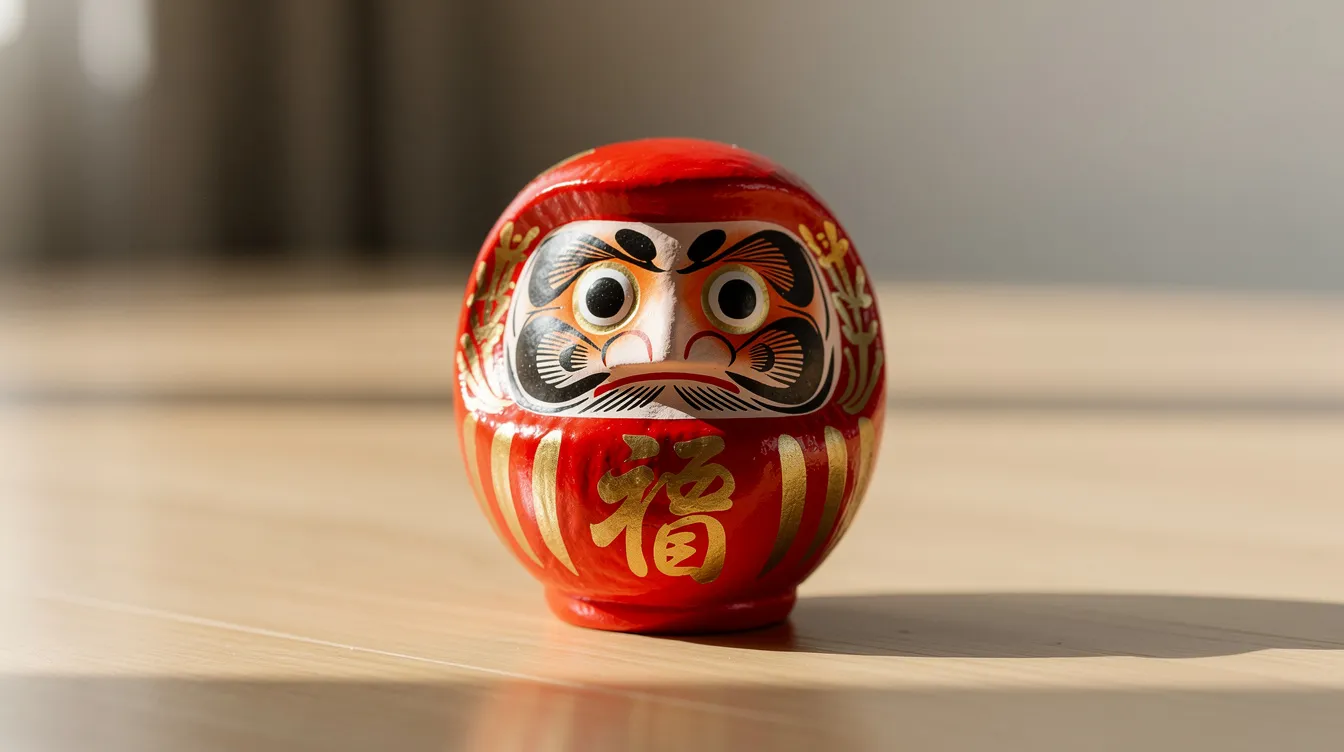
Origins and History of the Japanese Daruma
The story begins with Bodhidharma, a 6th-century monk who is credited with bringing Zen Buddhism from India to China. According to legend, Bodhidharma meditated facing a wall for nine years with such intense focus that his legs withered and his arms fell away. His limbless form became the inspiration for the rounded shape of the Japanese daruma.
That legendary perseverance gave birth to the Japanese proverb “Nanakorobi yaoki,” meaning fall down seven times, get up eight times. This phrase became the soul of every daruma doll ever made.
Key historical milestones:
- 17th–18th century: The first daruma dolls were made in Takasaki in what is now Gunma Prefecture. Silk farmers crafted paper mache figures during winter months as a side business.
- Edo period evolution: Daruma evolved from okiagari-koboshi (self-righting dolls) into a distinct good luck charm used by farmers praying for harvests and prosperity.
- Shorinzan Daruma-ji Temple: Also known as Daruma-dera, this temple first had priests distribute charms to parishioners before local people began making papier-mâché daruma from temple molds, helping the craft spread.
- Modern day: Over 80% of Japan’s daruma dolls are produced in Takasaki, with nearly 100 households involved in the traditional craft.
Design and Symbolism: Why Daruma Look the Way They Do
Every element of a daruma doll carries deep meaning. The daruma doll’s design reflects Bodhidharma’s meditative focus and perseverance, translated into a physical object you can hold in your hand.
Construction: The hollow paper mache body sits on a weighted base, so when you knock it down, it rolls right back up. This is the symbol of perseverance in action.
Color symbolism: Daruma dolls come in various colors, each representing different intentions. Here is a quick guide:
| Color | Meaning |
|---|---|
| Red | Good luck, protection from illness (linked to monks’ robes) |
| Gold / Yellow | Wealth and financial success |
| White | Purity and new beginnings |
| Black | Stability and protection from bad luck |
| Blue | Academic success, calmness |
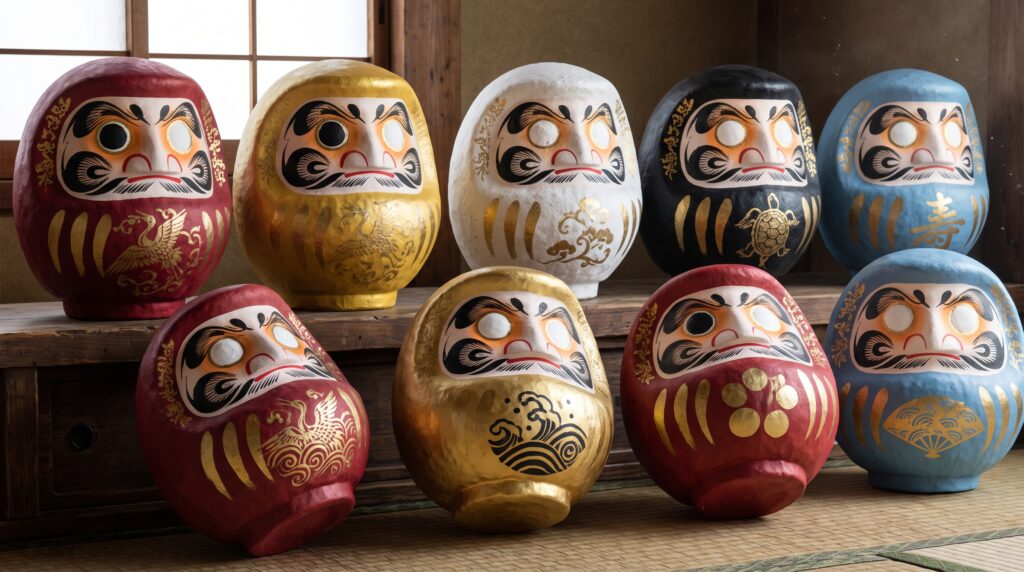
Common kanji inscriptions include 福 (good fortune), 商売繁盛 (prosperous business), and 家内安全 (family safety). Buyers choose the inscription that matches their wish.
How to Use a Daruma Doll to Make Your Dream Come True
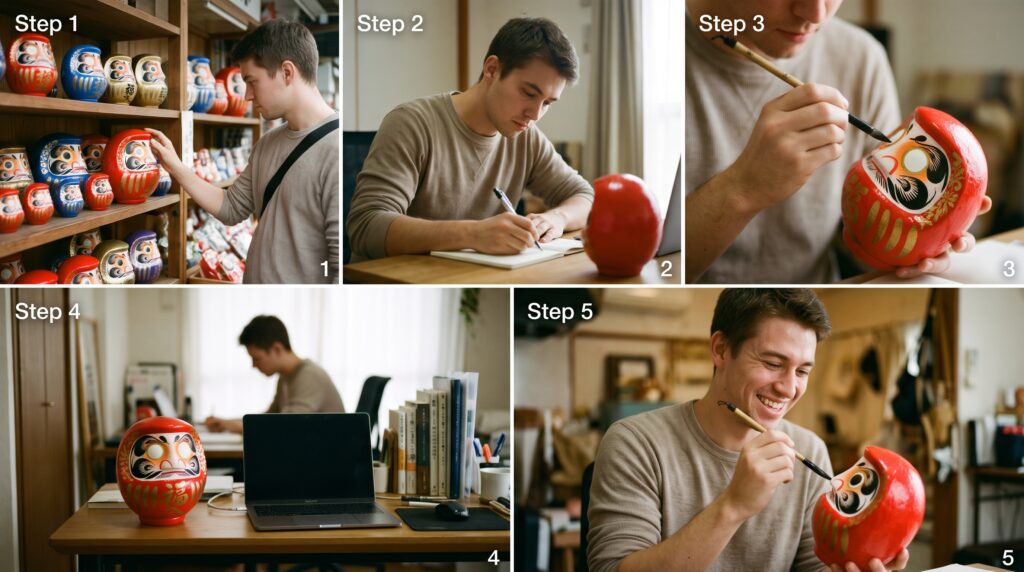
Using a daruma is not passive wishing. The process of using a daruma doll can help transform a wish into a visible commitment. Think of it as a contract between you and your goal.
Here is the ritual, step by step:
- Step 1 – Choose your daruma. Pick a size, color, and inscription that align with your goal. Small for everyday aims, larger for big tasks.
- Step 2 – Define a clear goal. Be specific: “Pass the July exam,” “Open my café by March,” “Run a half marathon.” Vague hopes stay vague.
- Step 3 – Paint one eye. At the start of your journey (often at new year or a project launch), paint the left eye while stating your goal aloud. This custom started centuries ago and turns the doll into a one eyed daruma watching over your progress. One eye is filled in when setting a goal.
- Step 4 – Display it where you see it daily. Your desk, your entryway, your study area. Daruma dolls serve as reminders to stay focused on goals, like a quiet coach.
- Step 5 – Paint the second eye. When the goal is achieved, fill the second eye to give your daruma full sight and celebrate. The second eye is filled in when the goal is achieved.
One explanation often asked: which eye first? Many people start with the daruma’s left eye (your right when facing it), but there is no strict universal rule. Overseas readers can follow whichever tradition feels right.
Real-life examples: students use daruma for exam success, entrepreneurs for store openings, couples for marriage milestones, people moving abroad for a fresh start. The daruma doll is not simply a magical object but a tool for accountability in everyday life.
Daruma Spirit in Japanese Culture and Festivals
The daruma spirit is the idea that you can overcome adversity by getting back up, again and again. It lives in the proverb “fall seven times, get up eight” and shows up across Japanese culture, from temple grounds to election night broadcasts.
Major events and festivals:
- Takasaki Daruma Doll Festival (January 6–7): Held at Shorinzan Daruma-ji Temple, this is the largest daruma market in Japan. The Shorinzan Daruma Temple hosts an annual Daruma Market where over 400,000 people attend the Takasaki Daruma Festival each year. The festival features a 24-hour reading of sutras for world peace. Visitors buy a new daruma and return old ones.
- Daruma Kuyo: Daruma dolls are burned in a ceremony called daruma kuyo at year-end, expressing gratitude and making space for new dreams. Many people return daruma dolls to temples for ceremonial burning. Katsuo-ji Temple in northern Osaka is especially known for dedicating completed daruma and for ceremonial burning after a wish or goal is fulfilled.
- Jindaiji Daruma Fair: The Jindaiji Daruma Fair is celebrated each spring in Tokyo, offering another chance to experience the cultural tradition.
Politicians often use giant daruma to win elections, painting one eye at campaign launch and the second eye on victory night. Companies and sports teams follow the same ritual. Daruma dolls are incorporated into various traditional Japanese rituals, such as hatsu-uri (the first sale of the new year).
For many Japanese families, buying a new daruma at a January fair is as natural as picking up amulets at a shrine. It is how they invite prosperity and luck into the coming year.
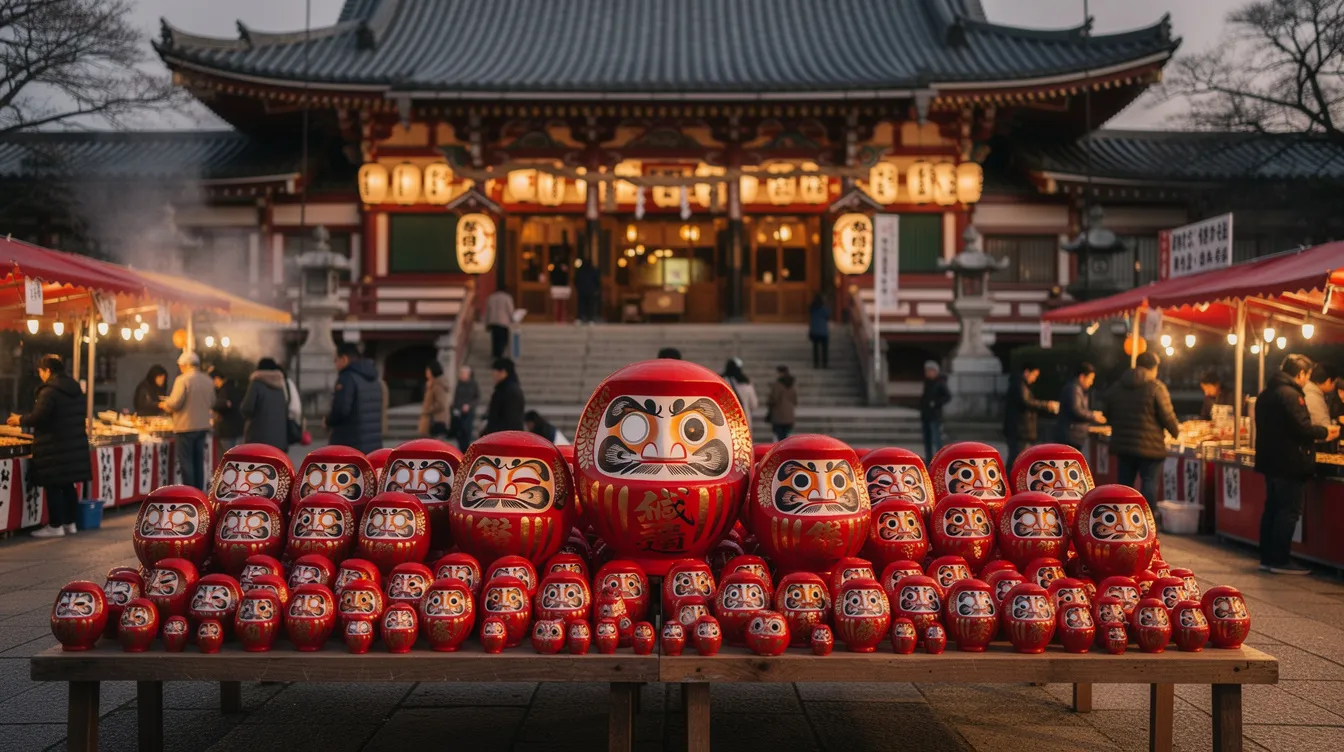
Four Reasons Overseas Visitors Love Daruma Dolls
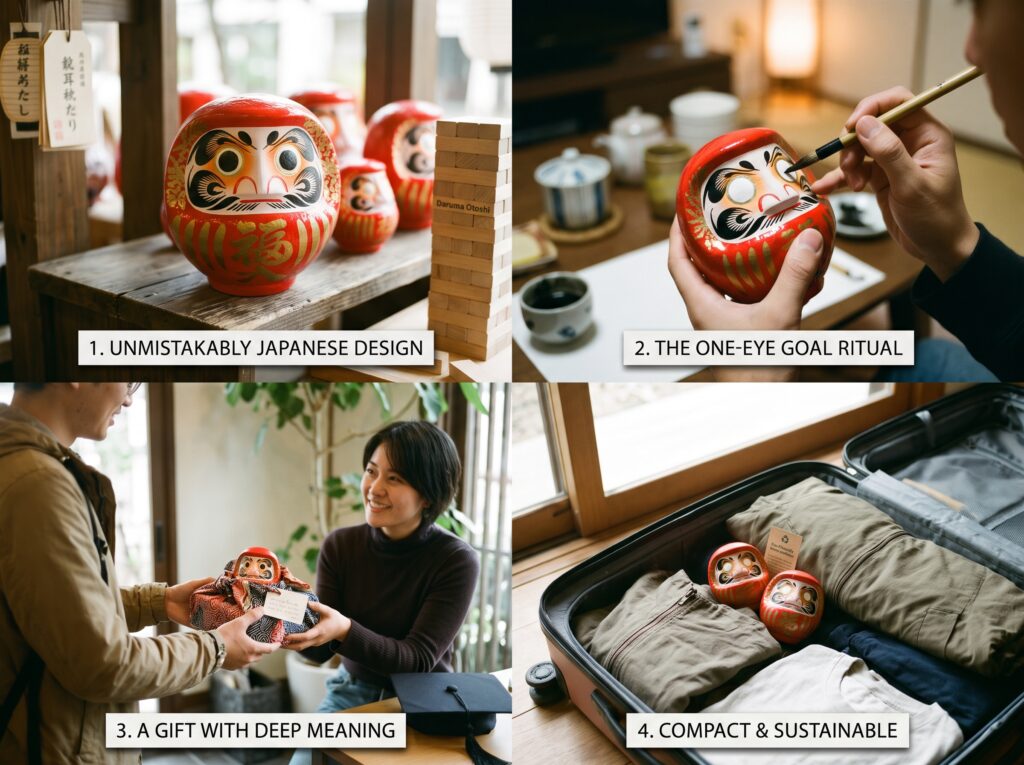
Even if you did not grow up in Japan, a daruma doll fills a universal need: the desire to commit to a dream and see it through. Here is why international visitors keep choosing daruma as their favorite souvenir.
Reason 1 – Unmistakably Japanese Design The bold red body, stylized facial hair evoking cranes and turtles, and hand-painted kanji make every daruma a compact piece of Japanese culture. Rooted in Zen Buddhism and Edo period folk art, a daruma looks striking on a desk, bookshelf, or studio wall anywhere in the world. You can find them in souvenir shops, at temples, and at craft fairs across Japan. Another familiar image is daruma otoshi, a traditional children’s game with stacked wooden blocks topped by a daruma head.
Reason 2 – The One-Eye Goal Ritual Painting one eye transforms the doll fills from decoration into personal commitment. The one eyed daruma staring at you daily is a quiet motivator. When you finally paint the second eye, the sense of achievement is real, and it is fun to share with friends. This is what it means to motivate daruma san into action alongside you.
Reason 3 – A Gift with Deep Meaning Giving a daruma is like saying “I believe in your dream.” It is ideal for graduations, new jobs, new businesses, housewarmings, or recovery from illness. Include a note explaining the eye-painting ritual so the recipient can enjoy the full tradition. Few gifts carry this kind of deep meaning.
Reason 4 – Compact, Lightweight, and Sustainable Paper mache construction makes daruma dolls light and travel-friendly. Japanese artisans often use recycled paper in the layering process, making the traditional craft both authentic and eco-conscious. Even a small palm-sized doll works perfectly to bring luck home.
Daruma Dolls as Good Luck Charms for Life’s Milestones
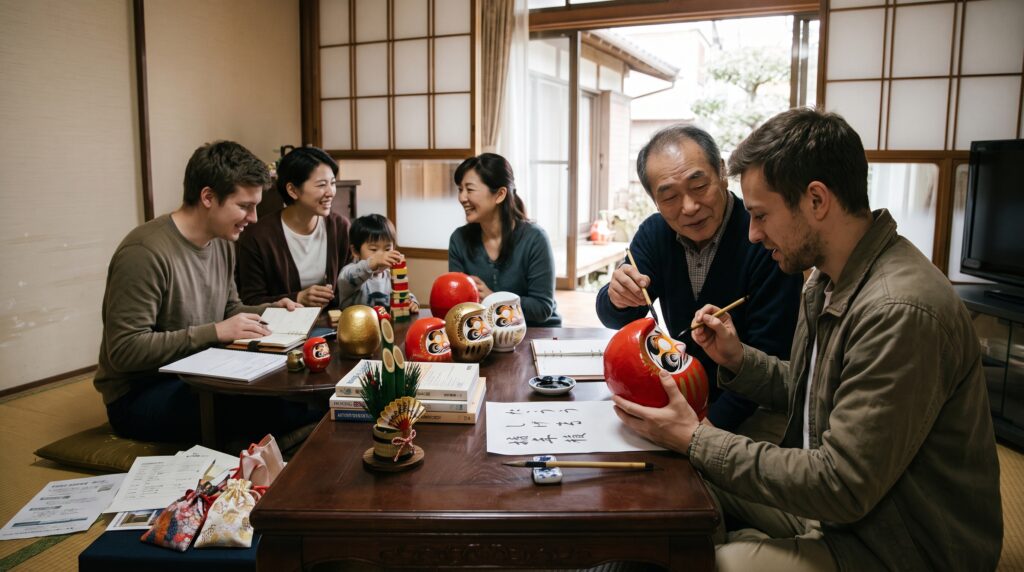
Daruma dolls are often used during New Year’s for goal setting, but they fit seamlessly into many life stages:
- New Year: Starting fresh, setting resolutions, inviting good luck for the year ahead.
- Exams & study abroad: Students use daruma to focus on passing university entrance tests. Gold daruma dolls are believed to bring financial luck for scholarship applications.
- Business & career: Store openings, startups, and promotions often begin with a new daruma. A prosperity white daruma signals a clean beginning.
- Health & recovery: People wish for safe surgery or steady rehabilitation, always pairing the charm with real effort and medical care.
- Personal goals: Learning Japanese, saving money for travel, writing a book, or picking up a creative hobby.
Daruma dolls are available year-round in various shops, not just at January fairs. Fans of Japanese pop culture often discover them alongside Japanese city pop artists like Mariya Takeuchi, reflecting how traditional motifs coexist with modern music and media. The daruma does not grant wishes magically. Its power lies in consistency, motivation, and gratitude, which is the core of every lucky charm worth having.
How Daruma Dolls Are Made: Traditional Paper Mache Craft
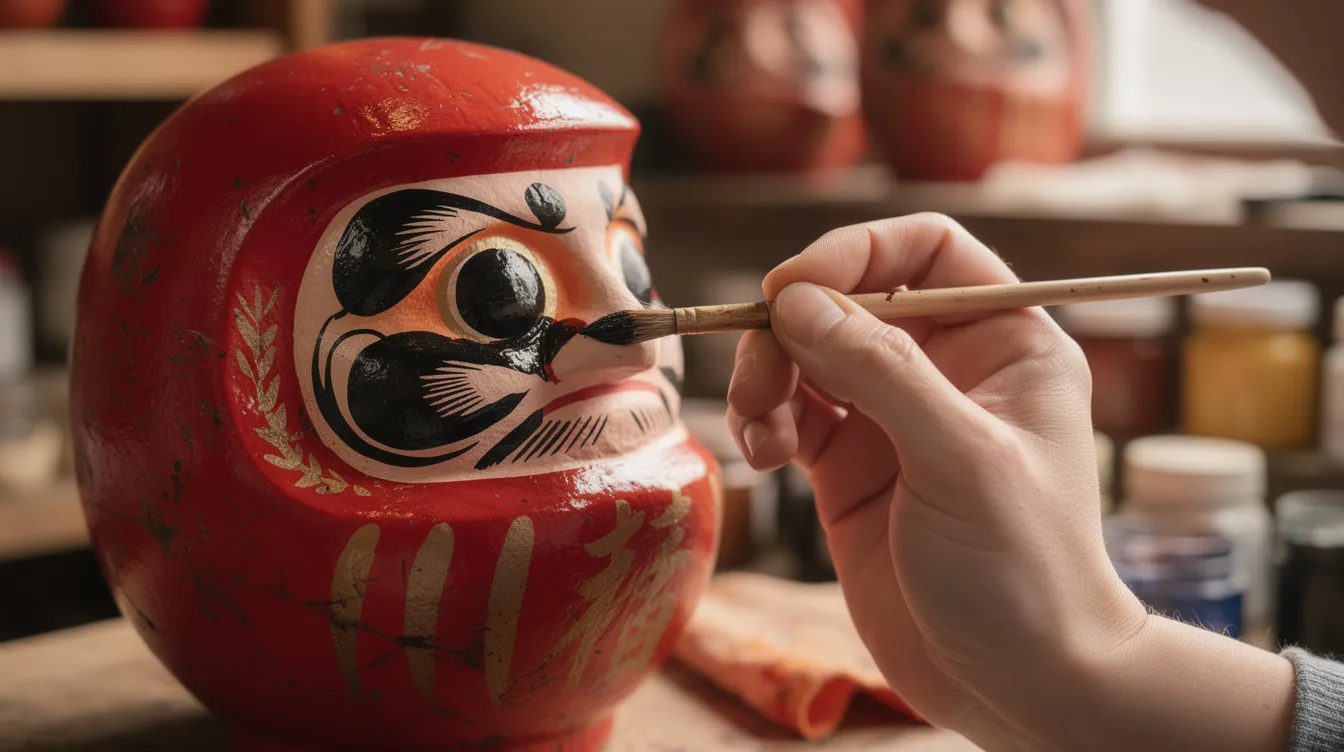
The craft begins with a wooden mold carved into the classic rounded shape. Japanese artisans layer recycled paper with paste over the mold, let it dry, then carefully remove the shell. The surface is smoothed, base-coated in red (or another color), and then the face and kanji are painted entirely by hand.
Takasaki City remains the heart of daruma production, with 80% of Japan’s daruma dolls made there. Around 900,000 dolls ship annually from workshops in the area. Because each face is hand-painted, every daruma has a slightly different expression, giving it a unique personality. Sizes range from palm-sized desk companions to towering figures over one meter tall. Daruma dolls are sold at temples and craft fairs throughout Japan, just as modern Japanese music from artists like Tatsuro Yamashita circulates worldwide and helps spread interest in contemporary and traditional Japanese culture alike.
Choosing and Gifting a Daruma Doll (Discovery Japan Mall Perspective)
When choosing your daruma, think about three things:
- Size: Small for everyday goals, larger for major milestones.
- Color: Match it to your intention (red for general good luck charms, gold for wealth, white for fresh starts).
- Inscription: Pick kanji that align with your wish, whether it is success, safety, or prosperity.
Gift ideas:
- For a friend launching a business: a red daruma with 商売繁盛 (business prosperity), along with a note about the eye ritual.
- For a graduate: a white or gold daruma symbolizing a bright new chapter and good fortune.
- For New Year: a classic Japanese daruma for the whole family to share one big wish. Authentic daruma dolls can be purchased online, and Discovery Japan Mall curates real items directly from workshop regions, making it safe and convenient for overseas customers.
Including a small printed “How to Use Your Daruma” guide in English helps non-Japanese recipients bring good luck into their lives with confidence.

Comments