
- A New Flower Blooming in J-Pop
- Who Are HANA? Overview of the bmsg Group
- Producer Chanmina: The Artist and Other Artists Behind HANA
- No No Girls: The Audition Show by SKY HI that Planted the Seeds
- From Trainees to HANA: Formation and Debut Story
- HANA Members: Profiles and Individual “Flowers”
- HANA Songs: Discography and Key Tracks
- No No Girls and the Message “You Can Make Your Flower Bloom”
- How Fans Can Support HANA and Watch No No Girls
- Your Story and HANA’s Blooming Future
A New Flower Blooming in J-Pop
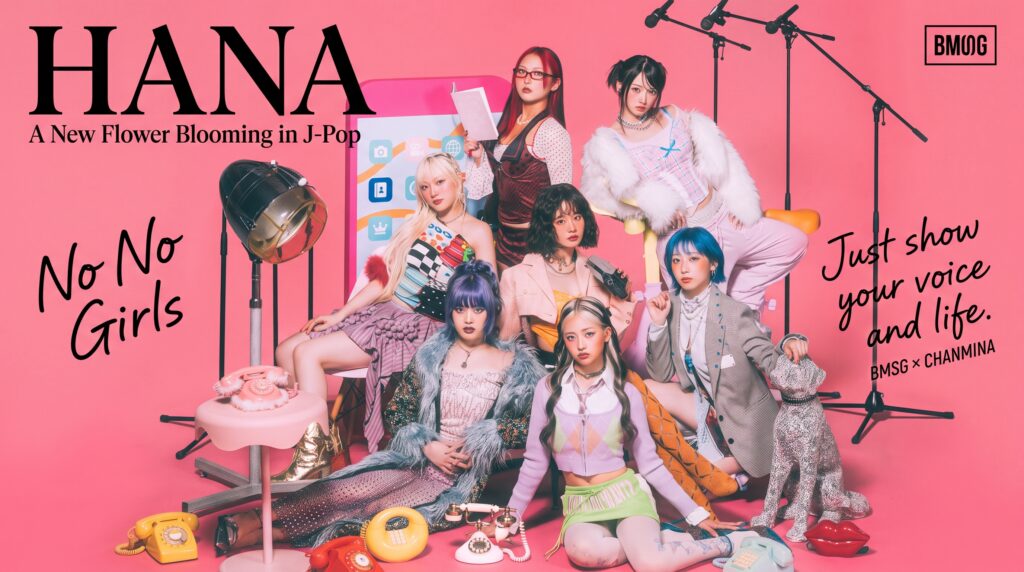
HANA is a seven-member Japanese girl group produced by rapper and singer Chanmina and formed through the No No Girls audition program in January 2025. The name means “flower” in Japanese, and the group’s core idea is simple: people can bloom in their own time, even after being told they are not enough. For J-pop fans, girl-group followers, and overseas listeners who want a clear introduction to HANA, this guide explains the group’s concept, each member’s profile, their songs and discography, the No No Girls story, Chanmina’s role in shaping them, and how to follow and support them from abroad.
In a Japan music scene where artists like SKY-HI have reshaped the business of building groups through his company BMSG, HANA represents a similar shift. Rather than assembling performers to fit a mold, Chanmina chose members whose life stories and imperfections became part of the art itself, which is exactly why the group stands out to anyone interested in a more honest kind of pop. Discovery Japan Mall introduces HANA from a fan’s view, helping international readers discover a group whose message of individuality and resilience can feel as meaningful as their music.
Who Are HANA? Overview of the bmsg Group
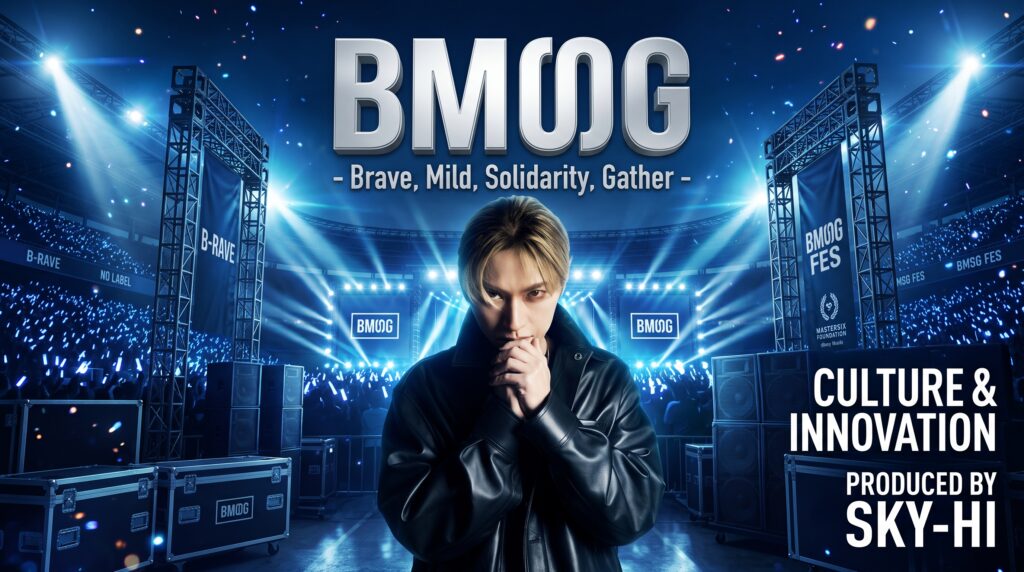
HANA is a Japan-based girl group produced by Chanmina, formed through the No No Girls audition program in 2025. They are signed to No Label Music under Sony Music Japan’s Mastersix Foundation and managed by BMSG’s B-RAVE division. The label structure reflects a deliberate choice: Chanmina’s creative control paired with BMSG’s infrastructure for artist development.
The group concept centers on individuality. Each member carries personal history, including past rejection, self-doubt, and things others called weaknesses. Chanmina’s framing invites them to treat those “thorns” as part of their flower rather than obstacles to cut away. Unlike traditional idols organized by a company for uniform appeal, HANA asks each member to address her own story and perform from that place. Their debut came after the No No Girls final on January 12, 2025, and they are active mainly in Tokyo with continuing growth in overseas attention.
Producer Chanmina: The Artist and Other Artists Behind HANA
Chanmina (real name Mina Otomonai) is a Korean-Japanese rapper and singer who made her major-label debut in 2017. Her catalog includes tracks like “Never Grow Up” and “Bijin,” and her work spans hip-hop, pop, and R&B. She started studying ballet, piano, and violin at age 3, later turned to rap in high school after hearing Big Bang, and built a career on writing about identity, gender, and the kind of honesty that feels uncomfortable.
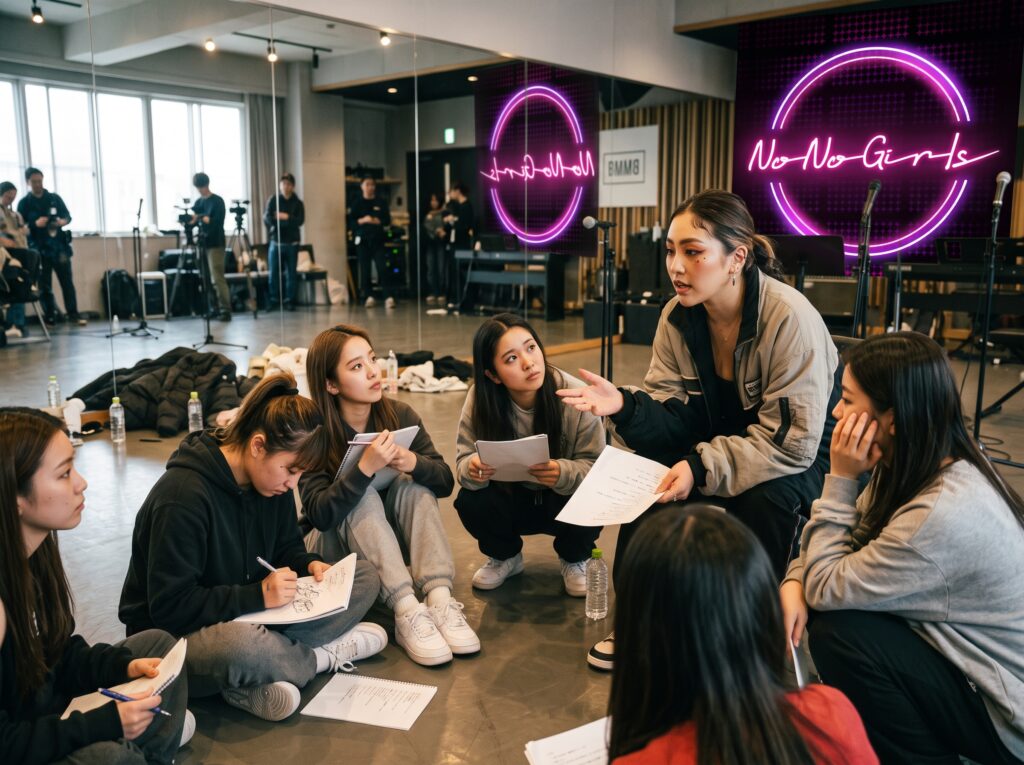
She took on the role of producer and host for No No Girls, guiding contestants through vocal, rap, dance, and self-production challenges. In interviews she has said she wants “a place where girls who feel different can still shine.” That philosophy is what separates HANA from a standard audition group. Chanmina did not search for the most polished performers. She looked for people who could communicate something real. Her approach shares common ground with SKY-HI at BMSG, whose motto translates to “so as not to kill talent,” but Chanmina’s creative involvement goes further into the songwriting and the emotional education of each trainee.
No No Girls: The Audition Show by SKY HI that Planted the Seeds
No No Girls is a televised and streamed audition program that ran in 2024 and 2025, with Chanmina as its producer. The show was not a closed audition; over 7,000 people from Japan, Korea, the USA, and other countries applied without restrictions on height, weight, or age. Applications eventually closed at 30 finalists after document and face-to-face screening.
The structure involved multiple rounds. Early episodes split trainees into teams of five to six, performing songs Chanmina selected to force them away from mimicry. She wanted to hear each voice, not a copy. Later rounds tested creative ability: writing original lyrics, building choreography, and producing self-introduction stages. The system was designed to reward self-expression over technical perfection.
One concrete occasion stands out. In Round 3, trainee MAHINA was eliminated. Chanmina saw enough potential in her rap and writing that she brought MAHINA back for extra screening. That decision shaped MAHINA’s arc for the rest of the show and became an emblem of the program’s core message: your time to bloom is not the same as anyone else’s.
The final event, held at K Arena Yokohama before roughly 20,000 people, asked each finalist to perform solo and as a group. Episodes are available to watch on YouTube and streaming platforms, and fan community translations help international viewers participate in the experience.
From Trainees to HANA: Formation and Debut Story
On January 12, 2025, Chanmina announced the seven members who would join HANA: CHIKA, NAOKO, JISOO, YURI, MOMOKA, KOHARU, and MAHINA. The reveal happened during the No No Girls final, where Chanmina explained the group name and its meaning. She told the chosen members and those who did not debut that “this is not the end, but the beginning.” The trainees who were not selected were told their bloom remains ahead.
The emotional arc of that evening was shaped by years of individual struggle. Several members had auditioned for other programs in the past. MOMOKA had been involved in Produce 101 Japan The Girls. CHIKA had tried out for Little Glee Monster auditions. For them, being selected felt like an answer to a lot of closed doors. The mix of skills in the final lineup covers strong vocalists, a rapper, dancers, and creative members who write lyrics.
Within weeks, HANA released their pre-debut digital single “Drop” on January 31, 2025. They opened official social media accounts (group account and individual member accounts), and fans, who call themselves HONEYs, began to share content across platforms. The group’s major-label debut single “Rose” followed on April 23, 2025.
HANA Members: Profiles and Individual “Flowers”
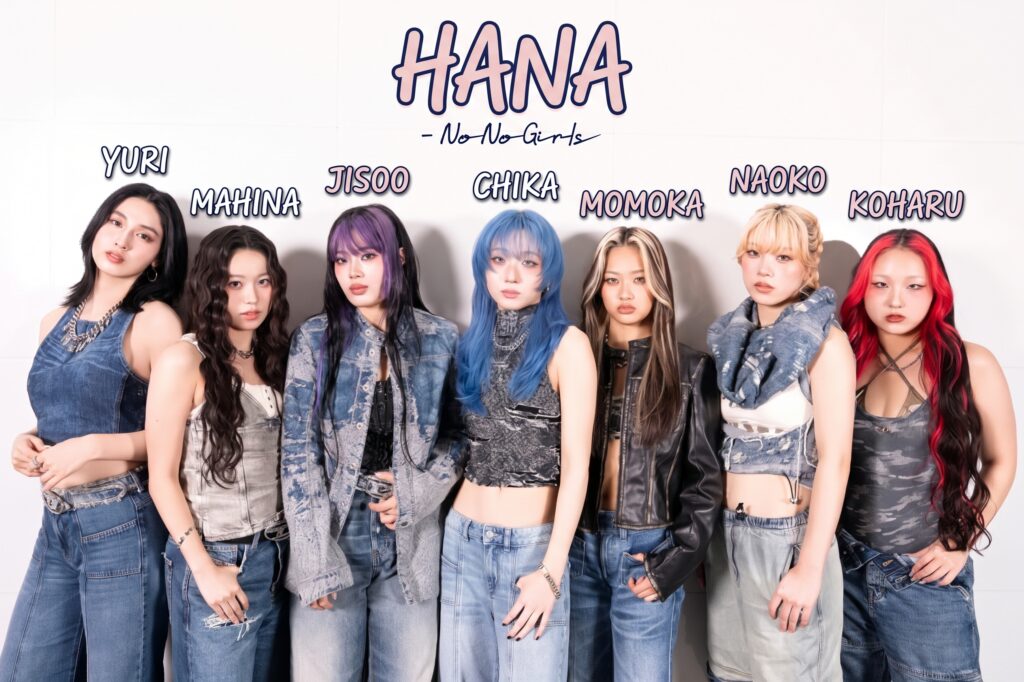
Each member brings a distinct story. Here is a brief look at all seven.
JISOO was born in 2000 in Incheon, South Korea. She is the group’s strongest vocalist, with a disciplined work ethic forged through years of home recording. During No No Girls, she struggled with self-pressure and learned to let her voice breathe rather than force control.
MOMOKA, born 2004 in Tokyo, carries a low, husky vocal tone and dramatic stage presence. Her final-round performance used an ink-splattered visual motif that drew a lot of comment from fans online.
CHIKA, born 2004 in Fukuoka Prefecture, is known for her whistle-register high notes. She lacked confidence in rap early in the audition but grew through every challenge Chanmina set.
NAOKO, born 2005 in Osaka, has mixed Japanese and Thai heritage. Her ability to shift between gentle and sharp vocal tones made her performances feel unpredictable in the best way.
YURI, born 2006 in Tokyo, has Japanese-Filipino heritage. She is often described as the mood-maker whose warmth on stage makes the group’s relationships visible to the audience.
KOHARU, born 2005 in Saitama, is HANA’s strongest dancer. She took leadership during team choreography tasks and helped others learn routines under pressure.
MAHINA, born 2009 in Tokyo, is the youngest at 16. Her rescue from elimination in Round 3 became the show’s defining story of delayed bloom. She writes rap lyrics and represents what happens when someone who feels like they suck at everything discovers the one thing they do not.
Together, HANA reads less like a uniform group and more like a bouquet: seven different flowers, none trying to look like the others.
HANA Songs: Discography and Key Tracks
“Drop” was released digitally on January 31, 2025, as HANA’s pre-debut single. The track blends pop and soft hip-hop, showcasing group vocal harmonies and giving each member’s voice its own space. It was originally performed as the group mission song during the No No Girls final.
“Rose” arrived on April 23, 2025, as the major-label debut. The song hit No. 1 on the Billboard Japan Hot 100 the week of April 9 and reached No. 3 on Oricon. Its lyrics use the rose as a metaphor for blooming on your own schedule, with a sound that mixes R&B grooves and pop melodies. The music videos for both tracks use floral imagery, petal motifs, and contrasting soft and edgy fashion; fans who read line-distribution breakdowns note fairly balanced screen time across members.
“Cold Night” serves as the image song for the second season of the anime Medalist. It appeared on HANA’s debut studio album, also titled Hana, released digitally on February 23, 2026. The album expands the group’s palette with empowerment tracks, ballads, and faster-tempo pop. Across all releases, Chanmina’s influence is visible: lyrics stay honest, sometimes raw, in a way that distinguishes HANA from more polished J-pop or K-pop-influenced releases.
No No Girls and the Message “You Can Make Your Flower Bloom”
The phrase “you can make your flower bloom” is not a slogan painted on a wall. It comes from specific moments. When Chanmina asked finalists what “No’s” they had faced, each trainee spoke about being told she was not pretty enough, not talented enough, or not the right kind of person. Chanmina’s response was consistent: use that experience as material, not as a wall.
This message speaks beyond the audition stage. For the fans watching, many of whom spend time comparing themselves to others at school or work, the show offered a view of growth that does not depend on being first or best. BMSG’s broader culture, where SKY-HI encourages artists to “be themselves,” reinforces this. HANA exists inside a larger shift in Japanese pop culture where the power of an artist comes from her story, not from fitting a template. For the sake of anyone who has been told “no,” that shift matters.
How Fans Can Support HANA and Watch No No Girls
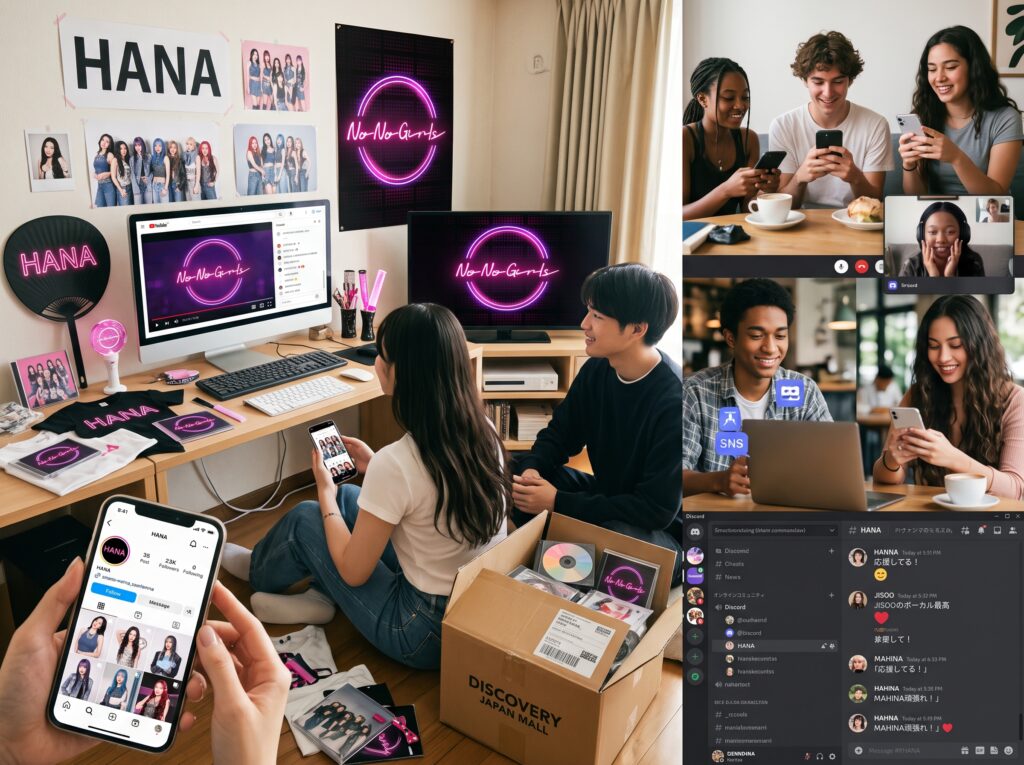
International fans can access No No Girls episodes through official streaming services and YouTube highlight videos. HANA’s official website and social media accounts (Instagram, TikTok, YouTube) provide regular content, and individual members’ accounts let you learn about each person directly. You do not need to send an email to sign up; following their public accounts is enough to join the community.
Fan communities share translations and episode summaries, so language barriers do not have to keep you from the experience. For the fans watching, these communities can also serve as a supportive buffer around the artists, helping protect them from outside criticism while reinforcing the show’s message that music should feel personal. You can also visit Discovery Japan Mall’s J-pop CD and DVD selection to find official merchandise and support the group through legitimate channels. On occasion, fan projects coordinate to help HANA chart internationally; these are easy to participate in and help the group’s visibility.
Your Story and HANA’s Blooming Future
Chanmina’s vision started with a question: what happens when you stop telling girls “no” and start asking them to show who they really are? No No Girls answered it. Seven members, each carrying her own history of rejection and growth, formed HANA and released music that reached No. 1 on Billboard Japan within months of their debut. The songs, from “Drop” to “Rose” to “Cold Night,” carry a message that your time to bloom is yours alone.
Looking ahead, HANA’s trajectory points toward more releases, live events, possible collaborations with other BMSG artists, and increasing visibility outside Japan. With members who hold rights to their own creative expression and a producer who protects that, HANA is building something designed to last for years.
You can make your flower bloom. Not on someone else’s schedule, not in someone else’s shape. Start by pressing play, and see what you find.

Comments