- Introduction: Rice, Japanese Daily Life, and the Secret of the Rice Cooker
- From Ancient Fields to Modern Kitchens: Why Japanese People Eat Rice Almost Every Day
- How Japanese Rice Cookers Differ from Overseas Models
- Step-by-Step: How to Cook Rice Perfectly in a Japanese Rice Cooker
- Beyond Plain White Rice: Versatile Cooking with a Japanese Rice Cooker
- Key Features that Matter: Keep Warm, Delay Timer, and Everyday Convenience
- Why Discovery Japan Mall Recommends Zojirushi NS-YMH10 for Authentic Japanese Rice
- Conclusion: Bringing Japanese Rice Culture into Your Home
Introduction: Rice, Japanese Daily Life, and the Secret of the Rice Cooker
It is 6:45 on a weekday morning in Tokyo, 2026. Steam curls from the lid of a rice cooker that finished its cooking cycle minutes ago, filling the kitchen with a faint, sweet flavor that signals breakfast is ready. A mother scoops glossy white rice into ceramic bowls while miso soup warms on the stove. This scene repeats itself in millions of Japanese homes every single day.
The reason is embedded in the language itself. The Japanese word “gohan” means both cooked rice and meal – rice is not a side dish, it is the meal. Rice is called the essence of Japanese culture, and the numbers confirm it: Japanese households consume about 9 million tons of rice annually, making it the most consumed food staple in Japan. Japanese people insist on specific texture, aroma, and taste in every bowl, which is why a Japanese rice cooker uses micom and induction heating to control soaking, boiling, simmering, and steaming more precisely than many overseas models, producing rice that is glossy, evenly cooked, and subtly sweet.
For readers outside Japan who want to cook authentic Japanese rice at home, improve everyday texture and flavor, or choose a reliable appliance with advanced features, this guide explains the history and culture behind Japanese rice, how Japanese cookers differ from overseas models, step-by-step cooking techniques, versatile uses beyond plain rice, and why Discovery Japan Mall recommends the Japanese-made Zojirushi NS-YMH10.
From Ancient Fields to Modern Kitchens: Why Japanese People Eat Rice Almost Every Day
Wet rice cultivation arrived in Japan via the Korean Peninsula between roughly 400 BC and 300 BC, and it changed everything. Rice has been cultivated in Japan since 400 BC, transforming scattered hunter-gatherer groups into settled agricultural communities that built paddy fields and irrigation systems; to grow rice required shared labor and coordinated water use, reinforcing cooperative habits still visible in Japanese life today.
Rice quickly became more than food. Throughout the Edo period, rice was historically used as currency – land value and samurai stipends were measured in koku, the volume of rice needed to feed one person for a year. Rice is also a key offering in Shinto rituals and weddings, tying it to spiritual as well as economic life. Because rice meant survival, wealth, and divine favor, eating it daily became culturally normal. Brown rice was historically the most common rice in Japan until polished white rice replaced it in the late 19th century, but the habit of daily consumption endured.
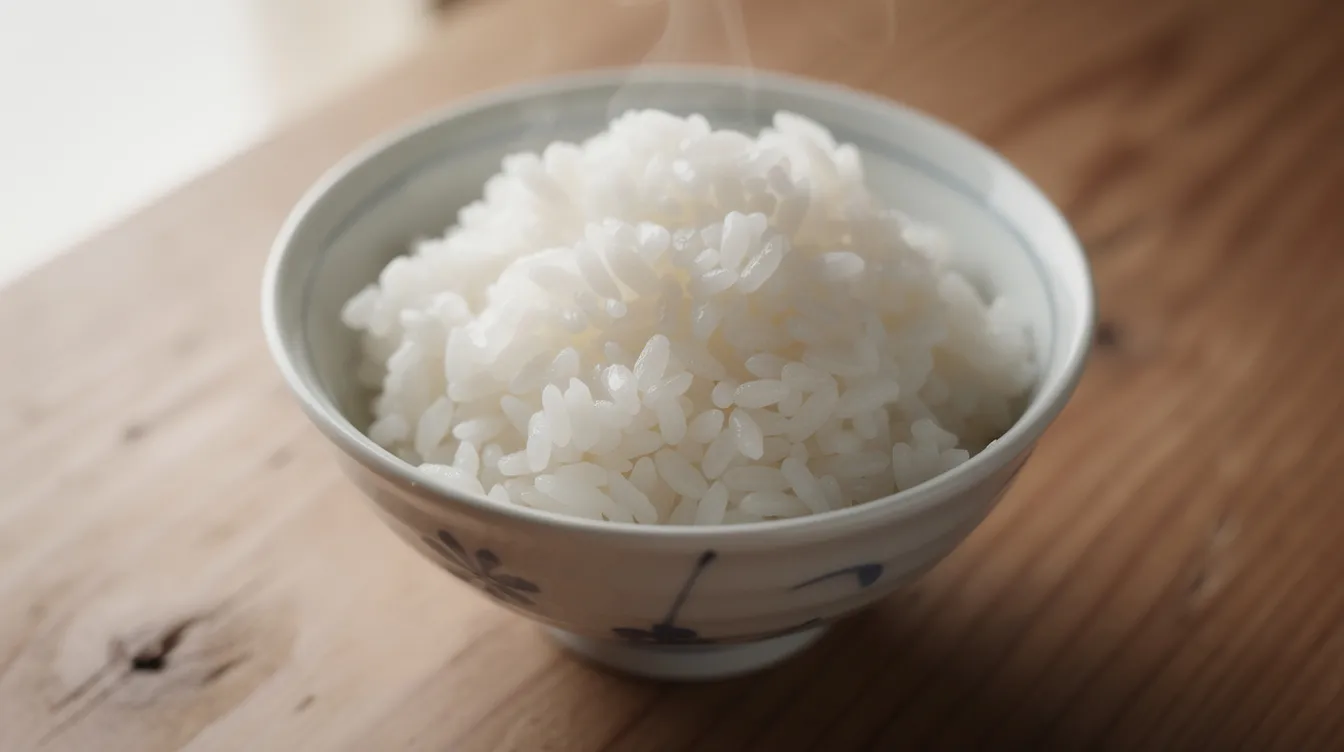
Even in 2026, a typical Japanese family might eat rice at breakfast with grilled fish and pickles, pack rice into a bento for lunch, and sit down to dinner with donburi or mixed rice dishes – rice from morning to night, across every generation, even though in recent decades few people personally grow rice anymore.
Around 75% of Japanese people eat short-grain rice, and that preference still shapes everyday meals.
Short-grain rice is also the preferred rice for sushi in Japan.
Onigiri are popular rice balls sold in convenience stores.
How Japanese Rice Cookers Differ from Overseas Models
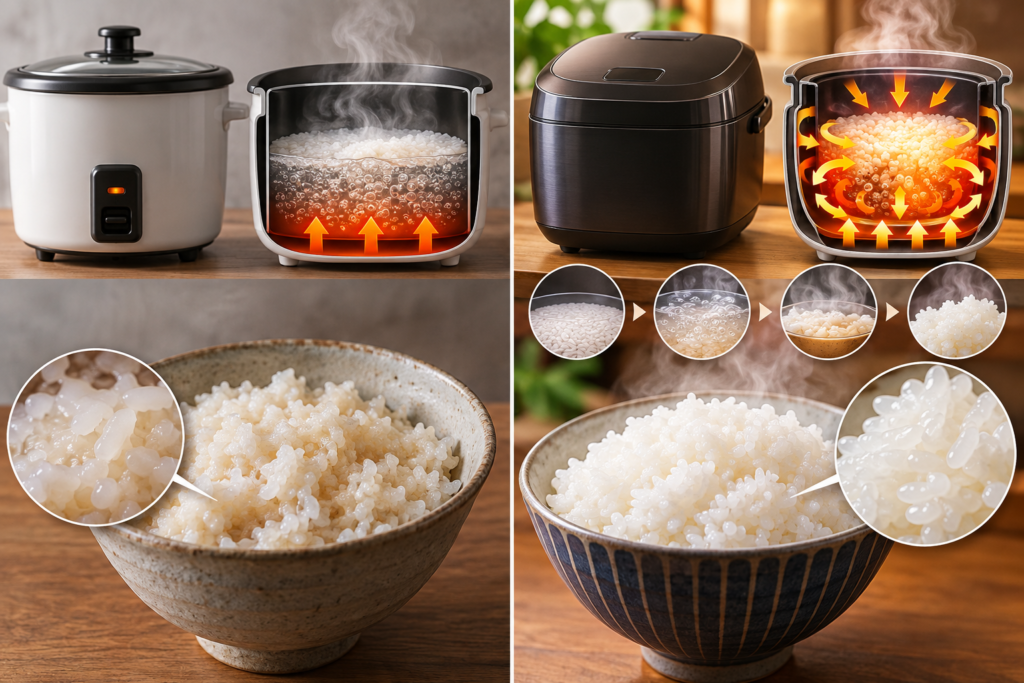
Many overseas rice cookers are essentially on/off boilers. Traditional rice cookers use a bottom heating plate to cook rice, with a simple thermostat that cuts power when water evaporates. The result is often unevenly cooked rice – hard cores surrounded by mushy exteriors.
Japanese rice cookers operate differently. Micom rice cookers use programmed cooking flows managed by a microcomputer chip that controls soaking, boiling, simmering, and steaming phases automatically. Fuzzy logic technology adjusts temperature and cooking time dynamically, compensating for variations in water amount, rice quantity, and ambient temperature. Advanced rice cookers feature dedicated settings for different rice varieties – white, brown, long grain, mixed rice, sushi rice, and porridge.
At the higher end, IH models utilize induction heating technology for cooking, generating heat across the entire pot rather than just the bottom, while pressure cooking models provide superior cooking results by raising the boiling point for deeper starch gelatinization. Triple heater technology ensures even cooking from all sides. Thicker inner pots retain heat better and distribute it uniformly, and those presets matter because different rice varieties cook differently – the NS-YMH10 from Discovery Japan Mall, for example, uses a 1.7 mm thick rounded black pot designed for convection-style heat circulation.
A cheaper version of a basic overseas cooker simply cannot replicate these stages. The difference in the final bowl – glossy, evenly cooked, subtly sweet – is immediately noticeable.
Step-by-Step: How to Cook Rice Perfectly in a Japanese Rice Cooker
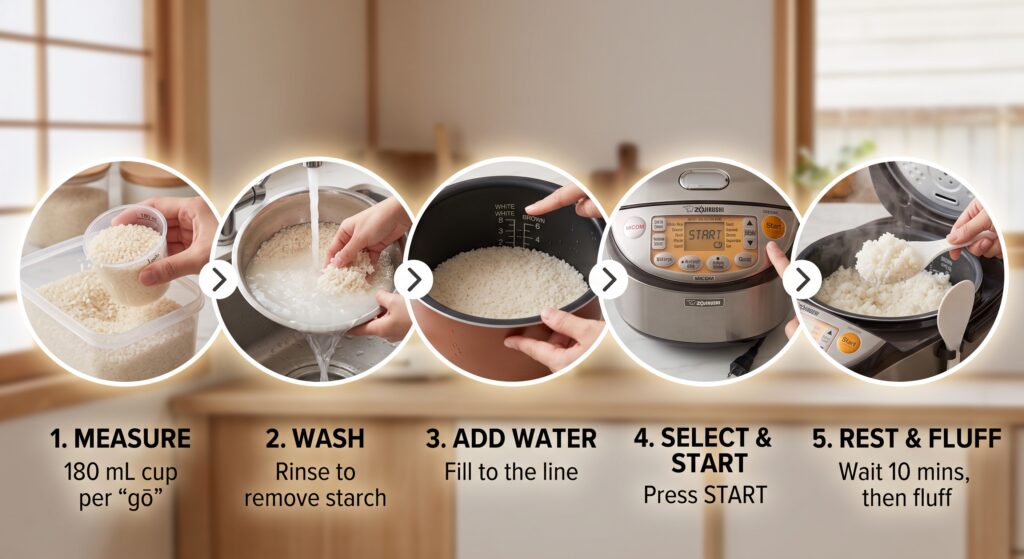
Once you follow these steps, you can consistently produce perfect Japanese rice at home. Proper use of rice cookers can help achieve perfect textures consistently, regardless of your experience level.
Measure: Use the included rice measuring cup (180 mL per “gō”) for accurate rice measurement. One cup of uncooked rice yields about 2 to 3 cups of cooked rice, so plan accordingly.
Wash: Wash rice to remove excess starch before cooking. Rinsing rice can remove excess surface starch and prevent gumminess – gently swirl in cold water and drain 2–3 times until the water runs nearly clear.
Add water: Different rice types require specific water-to-rice ratios for optimal cooking. White rice typically requires a 1:1 water-to-rice ratio. Sushi rice uses a 1:1.1 water-to-rice ratio and requires washing. Jasmine rice generally uses a 1:1 to 1:1.25 water-to-rice ratio. Brown rice typically requires a 1:1.5 to 1:2 water-to-rice ratio. Fill to the corresponding line inside the pot for your chosen type of rice.
Select and start: Select the appropriate menu setting for different rice types – white, brown, long grain, mixed, or porridge. A micom cooker like the NS-YMH10 then manages the entire cooking cycle: soaking, boiling at high heat, simmering, and a final steaming phase. The cooking time for white rice is typically 30–50 minutes; brown rice can take 90 minutes or more, but the cooker handles this automatically if you use the delay timer.
Rest: Rice should rest in the cooker for 10 to 15 minutes after cooking before you fluff it with the included spatula holder or rice paddle. This final step lets moisture redistribute evenly for fluffy rice throughout.
Beyond Plain White Rice: Versatile Cooking with a Japanese Rice Cooker
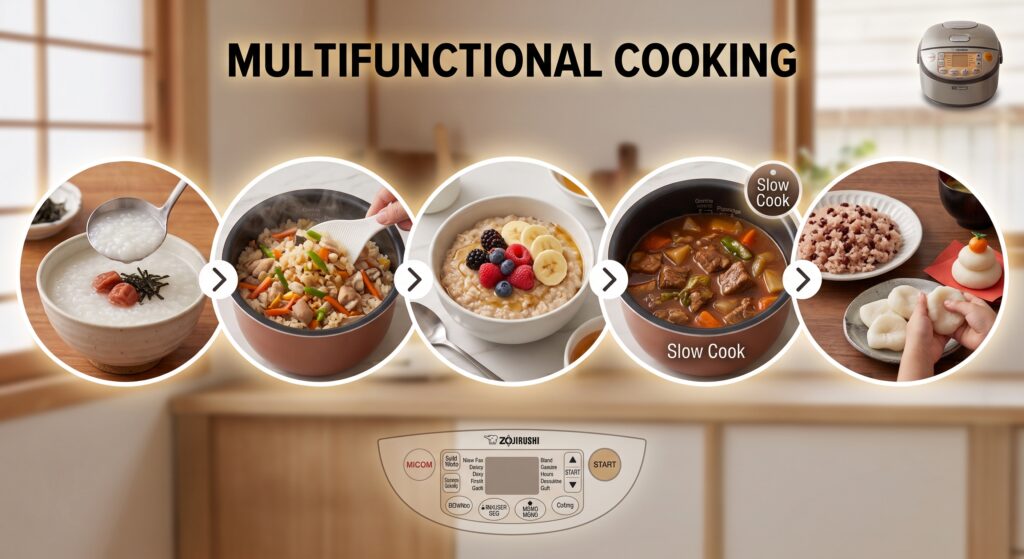
Modern Japanese rice cookers are not just rice machines – they are compact multi-cookers. Electric rice cookers can simplify the cooking of various grains well beyond just rice. Rice cooker settings should prioritize specific grain types and models, and the NS-YMH10 offers menus for white rice, brown rice, long grain rice, sushi rice, mixed rice, thick and thin porridge, sticky rice (okowa), and even a slow cook or stew mode.
Here is what you can actually make:
- Breakfast porridge (okayu): A gentle, warming rice porridge using the dedicated setting – far easier than stovetop monitoring
- Takikomi gohan: Mixed rice with vegetables, chicken, and dashi cooked together for dinner; donburi are hearty rice bowls topped with various ingredients, and many of those toppings pair well with freshly cooked rice from the same appliance
- Steel cut oats and steel cut oatmeal: The precise heat control prevents scorching, making the cooker excellent for hot cereals and other grains
- Stews and soups: Use the slow cook function to simmer meat and beans into rich stews
- Sticky rice for sekihan or mochi: Sekihan is a celebratory dish made with rice and adzuki beans, while mochi also appears in seasonal traditions such as kagami mochi for New Year’s; the GABA brown rice setting activates beneficial amino acids, specifically gamma aminobutyric acid, through extended soaking – ideal for health-conscious eaters
Rice cookers can also steam vegetables while cooking rice, and beyond cooked grains, Japanese rice culture extends to rice flour used in traditional sweets and crackers. A Stanford program on Japanese food once noted how one appliance can serve as a window into an entire cuisine – and a quality rice cooker proves this daily, much like Discovery Japan Mall’s latest arrivals and trending Japanese products reveal what’s current in everyday Japanese life.
Key Features that Matter: Keep Warm, Delay Timer, and Everyday Convenience
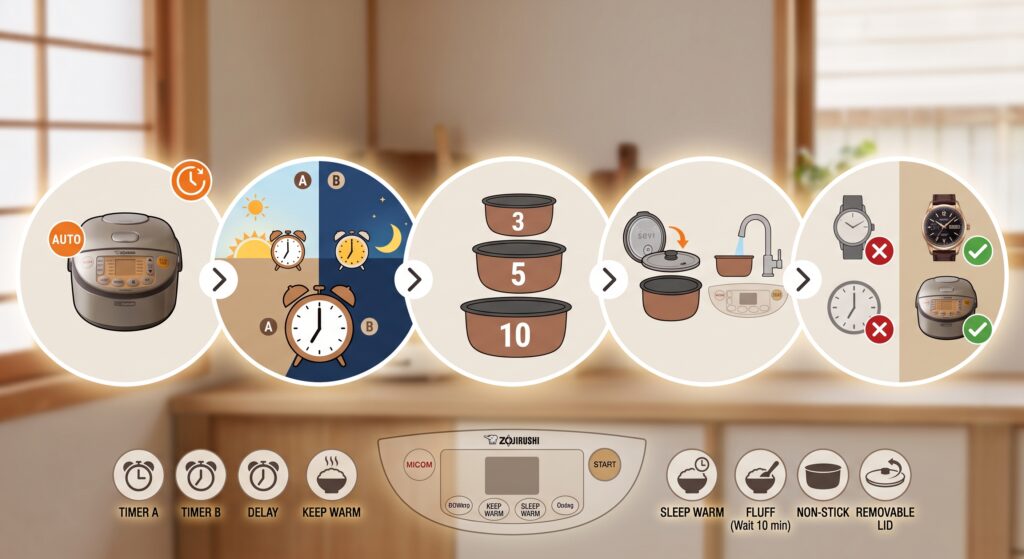
Beyond taste, the daily convenience of a Japanese rice cooker is what makes it indispensable. Keep-warm functions can preserve rice for several hours without drying it out, and models like the NS-YMH10 offer both high and low warm setting options, including a “sleep” mode that keeps rice fresh overnight without yellowing.
The delay timer is a game-changer for busy households. The NS-YMH10 includes a two-memory timer: set the cooker at 23:00 and wake up to perfect rice at 7:00, or schedule brown rice to finish right when you walk through the door for dinner. Imagine a weekday morning in London or Brussels – the aroma of freshly cooked Japanese rice greeting you before your coffee is even brewed.
Rice cooker capacity ranges from 3 cups to over 10 cups. A 3-cup rice cooker is ideal for singles or couples, while the NS-YMH10 at 5.5 cups suits families, and its 10-cup sibling NS-YMH18 handles maximum capacity needs. Non-stick coatings make cleanup easier but require careful handling – avoid metal utensils. Removable inner lids and smooth control panels facilitate easy cleaning, and the pot itself can withstand washing rice directly inside it.
Many cheaper overseas cookers lack reliable delay timers, accurate keep-warm functions, or settings for brown rice and mixed rice dishes. The difference between dried, scorched rice and a perfectly warm bowl hours later is the difference between a basic appliance and one of the best rice cookers on the rice market, as distinct as a generic timepiece versus Japan-made watches and limited editions on Discovery Japan Mall.
Why Discovery Japan Mall Recommends Zojirushi NS-YMH10 for Authentic Japanese Rice
From our perspective at Discovery Japan Mall, the Zojirushi NS-YMH10 is one of the most practical Japanese-made rice cookers for overseas users seeking authentic taste at 220–230V. Its 1.7 mm thick rounded black pot and sustained high-heat cooking throughout the cycle extract the sweet flavor and chewy texture that define Japanese rice at its best.
The menu covers white rice (standard and maturation soak), brown rice, long grain rice, mixed rice, sushi rice, porridge, okowa, and stew – making it suitable for both Japanese cuisine and international dishes. Whether you eat jasmine, basmati, or Koshihikari, the most popular rice variety in Japan, this one machine adapts to the preferences of japanese consumers. Akita Komachi was developed in 1975 in Akita Prefecture as one of several Japanese varieties selectively bred for distinct traits. Sasanishiki is another notable variety, known for its soft texture and shine. Manuals come in English, Chinese, Korean, and Japanese, specifically designed for overseas buyers.
Shipping is available internationally with transparent pricing – for example, approximately ¥9,000 to Belgium, excluding customs duties. The 220–230V (50/60Hz) compatibility covers much of Europe and Asia, though UK users will need a plug adapter. For those who want to explore IH technology or browse our full rice cooker collection, Discovery Japan Mall’s online marketplace for authentic Japanese goods offers options at every level. The NS-YMH10, however, represents the sweet spot: Japanese engineering, genuine versatility, and a price that makes sense for anyone serious about food security in their kitchen – meaning consistently good, reliable meals from a single, trusted appliance.
Conclusion: Bringing Japanese Rice Culture into Your Home
For over 2,000 years, rice has shaped every corner of Japanese culture – from ancient paddy fields where rice farmers cooperated to feed their communities, to modern apartments where a Zojirushi rice cooker quietly finishes its cycle before dawn. Japanese people do not eat just rice; they eat rice that has been measured, washed, soaked, and cooked with intention. That relationship between a country and its staple food is something worth experiencing, no matter where in the world you live.
The comparison is straightforward: Japanese rice cooked in a quality Japanese machine versus long grain in a basic overseas cooker. The texture, sweetness, and everyday convenience all improve dramatically. Whether you want to make plain white rice with miso soup in the traditional ichi juu san sai style, meaning rice served with one soup and three sides, experiment with mixed rice dishes and brown rice, or explore dishes like sekihan and takikomi gohan, a dedicated Japanese cooker gets you closer to Japanese cuisine as it is tasted in Japan itself. Ceremonial traditions also connect rice with sake, and learning through cooking can even support cross cultural education.
We invite you to visit the Zojirushi NS-YMH10 product page, read real user reviews, confirm voltage compatibility for your country, and take the first step. Your first bowl of truly Japanese-style cooked rice – glossy, warm, and quietly perfect – can become part of your daily life starting this week.


Comments