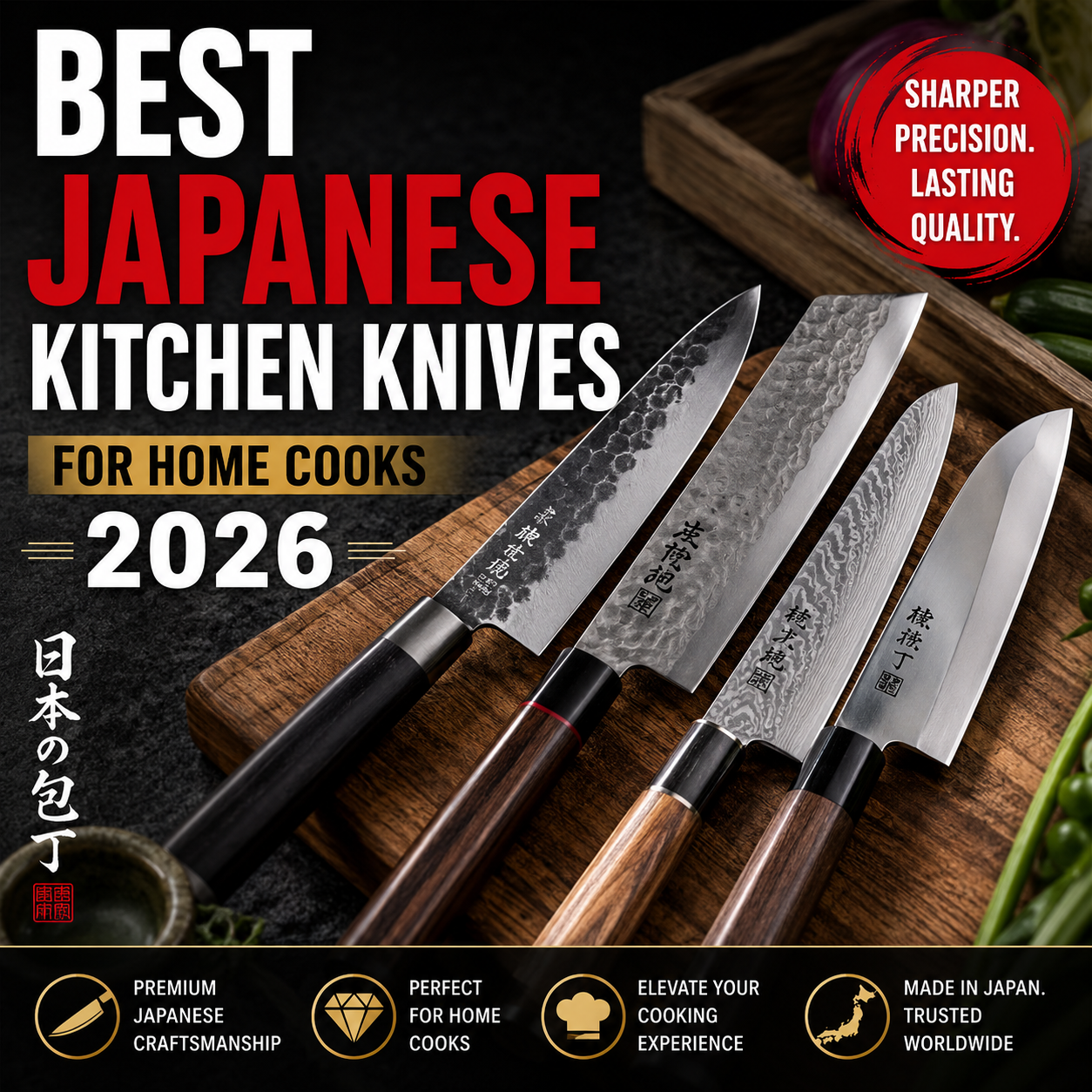
There is a specific kind of magic that happens the first time you use a Japanese kitchen knife. If you are used to the heavy, robust blades common in Western kitchens, the transition feels less like using a tool and more like an extension of your hand. Japanese knives prioritize precision, thinness, and incredible hardness. In 2026, the market for these artisan tools has expanded, making it easier than ever for home cooks to access blades that were once reserved for professional sushi chefs in Osaka and Tokyo.
- I tested the best Japanese kitchen knives for home cooks in 2026
- Understanding Japanese knife types: Gyuto, Santoku, and beyond
- Selection criteria: What makes a Japanese knife “the best”
- Comparison of the best Japanese kitchen knives for 2026
- The 7 best Japanese kitchen knives for every home cook in 2026
- Caring for your Japanese knives: Pro maintenance tips
- Find authentic Japanese knives at Discovery Japan Mall
- Frequently Asked Questions
- What is the most versatile shape for a best Japanese kitchen knives 2026 search?
- Is a Santoku better than a Gyuto in the context of best Japanese kitchen knives 2026?
- Do I need to worry about rust with the best Japanese kitchen knives 2026?
- Why are the best Japanese kitchen knives 2026 more expensive than Western brands?
- Where can I buy authentic models found in a best Japanese kitchen knives 2026 guide?
I tested the best Japanese kitchen knives for home cooks in 2026
You might be wondering why 2026 is the year to finally upgrade your kitchen game. The answer lies in the evolving needs of the modern home cook. We are spending more time preparing fresh, whole ingredients, and we want tools that make that process a joy rather than a chore. A high quality Japanese knife does not just look beautiful on your magnetic strip; it changes the way you interact with food.
The “shokunin” spirit, a Japanese philosophy of craftsmanship where an artisan dedicates their life to perfecting a single skill, is baked into every blade on this list. Whether you are looking for your first “real” chef’s knife or adding a specialized vegetable slicer to your collection, this guide covers the absolute essentials. We have looked at everything from versatile Gyutos to compact Santokus, focusing on brands that balance traditional methods with modern usability.
If you are ready to see what is trending right now, check out our current bestsellers to get a sense of what other enthusiasts are choosing.
Understanding Japanese knife types: Gyuto, Santoku, and beyond
Before you buy, it is important to know which shape fits your cooking style. Japanese cutlery is highly specialized, but most home cooks only need two or three core shapes to handle 95% of kitchen tasks.
Gyuto (Chef’s Knife)The Gyuto is the Japanese equivalent of a Western chef’s knife. It literally translates to “beef sword,” reflecting its origins as a tool for cutting meat. However, it is an incredibly versatile all-purpose blade. It typically has a gentle curve that allows for a slight rocking motion, though it excels at push-cuts and slicing. If you only want one Japanese knife, start here.
Santoku (Three Virtues)The Santoku is perhaps the most popular choice for home kitchens in Japan. The name refers to its “three virtues”: its ability to handle meat, fish, and vegetables with equal ease. It features a flatter edge and a rounded “sheep’s foot” tip, making it feel very safe and controlled. It is usually shorter than a Gyuto, which is a plus for those with smaller hands or limited counter space.
NakiriIf you prepare a lot of vegetables, you will love the Nakiri. This rectangular blade has a straight edge that makes full contact with the cutting board. This allows for clean, vertical chops that prevent the “accordion” effect where vegetable slices stay connected by a thin thread of skin.
PettyThe Petty knife is the Japanese version of a paring or utility knife. It is essential for small, detailed tasks like peeling fruit, trimming herbs, or deveining shrimp. It provides the same razor-sharp precision as its larger siblings but in a much more nimble package.
You can browse our full Kitchen category to see these different shapes in various styles and finishes.
Selection criteria: What makes a Japanese knife “the best”
Choosing a knife is personal, but certain technical factors determine whether a blade will perform well over the long term. Here is how we evaluated the picks in this guide.
Steel Hardness (HRC)The Rockwell Hardness Scale (HRC) measures how hard the steel is. Most Western knives sit between 54 and 58 HRC. Japanese knives, however, often range from 60 to 64 HRC. Harder steel can be sharpened to a much finer angle and will stay sharp significantly longer. The trade-off? It is more brittle. You cannot use these knives to hack through frozen food or bone, or you risk chipping the edge.
Blade GeometryPerformance is often more about geometry than the steel itself. A great Japanese knife is “thin behind the edge.” This means the blade tapers down to a paper-thin profile just above the cutting edge, allowing it to glide through ingredients with zero resistance. If a knife feels like it is “wedging” or cracking a carrot instead of slicing it, the geometry is likely too thick.
Handle StylesYou will see two main types:
- Wa-handle: The traditional Japanese handle. Usually octagonal or D-shaped wood, it is light and shifts the balance point toward the tip of the blade for more nimble control.
- Full-tang (Western hybrid): These feature a metal tang that runs through the entire handle, often with rivets. They feel heavier and more balanced in the center, which some Western cooks prefer.
Maintenance LevelStainless steels like VG-10 and SG2 offer great performance with rust resistance. High-carbon steels (like White or Blue steel) can achieve even higher levels of sharpness but will rust if not dried immediately. For most home cooks, high-quality stainless or “semi-stainless” (like SLD steel) is the best choice.
Comparison of the best Japanese kitchen knives for 2026
Let’s look at how the top contenders for 2026 stack up against each other.
| Knife Model | Core Steel | Hardness (HRC) | Handle Style | Best For |
|---|---|---|---|---|
| Shun Classic 8″ | VG-MAX | 61 | Western Hybrid | All-around performance |
| Miyabi Birchwood | SG2 | 63 | Traditional Wa | Enthusiasts & Art |
| Global G-2 | Chromova 18 | 56-58 | All-Steel | Low maintenance |
| MAC MTH-80 | Molybdenum | 59-60 | Western Hybrid | Professional speed |
| Tojiro DP | VG-10 | 60 | Western Hybrid | Best budget entry |
| Sakai Ichimonji Jin | SLD | 61-62 | Traditional Wa | Authentic feel |
The 7 best Japanese kitchen knives for every home cook in 2026
1. Shun Classic 8″ Chef’s Knife
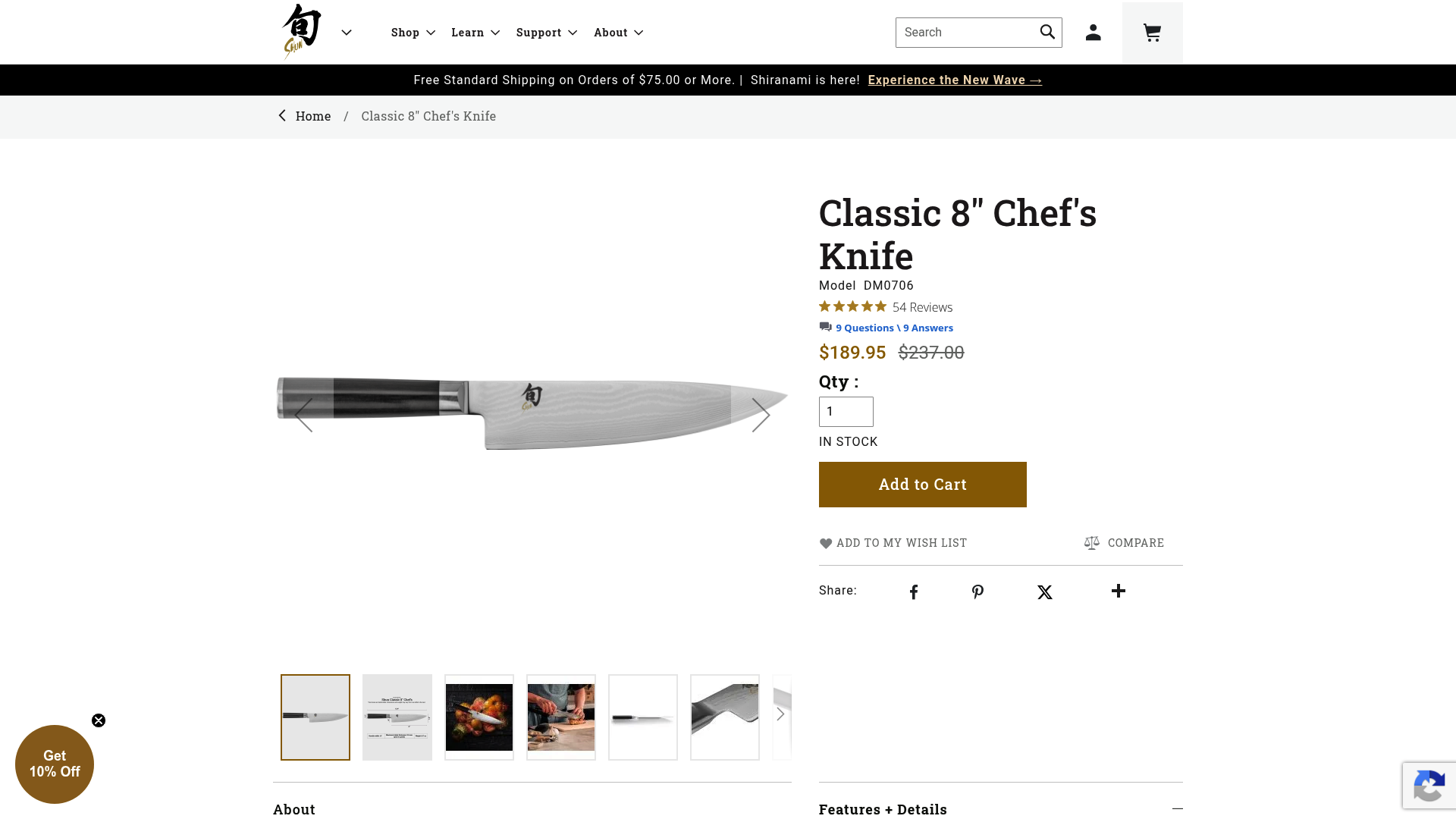
The Shun Classic 8″ Chef’s Knife is often the first Japanese knife a serious home cook buys, and for good reason. It represents a perfect middle ground between traditional Japanese performance and Western durability. Produced by the KAI Group in Seki City, every knife undergoes at least 100 handcrafted steps.
PerformanceThe core is made of proprietary VG-MAX steel, which is incredibly wear-resistant. This core is supported by 34 layers of stainless Damascus cladding on each side. Those 68 total layers do more than just look pretty; they add stain resistance and help food release from the blade as you slice. With a hardness of 61 HRC, it holds its edge beautifully.
Pros & Cons
- Pros: Exceptional out-of-box sharpness; comfortable D-shaped ebony Pakkawood handle; limited lifetime warranty with free sharpening service.
- Cons: The hard steel is prone to micro-chipping if you use improper technique or cut on hard surfaces like glass or stone.
PricingYou can typically find this model for around $189.95 to $237.00, depending on current sales.
2. Miyabi Birchwood 5000MCD
If you want a knife that doubles as a museum-quality art piece, the Miyabi Birchwood 5000MCD is the clear winner. Part of the Zwilling group, Miyabi combines German engineering with the legendary craftsmanship of Seki, Japan.
PerformanceThis knife features an SG2 micro-carbide powder steel core, which reaches a staggering 63 HRC. This allows the blade to be sharpened to a laser-like thinness while maintaining its edge for months of daily use. The blade is finished with a stunning “Flower Damascus” pattern consisting of 101 layers.
Pros & Cons
- Pros: The Karelian Birch handle is visually stunning and fits perfectly in the hand; incredible edge retention that outperforms almost any other stainless blade.
- Cons: It is an investment piece and very expensive; the high hardness means you need advanced whetstone skills to sharpen it properly.
PricingThis is a premium tool, usually retailing between $350.00 and $400.00.
3. Global G-2 Classic 8″ Chef’s Knife
The Global G-2 Classic 8″ Chef’s Knife is perhaps the most recognizable Japanese knife in the world. It broke the mold with its all-stainless steel construction and continues to be a favorite in both professional and home kitchens.
PerformanceMade from CROMOVA 18 stainless steel, this knife is ice-tempered and hardened to 56-58 HRC. While not as hard as other Japanese steels, it is much tougher and more forgiving. The most unique feature is the hollow handle filled with sand, which ensures the knife is perfectly balanced.
Pros & Cons
- Pros: Extremely easy to clean and hygienic due to the seamless construction; very lightweight and maneuverable; famously recommended by Anthony Bourdain.
- Cons: The steel is softer than brands like Shun or Miyabi, meaning you will need to hone it more frequently to keep that razor edge.
PricingIt is a great value option, often priced between $119.96 and $149.95.
4. MAC MTH-80 Professional Series 8″
Professional chefs often skip the flashy Damascus patterns and reach for a MAC MTH-80. It is a “rational” tool designed for pure speed and efficiency.
PerformanceThe MTH-80 is made from Molybdenum high-carbon steel. At 59-60 HRC, it offers a great balance of edge retention and ease of sharpening. The blade is remarkably thin (2.5mm), and the added dimples help the knife glide through sticky foods like potatoes and apples without them clinging to the steel.
Pros & Cons
- Pros: Consistently rated as a top pick by publications like Wirecutter and Food & Wine; extremely lightweight and reduces wrist fatigue during long prep sessions.
- Cons: The aesthetics are very plain and industrial compared to more decorative Japanese brands.
PricingExpect to pay around $175.00 for this professional-grade workhorse.
5. Tojiro DP Gyuto 8.2″
If you are looking for the best possible performance at the lowest possible price, the Tojiro DP is unbeatable. It is often the first “real” knife recommended to culinary students because it performs like a knife three times its price.
PerformanceThe core is high-quality VG-10 “Cobalt Alloy” steel, sandwiched between two layers of softer stainless steel for protection. It hits 60 HRC, giving you that classic Japanese sharpness without the high price tag of more established brands.
Pros & Cons
- Pros: Incredible value for money; very durable and handles a lot of abuse (for a Japanese knife); easy to sharpen on a whetstone.
- Cons: The “fit and finish” can be a bit rough; you might feel some sharp edges along the spine that need to be smoothed down with light sandpaper.
PricingThis is the budget champion, usually found for $90.00 to $100.00.
6. Sakai Ichimonji Mitsuhide Jin Wa-Santoku
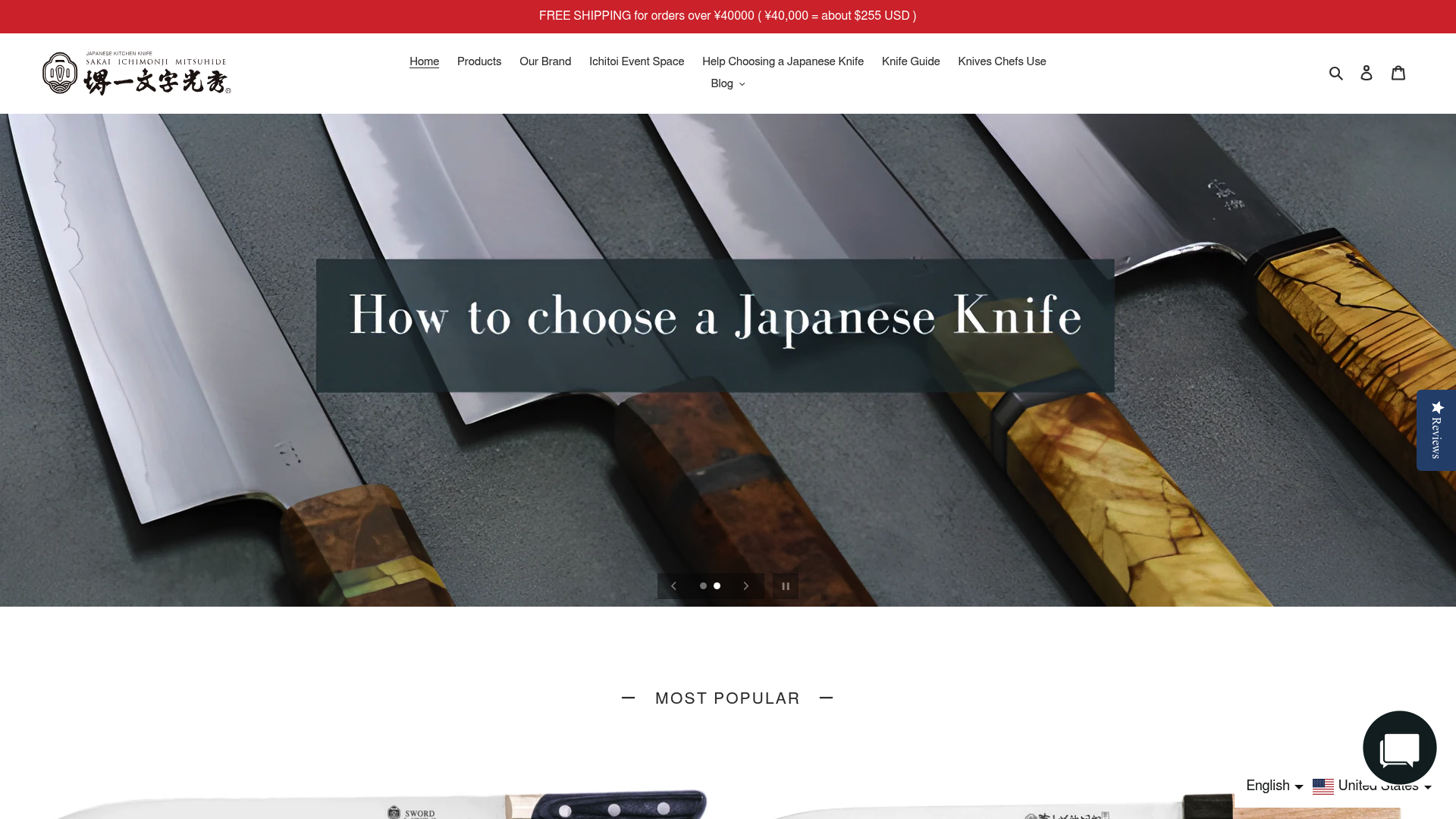
For a truly authentic Japanese experience, the Sakai Ichimonji Mitsuhide Jin Wa-Santoku is a spectacular choice. Coming from the heart of Osaka’s knife-making district, this brand represents 600 years of tradition.
PerformanceThe Jin series uses SLD steel, a “semi-stainless” material that is highly popular right now. It offers the exceptional hardness (61-62 HRC) and edge retention of carbon steel but with much better rust resistance. It is paired with a beautiful octagonal olive wood handle.
Pros & Cons
- Pros: Authentic handmade feel from Sakai; the olive wood handle is naturally resistant to bacteria; nimble and lightweight traditional Wa-style design.
- Cons: As a semi-stainless steel, it still requires more care than a fully stainless Global or Shun to prevent any surface discoloration.
PricingRetails for approximately $147.20.
7. Musashi Hamono VG-10 Tsuchime Santoku
The Musashi Hamono VG-10 Tsuchime Santoku is for the cook who wants a traditional, artisan-made blade that looks like it came straight from a blacksmith’s forge.
PerformanceThis knife features a VG-10 stainless steel core with a Tsuchime (hammered) finish. The hammered texture creates air pockets between the blade and the food, significantly reducing sticking. It is finished with a traditional Bubinga wood handle and a buffalo horn bolster.
Pros & Cons
- Pros: Handcrafted in Japan; the hammered finish is both beautiful and functional; very lightweight and well-balanced.
- Cons: Like all thin Japanese blades, it demands respect and careful technique to avoid chipping on hard ingredients.
PricingRetails for around $150.00 to $170.00.
Caring for your Japanese knives: Pro maintenance tips
Buying a great knife is only the first step. To keep these precision tools performing at their peak, you need to follow a few simple rules. Most high-end knives are ruined not by use, but by improper care.
Hand wash onlyNever, under any circumstances, put a Japanese knife in the dishwasher. The intense heat, harsh detergents, and the physical knocking against other items will dull the edge and potentially crack the handle. Use warm water, mild soap, and a soft sponge.
Immediate dryingDo not let your knife air dry in a rack. Use a soft towel to dry it immediately after washing. This prevents rust spots (even on stainless steel) and maintains the integrity of wood handles. For carbon steel blades, this step is non-negotiable if you want to avoid instant oxidation.
Sharpening vs. HoningA ceramic honing rod is great for a quick touch-up between prep sessions, but it does not replace real sharpening. To maintain a true Japanese edge, you will need to learn how to use whetstones or find a professional service that specializes in Japanese cutlery. Avoid pull-through sharpeners, as they are often too aggressive for these thin blades.
Proper StorageDo not throw your knives in a drawer where they can bump against other tools. Use a magnetic knife strip, a dedicated wood block, or individual blade guards (sayas). This protects both the edge and your fingers.
If you are just starting your collection, check out our new arrivals to see the latest accessories and maintenance tools available.
Find authentic Japanese knives at Discovery Japan Mall

Choosing the right blade depends on your budget, your maintenance tolerance, and how the knife feels in your hand. Whether you choose the workhorse MAC MTH-80 or the artisanal Sakai Ichimonji Jin, upgrading to a Japanese knife is a choice you will appreciate every time you step into the kitchen.
At Discovery Japan Mall, we specialize in bringing authentic, high-quality Japanese products directly to your door. We “convey Japan to the world” by offering an extensive catalog of over 74,000 Japan-made items, including some of the finest cutlery available. When you buy from us, you are not getting a “Japanese-inspired” brand; you are getting a genuine tool crafted by artisans who have mastered their trade over generations.
Explore our curated Home & Kitchen category today and discover the difference that authentic Japanese craftsmanship makes in your culinary journey.
Frequently Asked Questions
What is the most versatile shape for a best Japanese kitchen knives 2026 search?
The Gyuto is the most versatile shape. It is the Japanese version of a chef’s knife and can handle meat, fish, and vegetables, making it the top recommendation for home cooks in 2026.
Is a Santoku better than a Gyuto in the context of best Japanese kitchen knives 2026?
It depends on your space. A Santoku is usually shorter and flatter, making it excellent for smaller kitchens and precise vegetable prep. A Gyuto is longer and more versatile for large tasks.
Do I need to worry about rust with the best Japanese kitchen knives 2026?
If you choose stainless steel models like Shun or Global, rust is less of a concern. However, even the best Japanese kitchen knives 2026 need to be hand-washed and dried immediately to maintain their finish.
Why are the best Japanese kitchen knives 2026 more expensive than Western brands?
You are paying for the higher carbon content, which provides better edge retention, and the artisan labor involved. Most of the best Japanese kitchen knives 2026 require over 100 handcrafted steps to produce.
Where can I buy authentic models found in a best Japanese kitchen knives 2026 guide?
You should look for retailers that ship directly from Japan. Discovery Japan Mall offers a wide range of authentic, Japan-made models that often appear in any best Japanese kitchen knives 2026 guide.


Comments