- Hey! Say! JUMP as “Friends” in Your Daily Routine
- Who Are Hey! Say! JUMP? A Quick Background You Can Chat About Like Friends
- Natural Charm: “Friend-like Idols” and the Bond Between Members
- Growing Up Together: From “Ultra Music Power” Debut to 20th Anniversary Project
- Songs That Brighten Tired Days: “Maji Sunshine” and Recommended Tracks for Every Mood
- TV Shows, Variety, Drama, and Acting Career: “Itadaki High Jump” and More Ways They Feel Close
- Collecting Japanese CDs: The Joy of Having Their Music in Your Hands
Hey! Say! JUMP as “Friends” in Your Daily Routine
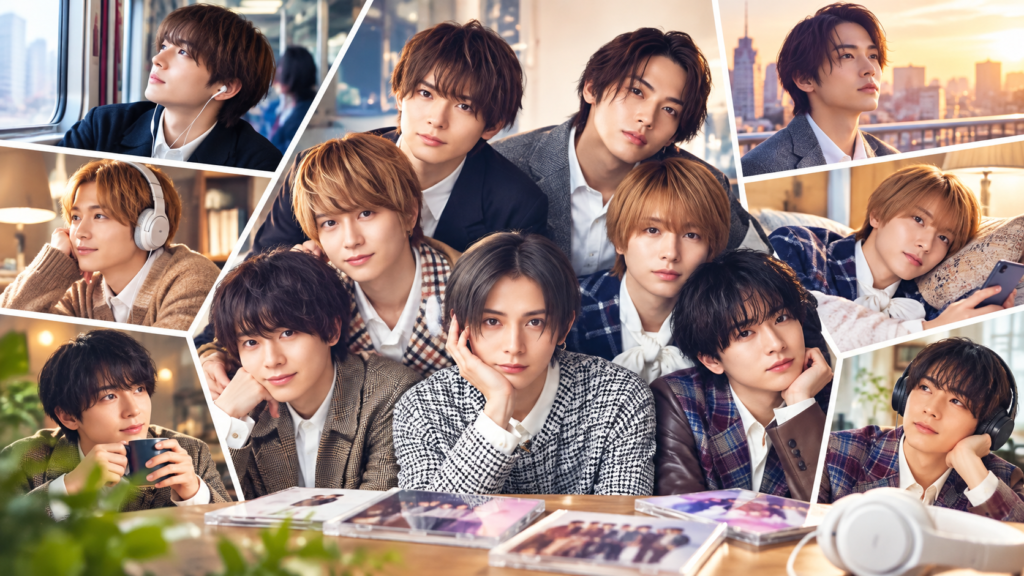
Picture yourself on a crowded morning train in 2026, earbuds in, letting an upbeat melody cut through the noise of another long commute. Or imagine coming home exhausted after a rough day, pressing play on a ballad that feels like a friend saying, “You did great today.” For millions of fans in Japan and around the world, that friend has a name: Hey! Say! JUMP.
Hey! Say! JUMP is a seven-member Japanese idol group under STARTO Entertainment that debuted on November 14, 2007, with their debut song Ultra Music Power. What sets them apart from countless other artists isn’t just catchy music or polished choreography-it’s the feeling that they’re not distant stars on a stage but people you could actually grab coffee with. Their natural chemistry, self-deprecating humor, and genuine warmth make listening to their songs feel less like fandom and more like hanging out with old friends.
If you’ve never explored their discography, or if you’re a longtime fan looking to deepen your connection, this guide walks you through everything-from who they are, to the songs that fit your daily mood, to how Discovery Japan Mall makes it easy for fans outside Japan to hold authentic Japanese CDs and DVDs in their hands.
Who Are Hey! Say! JUMP? A Quick Background You Can Chat About Like Friends
Fans around the world often first encounter the group through international-friendly shops like Discovery Japan Mall, which make Japanese releases accessible far beyond Japan itself.
The group name itself tells a story. “Hey! Say!” refers to the Heisei generation-Japan’s era from 1989 to 2019-while “JUMP” stands for Johnny’s Ultra Music Power. The group was formed with ten members from Johnny’s Jr., and at debut, the average age was just 14.8 years, with the youngest member only 12 years old. They were the largest group in Johnny & Associates at the time, and their youthful energy was immediately infectious.
Those ten members were split into two sub groups: Hey! Say! BEST (the older half) and Hey! Say! 7 (the younger half). This division into two groups created a balance of reliable older-brother energy and playful younger-brother charm. Before the official formation, a temporary group called Hey was assembled for a special project, and that temporary group eventually evolved into the full lineup we know today.
Hey! Say! JUMP originally debuted with a concert on December 22, 2007-just weeks after their single release-drawing massive crowds and proving they could perform at scale right from the start. They even held an early concert at Tokyo Dome in that debut month, a sign of the enormous expectations placed on them.
But the road wasn’t smooth. Ryutaro Morimoto was indefinitely suspended in June 2011 following an underage smoking scandal after leaked photos surfaced. Morimoto’s suspension was followed by his eventual departure. Keito Okamoto left in April 2021 to focus on studying abroad and pursuing an acting career. Most recently, Yuto Nakajima announced his graduation in August 2025 to focus on solo work as an actor.
Hey! Say! JUMP also stopped performing Ultra Music Power live in October 2023, a decision tied to a sexual abuse scandal involving their former agency. Despite all this, the group name remains unchanged, and the members continue to form a tight unit under STARTO Entertainment. Today, they carry forward as seven members with the same warmth that defined them from day one.
Natural Charm: “Friend-like Idols” and the Bond Between Members
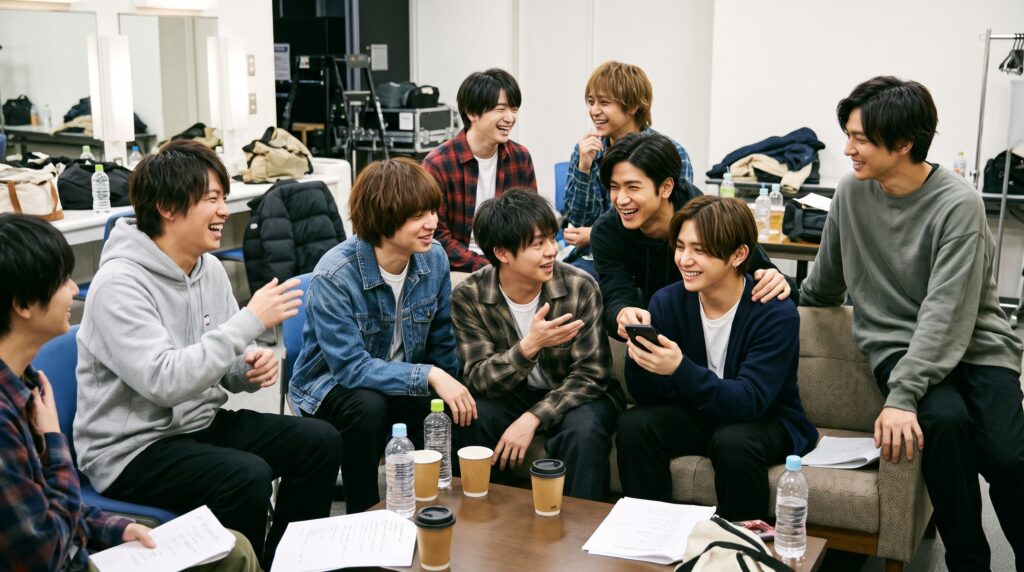
What makes Hey! Say! JUMP feel like friends rather than untouchable celebrities? It starts with how they interact on camera. On their variety program Itadaki High Jump, launched in 2015 on Fuji TV, members tackle viewer-submitted challenges-from visiting haunted houses to attempting extreme sports. You see real fear, genuine clumsiness, and competitive trash talk that feels like watching your own friend group try something ridiculous on a weekend.
Yuya Takaki is the laid-back mood-maker of the group, his gentle Kansai-flavored speech and easy laughter calming any tense moment. He often serves as a natural leader during MC segments, keeping conversations flowing without ever feeling forced. Meanwhile, Kei Inoo brings sharp wit and architectural knowledge (yes, he actually studied architecture) to discussions, surprising fans with depth behind the idol polish.
Yuto Nakajima, tall and camera-loving with serious drum skills, always showed a caring side that made his 2025 graduation hit fans especially hard. As the main dancer and a key visual presence, he brought cool energy to performances, but it was his warmth offstage-checking on members, thanking fans with handwritten notes-that fans remember most.
The sub unit dynamic between Hey! Say! BEST and Hey! Say! 7 essentially gave the group two personalities: dependable and playful. Each member plays a distinct role-whether it’s the lead dancer bringing precision to choreography, the lead rapper and main rapper trading verses with swagger, or the main dancer anchoring complex routines. This variety of “friend types” means every fan finds someone they personally connect with.
Growing Up Together: From “Ultra Music Power” Debut to 20th Anniversary Project
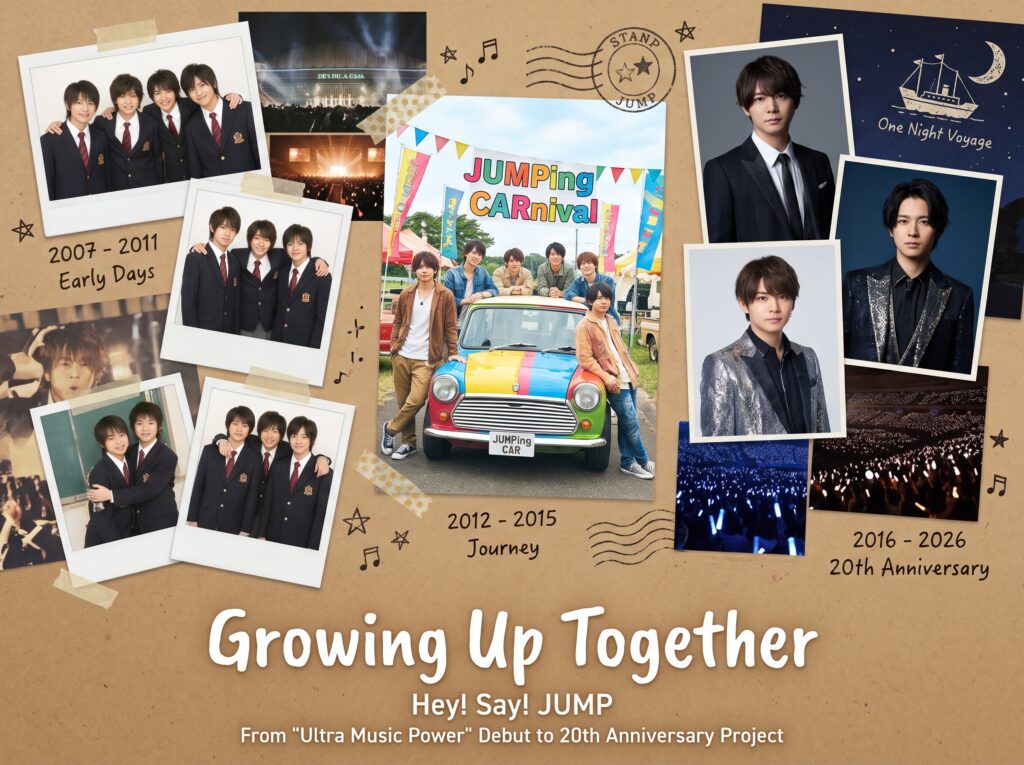
The beauty of following Hey! Say! JUMP is that fans and members have literally grown up together. Here’s how that journey unfolded.
The early spark (2007–2011). After their debut, the group leaned into youthful themes-school uniforms, friendship anthems, and songs like Shadow Boy that captured teenage rebellion. Their first album, Jump No. 1, was released on July 7, 2010, cementing their place in mainstream J-pop. The sixth single, Hitomi no Screen, sold 202,000 copies in its first week, proving their commercial power. Magic Power, released on September 21, 2011, kept the momentum alive with its playful energy. Around this period they were already performing at Tokyo Dome during their 2014 tour, a milestone that many groups spend years chasing.
Maturing sound (2012–2014). Their first Asian concert tour from March to June 2012 expanded their world beyond Japan. The album JUMP World (2012) introduced more layered arrangements, and S3ART (called “smart” by fans) pushed into sophisticated territory. The Hey! Say! JUMP Zenkoku e JUMP Tour 2013 ran from April to August, bringing them to fans across the country. Their ninth single and tenth single from this era showed increasing musical range-ballads sitting alongside dance tracks.
The Jumping Car era (2015). The fourth album JUMPing Car was a turning point. With its road-trip concept, it felt like the group was inviting fans to hop in and ride along. For overseas listeners, browsing CD & DVD J-POP listings on Discovery Japan Mall or the broader CD & DVD J-POP marketplace can feel like curating your own Jumping Car-era road-trip soundtrack. The live tour that followed-Hey! Say! JUMP LIVE TOUR 2015 JUMPing CARnival-turned concerts into a full carnival experience, complete with colorful units like UNION and Pet Shop Love Motion. This Jumping Carnival era symbolized Hey! Say! JUMP’s evolution from teen idols to artists who could craft immersive concert experiences.
Into the present (2016–2026). They launched the Hey! Say! JUMP LIVE TOUR 2016 DEAR on July 28, 2016, supporting the album Dear. which sold 141,079 copies on its first day alone. Later albums like Parade (2019) and Fab! -Music Speaks.- (2020) explored everything from theatrical pop to R&B. The song Mae wo Muke became an anthem of perseverance. Now, with their 20th anniversary project approaching-including “Hey! Say! JUMP One Night Voyage” airing in late 2026-the group is reflecting on nearly two decades of shared memories with fans.
Songs That Brighten Tired Days: “Maji Sunshine” and Recommended Tracks for Every Mood
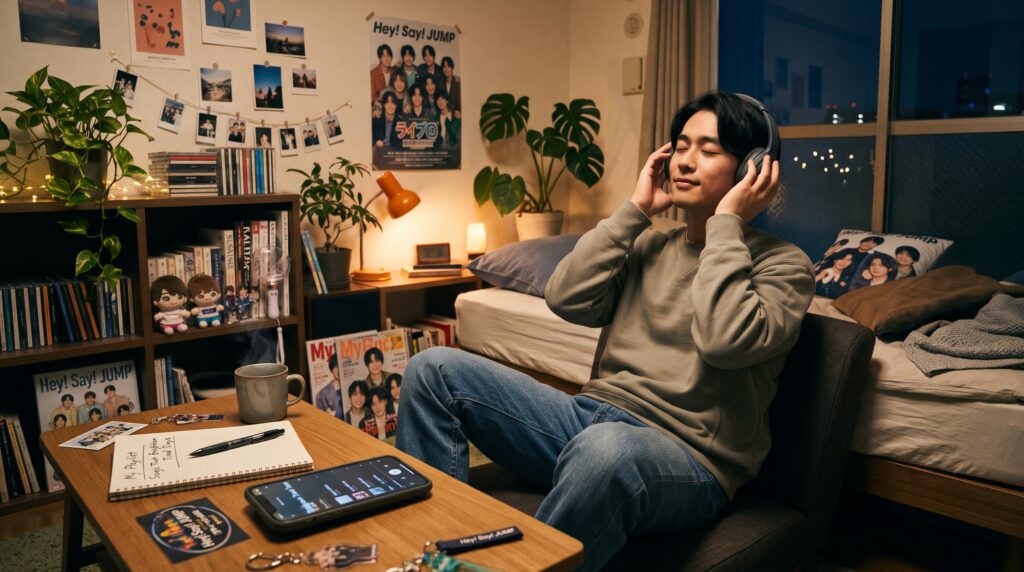
Think of this as a playlist recommendation from a friend who knows exactly what you need.
When you need pure energy: Songs like JUMPing Car, Come On A My House, and Kimi Attraction are built to make you move. Their catchy hooks and high-energy choreography translate perfectly even through earbuds-try them on a Monday morning commute and see if you can keep still. The single UMP channels that same electric feeling. Super Delicate, which served as a drama theme song, blends pop energy with an irresistible groove.
When you’re quietly exhausted: Give Me Love (2016) works like someone gently patting your back after a long day. Ballads scattered across their discography-especially deep cuts on albums released under Storm Labels-offer comfort without demanding anything from you.
When you need small courage: HANIKAMI (2026) and encore speak directly to the feeling of being scared but stepping forward anyway. Their lyrics don’t preach grand heroism; they whisper, “It’s okay to be your ordinary self.”
Interestingly, in English, the word “jump” in common contexts includes workplace dynamics and interpersonal relationships-the expression “jump when I say jump” emerged in American and British colloquial speech during the mid-20th century and suggests immediate obedience without questioning the order. It is a metaphor for subservience in relationships and authority, representing absolute, unquestioning compliance, often used to critique blind obedience to authority figures. Hey! Say! JUMP flips that meaning entirely-their music turns “jump” into joy, freedom, and choosing to sing and play on your own terms.
TV Shows, Variety, Drama, and Acting Career: “Itadaki High Jump” and More Ways They Feel Close

Itadaki High Jump remains the gateway for many new fans. The show’s concept-members perform challenges based on viewer requests-produces moments of real vulnerability. You see someone terrified of heights, another failing spectacularly at cooking, and the whole group erupting in laughter. It’s unscripted and unpretentious.
Individual members have also stepped into acting. Ryosuke Yamada’s film career and Yuto Nakajima’s drama roles, including work connected to Fantastic Time, let fans cheer on a friend’s career milestones. Seeing a member you’ve watched grow up suddenly appear in a YouTube trailer for a new drama feels personal in a way that mainstream celebrity culture rarely achieves.
The group has also appeared alongside other groups and hosted variety slots, reinforcing their reputation as natural entertainers who can play off anyone-not just each other.
Collecting Japanese CDs: The Joy of Having Their Music in Your Hands
Streaming is convenient, but there’s something irreplaceable about holding a Japanese CD. Browsing the latest arrivals on Discovery Japan Mall gives you that thrill of seeing new Japanese releases appear in real time. Typical Hey! Say! JUMP releases come in multiple editions-regular and limited-each with different jacket photos, bonus tracks, and DVD extras featuring behind-the-scenes footage or music video making-of clips.
First-press limited editions often include photo cards, stickers, and booklets filled with member photos and handwritten notes. The album Dear., for example, is a collector’s favorite with its platinum-certified tracklist containing live staples. Owning these physical items feels like flipping through a friend’s photo album-you discover new details every time.
For fans abroad, aligning your purchase with the Japanese release day means opening the CD “together” with fans in Japan, sharing first impressions online like classmates exchanging albums at school. Checking newly released Japanese watches and goods on Discovery Japan Mall or even browsing Rhythm brand wall clocks alongside your music orders can turn each mail day into a small celebration of Japanese design and pop culture.

Comments