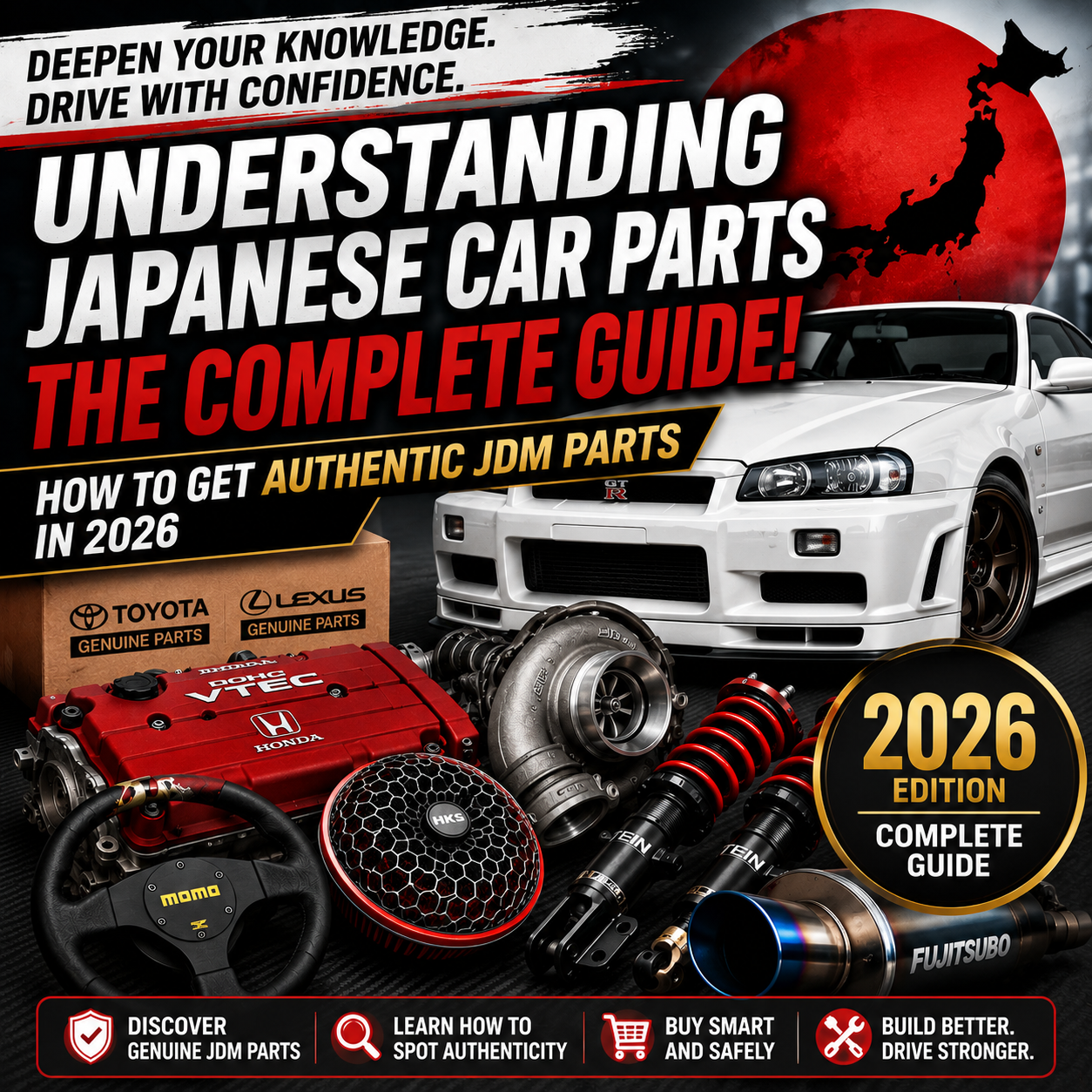
If you’ve ever spent time in a virtual garage in Gran Turismo or watched a Skyline R34 scream down a highway in a movie, you know the allure of the Japanese Domestic Market (JDM). These cars aren’t just vehicles, they’re engineering marvels that defined a golden era of performance. But whether you’re restoring a classic Supra or building a track-ready Silvia, you quickly run into a major hurdle: finding parts that are actually real.
The market is currently in the middle of what many call a “Heritage Gold Rush.” As 90s icons skyrocket in value, the demand for factory-correct components has reached a fever pitch. This has led to two things: prices that can make your eyes water and a flood of low-quality replicas that look good in photos but fail on the road.
Getting your hands on genuine components requires a bit of sleuthing and a solid understanding of where these parts come from. At Discovery Japan Mall, we’ve spent years bridging the gap between Japanese quality and global enthusiasts. Our mission is to convey Japan to the world by providing 100% authentic Japan-made products directly from the source. In this guide, we’ll break down how to navigate the JDM market with confidence.
- What exactly are JDM car parts?
- The “Heritage Gold Rush”: Why JDM parts are getting harder to find
- Understanding Japanese car parts how to get authentic JDM: Spotting fakes
- Why buying directly from Japan is the best strategy
- Navigating the logistics: Shipping and prohibited items
- How to get authentic JDM parts from Discovery Japan Mall
- Start your JDM build with confidence
- Frequently Asked Questions
- What is the best way of understanding Japanese car parts how to get authentic JDM?
- Is it actually cheaper for understanding Japanese car parts how to get authentic JDM by importing?
- Can I ship used engines when understanding Japanese car parts how to get authentic JDM?
- How can I verify a seller for understanding Japanese car parts how to get authentic JDM?
- Are there limited edition items available when understanding Japanese car parts how to get authentic JDM?
What exactly are JDM car parts?
To understand the market, we first need to define the term. JDM stands for Japanese Domestic Market. These are vehicles, accessories, and components specifically manufactured for use within Japan. While a Nissan 300ZX was sold in North America, the JDM version often featured different engine specs, lighting configurations, and interior trims that were never available at local dealerships.
Enthusiasts covet these parts for several reasons:
- Craftsmanship: Many genuine Japanese components are built with a level of precision and material quality that aftermarket “generic” parts can’t match [Source: https://firstgearproject.com/genuine-vs-replica-jdm-parts/].
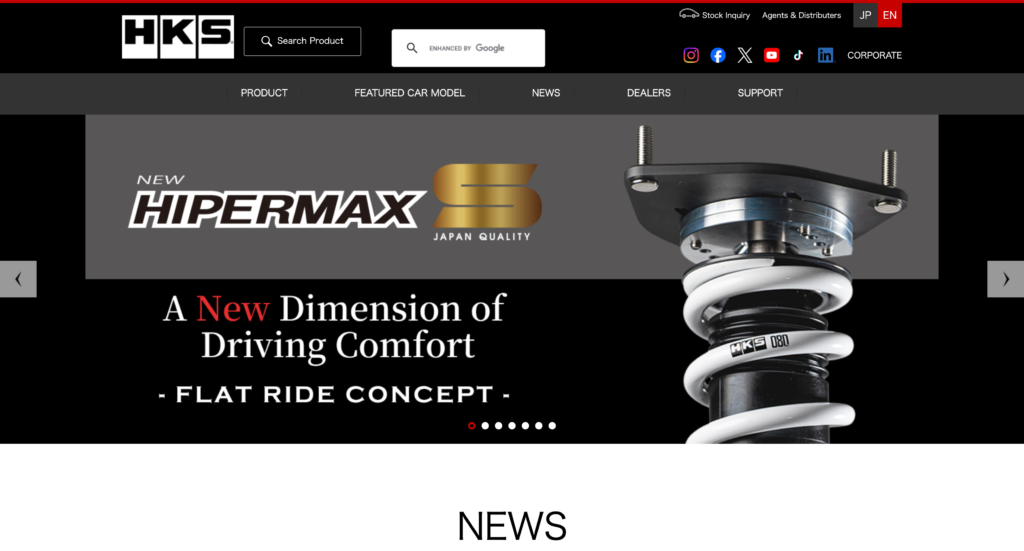
- Performance Engineering: Brands like TRUST (Greddy) and HKS design parts that are often tested on Japanese circuits like Suzuka or Fuji Speedway.
- Authenticity: For a purist, nothing replaces the feeling of an original NISMO component that fits perfectly without modification.
The “Heritage Gold Rush”: Why JDM parts are getting harder to find
If you’ve noticed that a mass airflow sensor for an R32 Skyline now costs as much as a small used car, you’re seeing the results of the “Heritage Gold Rush.” As these cars have become six-figure collector items, the inventory of OEM (Original Equipment Manufacturer) parts has dwindled to near extinction.
Several factors have created this scarcity:
- The Scrapyard Drought: As car values rise, fewer vehicles are being sent to scrapyards. This means the supply of affordable second-hand parts is drying up .
- The Restoration Craze: Owners are increasingly looking to return their modified cars to showroom-original condition, which requires specific factory parts that were discontinued decades ago.
- Heavy Use: These cars were built to be driven. After twenty years of abuse at drag strips and track days, many original components have simply worn out.
In response, major manufacturers have launched “Heritage” programs. NISMO Heritage, GR Heritage Parts (Toyota), and Mazda Heritage are now re-issuing critical components. For example, Toyota Gazoo Racing recently restarted production on accelerator cables and brake tubes for the Land Cruiser 60 and 70 series. While these re-issued parts are a lifesaver, they often come with premium price tags and limited production runs.
Understanding Japanese car parts how to get authentic JDM: Spotting fakes
With demand so high, the market is unfortunately full of counterfeits. Some are “homage” pieces that are honest about being replicas, but others are outright fakes designed to deceive. Knowing the red flags is essential before you spend your hard-earned money.
Packaging and branding
Japanese manufacturers take great pride in their presentation. Genuine parts almost always come in branded boxes with high-quality printing. If a part arrives in a generic brown box or a plastic bag with a photocopied label, be suspicious.
Another huge giveaway is the language. Japanese is a difficult language to fake convincingly. Replicas often feature mistranslated Japanese characters or awkward English phrasing on the box [Source]. We recommend using a translation app on your phone to check any text on the packaging.
Technical markers and build quality
Manufacturers like NISMO often include serial numbers or stamped part codes directly on the component. NISMO Heritage parts, for instance, are meticulously documented. You should also look at the physical craftsmanship:
- Weld Quality: Authentic parts from HKS or TRUST feature clean, precise welds. Replicas often have “sloppy” welds that look inconsistent.
- Material Integrity: Genuine carbon fiber pieces will have a consistent weave and high-quality clear coating. Replicas often show “waves” in the weave.
- Weight: Authentic manufacturers often list the exact mass of their parts. If your “lightweight” shift knob feels too heavy or too light compared to the official specs, it might be a fake [Source: https://firstgearproject.com/genuine-vs-replica-jdm-parts/].
Why buying directly from Japan is the best strategy
For many enthusiasts, the first instinct is to check local resellers or eBay. However, importing directly from Japan is almost always the better choice for several reasons.
| Benefit | Impact |
|---|---|
| Competitive Pricing | Saves 20-40% by eliminating middleman markups |
| Better Condition | Parts are often better maintained due to strict “Shaken” inspection laws |
| Rare Inventory | Access to limited editions and “Revival Parts” that never left Japan |
| Authenticity | Direct sourcing from Japanese distributors minimizes the risk of fakes |
When you buy from a local reseller, you’re paying for their shipping costs, their storage, and their profit margin. By using a service that ships directly from Japan, you can often afford a much higher tier of parts for the same budget. Furthermore, Japanese car culture is built on a foundation of meticulous care. A used part from a Japanese “upgarage” or auction site is often in significantly better condition than a similar part found locally.
Navigating the logistics: Shipping and prohibited items
Importing car parts isn’t as simple as shipping a book. There are strict rules you need to follow, particularly when it comes to international air freight.
The prohibited list
Generally speaking, anything that has been in contact with oil, gasoline, or flammable lubricants cannot be shipped via traditional air carriers . This includes:
- Used Engines and Transmissions: These almost always contain residual fluids.
- Fuel Tanks and Carburetors: Even if they are drained, the vapor residue is considered a hazard.
- Pressurized Items: Shock absorbers (coilovers) and airbags can be difficult to ship because they are under pressure.
Shipping methods
Which method you choose depends entirely on the size of the part. For smaller items like NISMO shift knobs or light lenses, Air Freight (EMS or DHL) is the way to go. It’s fast (usually 3-7 days) and reliable. For larger items like bumpers, hoods, or a set of rims, you’ll likely need to use Sea Freight. This is much cheaper for bulky items but can take anywhere from 4 to 8 weeks to arrive.
How to get authentic JDM parts from Discovery Japan Mall
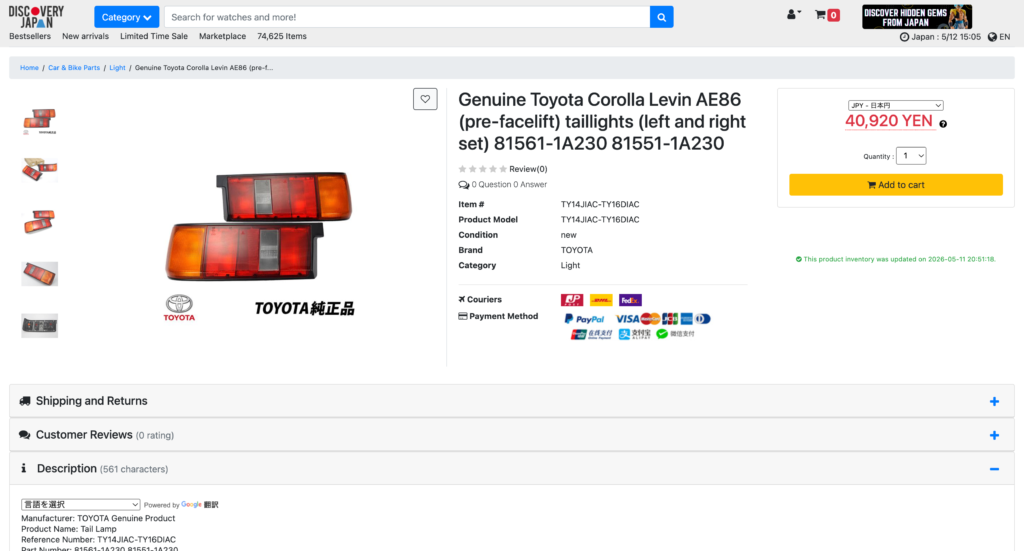
We understand that the process of importing can feel overwhelming. Dealing with bidding on Japanese auction sites or trying to translate technical descriptions isn’t for everyone. That is why we’ve built a platform that simplifies the entire experience.
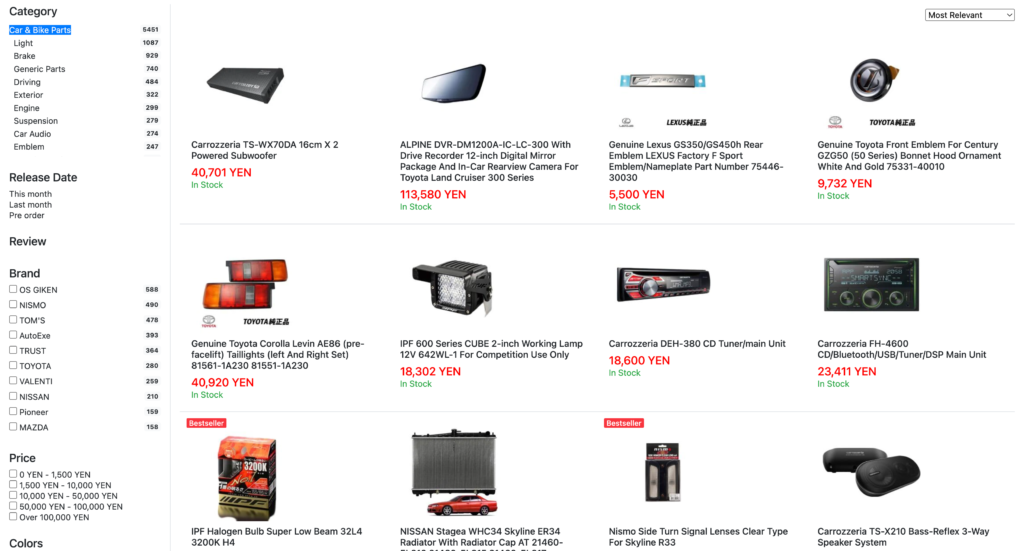
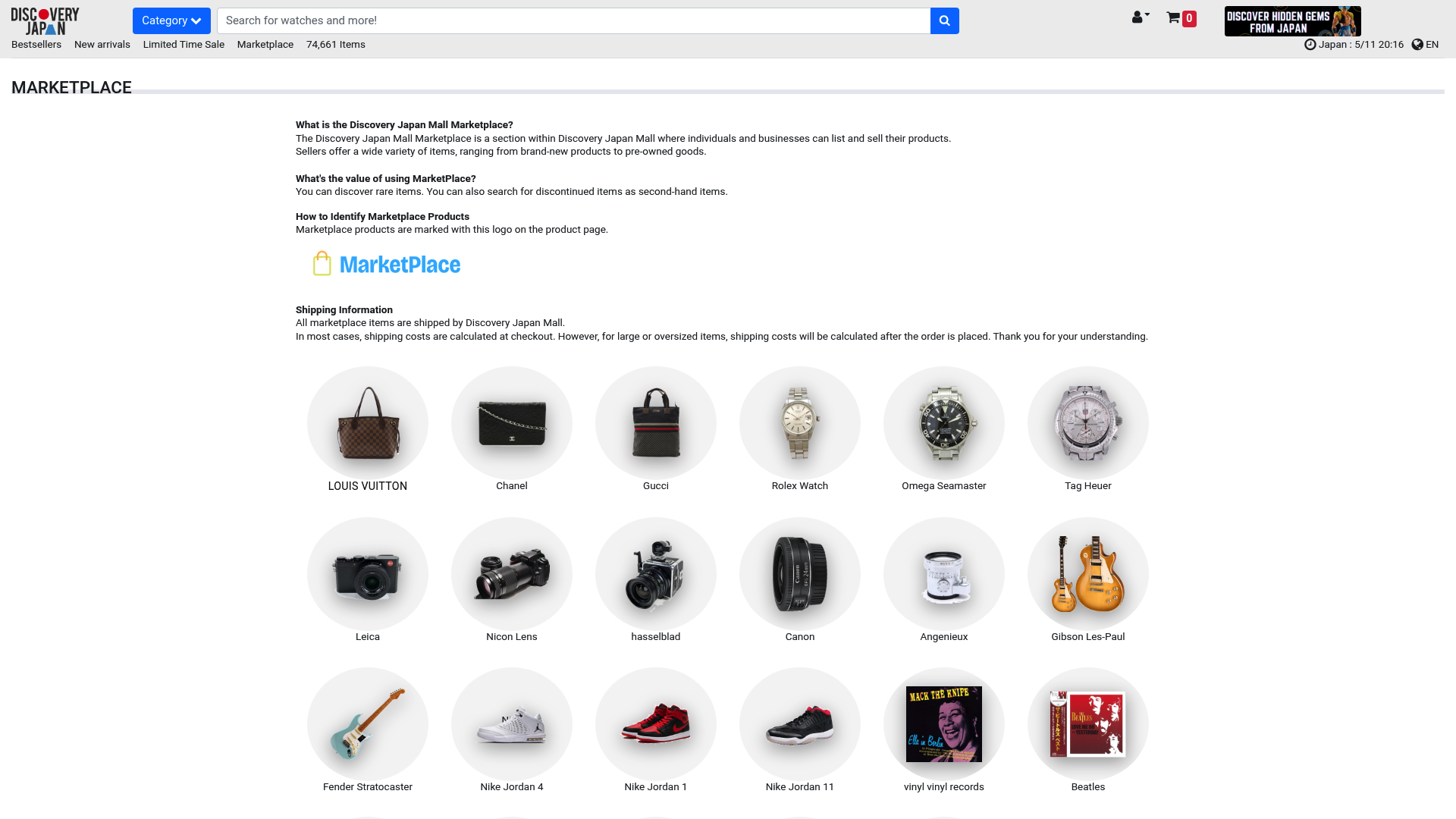
At Discovery Japan Mall, we offer an extensive catalog of over 74,000 Japan-made items, including a massive selection of automotive components. Whether you’re looking for NISMO performance parts or a specialized radiator, we provide a standard e-commerce checkout experience that ships directly to your door.
Our advantage is simple: we only source products that are 100% made in Japan. This eliminates the “fake” anxiety that plagues sites like eBay. You can browse our new arrivals or check out our bestsellers to see what other enthusiasts are currently sourcing.
If you are looking for a very specific or rare part that isn’t in our standard catalog, we also offer a Marketplace proxy purchase service. We can help you source items from other Japanese online stores and handle the complex logistics of international shipping for you. Bottom line? We want to make it as easy as possible for you to get the authentic Japanese quality your car deserves.
Pricing for popular NISMO components
To give you an idea of the value of direct sourcing, here are some current prices for popular NISMO items available through our store:
| Item | Product Details | Price (YEN) |
|---|---|---|
| R33 Side Signal Lenses | Clear type for Skyline R33 | 5,168 YEN |
| Suspension Mount Bush | Repair part for 180SX RS13 | 5,844 YEN |
| NISMO Shift Knob | Aluminum with Carbon Fiber finish | 11,316 YEN |
| NISMO Wheel Nut Set | Standard 34mm (20 pieces) | 19,542 YEN |
| BNR34 Clutch Cylinder | For Skyline GT-R BNR34 | 21,312 YEN |
Note: Prices are subject to change based on availability and exchange rates.
Start your JDM build with confidence
Building your dream car is a journey. It requires patience, research, and an eye for detail. By focusing on authenticity and sourcing your parts directly from Japan, you’re not just building a car, you’re preserving a piece of automotive history.
Whether you’re just starting with foundational pieces like wheels and lighting or you’re deep into a full restoration with Heritage Parts, the key is to never settle for less than genuine quality. Replicas might save you a few dollars today, but they’ll never provide the same performance or pride of ownership as the real thing. Explore our Car & Bike Parts catalog today and let us help you find exactly what you need to take your build to the next level.
Frequently Asked Questions
What is the best way of understanding Japanese car parts how to get authentic JDM?
The most reliable method is to source directly from reputable Japanese distributors. Platforms like Discovery Japan Mall ensure that every product is 100% Japan-made, which eliminates the risk of receiving counterfeit or replica parts that are common on third-party marketplace sites.
Is it actually cheaper for understanding Japanese car parts how to get authentic JDM by importing?
Yes, in many cases. Buying directly from Japan often allows you to save 20-40% by cutting out international middlemen. While you do have to account for shipping costs, the lower base price of parts in the Japanese market usually results in significant overall savings.
Can I ship used engines when understanding Japanese car parts how to get authentic JDM?
Shipping used engines via air freight is extremely difficult because any residue of oil or fuel is considered a hazardous material. Most enthusiasts who source used engines from Japan use specialized sea freight services that can handle the complex logistics and hazardous material requirements.
How can I verify a seller for understanding Japanese car parts how to get authentic JDM?
Check for a clear social media presence and proof of past international shipments. Reputable sellers will often have a physical storefront in Japan and a history of positive feedback within the enthusiast community on forums and subreddits.
Are there limited edition items available when understanding Japanese car parts how to get authentic JDM?
Absolutely. Many Japanese manufacturers released ‘limited run’ parts that were never officially exported. Sourcing directly from Japan gives you access to these rare items, as well as the new ‘Heritage’ and ‘Revival’ parts being produced by companies like NISMO and Toyota.
Comments