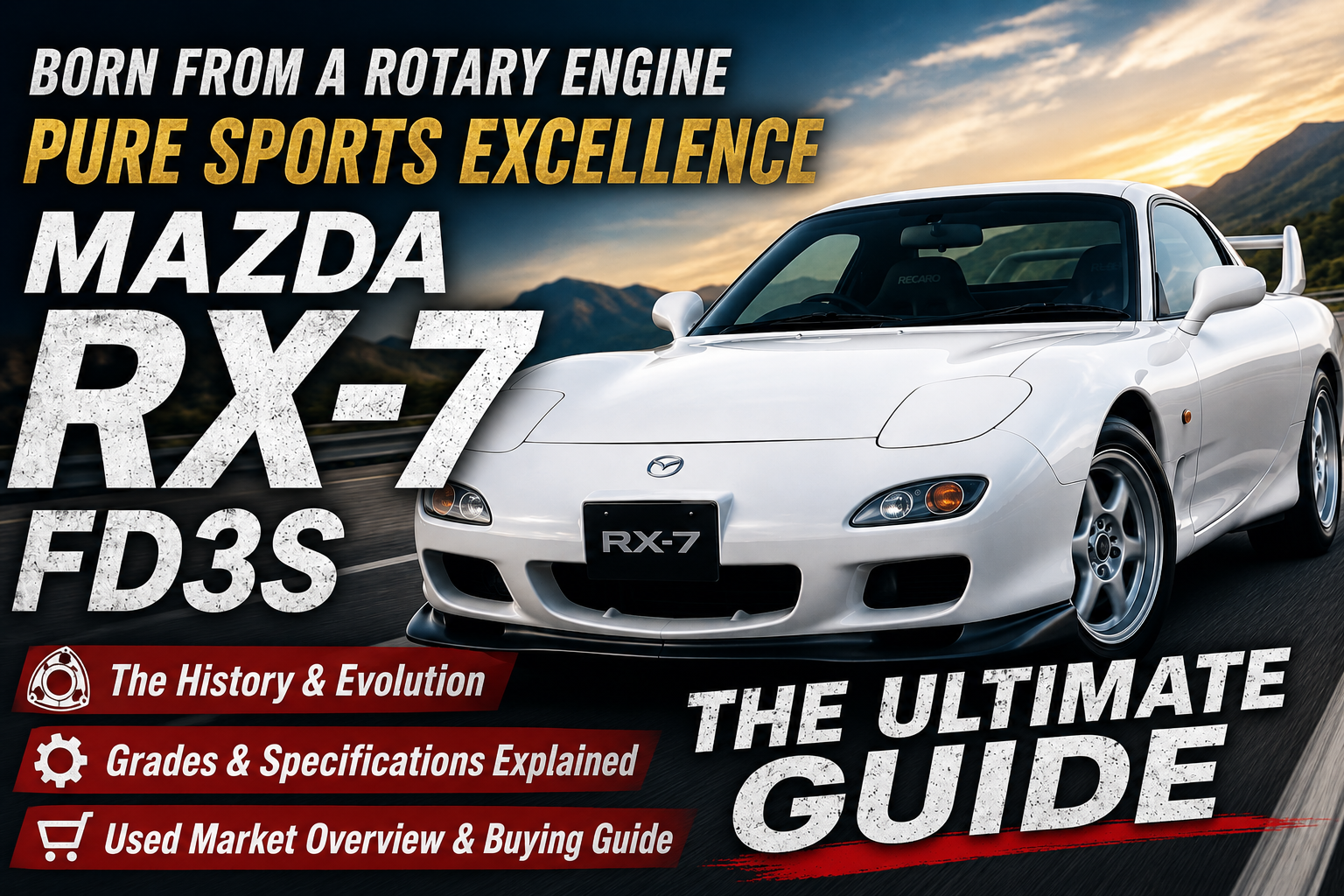
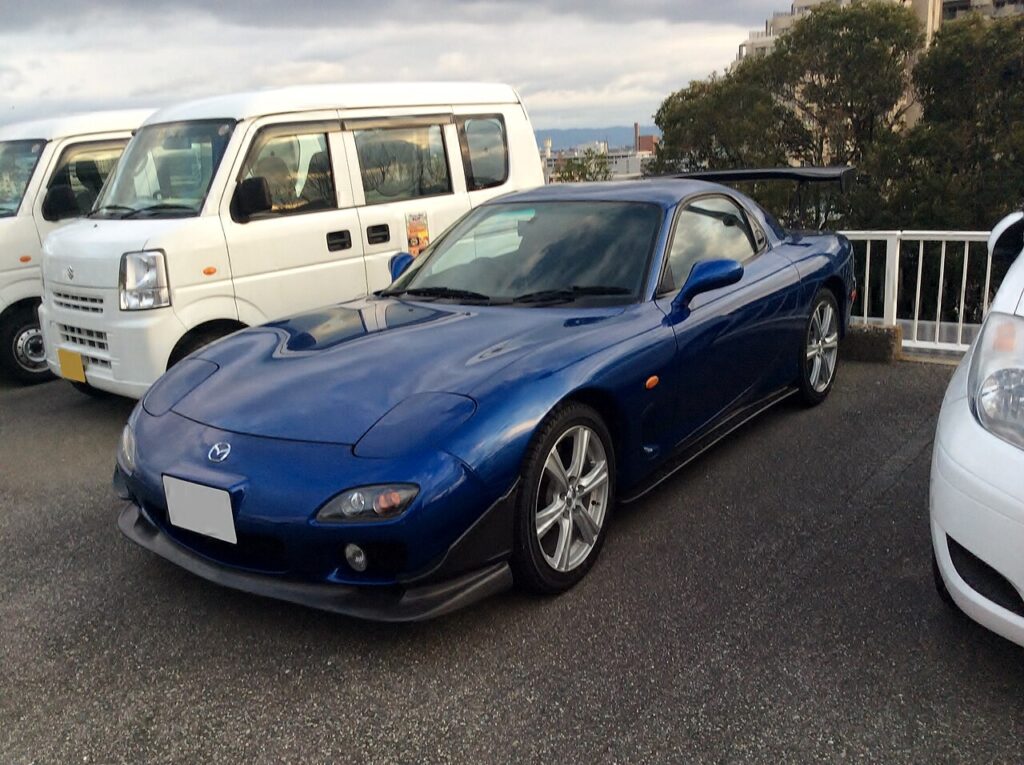
Image source: Wikimedia Commons, photo by Tokumeigakarinoaoshima (CC0 / Public Domain)
When Mazda unveiled the third-generation RX-7 at the 1991 Tokyo Motor Show, it was widely regarded as one of the most technically ambitious Japanese sports cars of its era. A twin-sequential turbocharged rotary engine, a near-perfect 50:50 weight distribution, a body so aerodynamically clean it posted a drag coefficient of just 0.29 — all wrapped in one of the most distinctive silhouettes ever to come out of Japan. Thirty-plus years later, the FD3S is still turning heads at circuits, car meets, and time attack events across the globe. And with the right upgrades, it remains competitive with modern sports cars at a fraction of the cost.
But here’s the thing about the FD3S: it rewards owners who understand it. The 13B-REW rotary engine is not a piston engine in a rotary costume — it has its own logic, its own weak points, and its own enormous potential. Tuning one correctly means respecting that. Do it right, and you have one of the most exhilarating cars on any road or track. Do it wrong, and you’re shopping for apex seals.
This guide covers the complete RX-7 FD3S tuning menu for 2026 — from the first sensible modifications a new FD3S owner should make, all the way up to full circuit race build territory. Every brand mentioned is Japanese. Every product is the real thing.
Browse all Japanese car parts on Discovery Japan Mall →
- Why the RX-7 FD3S Is Still One of the Greatest Tuning Platforms in JDM History
- Before You Tune: What Every FD3S Owner Must Understand About the 13B-REW Rotary Engine
- Tuning Category #1 – Engine & Turbo Upgrades
- Tuning Category #2 – Cooling System Upgrades
- Tuning Category #3 – Exhaust & Intake Systems
- Tuning Category #4 – Suspension & Handling
- Tuning Category #5 – Clutch & Drivetrain Upgrades
- Tuning Category #6 – Brakes & Wheels
- Tuning Category #7 – ECU & Fuel Management
- Tuning Category #8 – Aero & Exterior Upgrades
- The RX-7 FD3S Rebuild & Tuning Scene on YouTube: Channels Every Rotary Fan Should Be Watching
- Build Level Comparison: Which Upgrade Path Is Right for You?
- How to Order RX-7 FD3S Tuning Parts from Japan
- Frequently Asked Questions (FAQ)
- What is the first modification I should make to an FD3S?
- How much horsepower can a 13B-REW make with tuning?
- Is the RX-7 FD3S reliable if properly maintained and tuned?
- Can I order RX-7 FD3S tuning parts from outside Japan?
- What clutch should I use for a 400hp+ FD3S build?
- Is a single-turbo conversion worth it on the FD3S?
- What suspension setup do FD3S time attack cars use?
- What is the most iconic aero kit for the RX-7 FD3S?
- Are there good YouTube channels for learning about RX-7 FD3S builds?
- Is a wide-body conversion worth it on an FD3S?
- Final Thoughts: The FD3S Deserves the Best — Give It Japanese Quality
Why the RX-7 FD3S Is Still One of the Greatest Tuning Platforms in JDM History

Image source: Wikimedia Commons (see file page for author & license)
The JDM tuning world has no shortage of legends. The Nissan Skyline GT-R, the Toyota Supra, the Mitsubishi Lancer Evolution — these are cars that defined an era. But among the truly devoted, the FD3S occupies a different kind of space. It isn’t just a fast car. It’s a philosophical statement about what a sports car should be.
Consider the numbers from the factory: 255hp in JDM specification, a curb weight of approximately 1,260kg, and handling balance praised by professional drivers for its natural balance and responsiveness. The sequential twin-turbo system — a small primary turbo spooling from low rpm, handing over to a larger secondary above 4,500rpm — gave the 13B-REW a power delivery unlike anything else in its class.
That foundation is what makes the FD3S such an exceptional tuning platform. You’re not fighting the car to make it handle — it already handles. You’re not trying to convince a heavy GT cruiser to go around corners — it already wants to. Every upgrade you make builds on a chassis and concept that was, from day one, engineered for exactly the kind of driving you want to do.
Japan’s motorsport scene recognized this immediately. RE Amemiya’s GT-spec FD3Ss competed in the JGTC (Japan GT Championship, now Super GT) and became some of the most visually iconic race cars in Japanese motorsport history. The D1 Grand Prix drift series has seen competitive FD3S builds that continue to hold their own against newer platforms. Time attack events at Tsukuba and Fuji continue to feature modified FD3Ss posting times that demand respect.
The global community has caught up. RX-7 FD3S tuning content now spans dozens of YouTube channels, dedicated forums, and a worldwide parts sourcing network that simply didn’t exist a decade ago. Japan remains the primary source of purpose-built, motorsport-developed FD3S parts — and in 2026, getting those parts shipped directly to your door from Japan has never been easier.
Before You Tune: What Every FD3S Owner Must Understand About the 13B-REW Rotary Engine
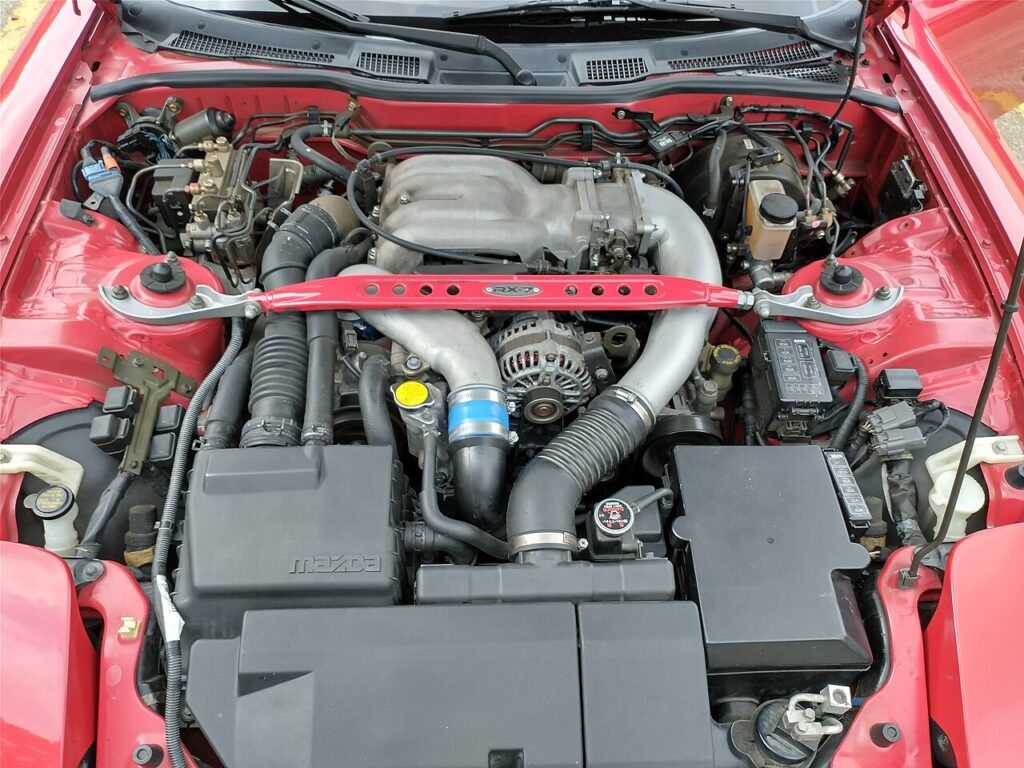
Image source: Wikimedia Commons (see file page, CC BY-SA 4.0)
Before a single performance part goes on your FD3S, there is one rule that every experienced rotary tuner will tell you: the engine must be healthy first. This isn’t a suggestion. It’s the difference between a build that runs for years and one that detonates on a dyno.
The rotary engine’s fundamental difference from a piston engine is that combustion happens in a rotor housing rather than a cylinder. Sealing is provided by apex seals — small carbon-composite pieces at the tips of each rotor face. These seals are the rotary’s most critical wear item, and they are sensitive to heat, poor lubrication, and detonation in ways that piston rings simply are not.
What this means practically:
- Cooling comes first. Any FD3S with meaningful modifications needs upgraded oil cooling and, in most cases, a higher-capacity radiator. Heat is the primary killer of apex seals and rotor housings. This is not optional.
- Oil quality and the oil metering pump matter enormously. The 13B-REW injects a small amount of oil directly into the intake for apex seal lubrication. Running the wrong oil, or running an oil metering pump that’s partially blocked or worn, accelerates seal wear dramatically. On any power build, upgrading or at minimum inspecting the oil metering system is essential.
- Compression test before everything. A healthy 13B-REW should show consistent compression across all faces. Low or uneven compression readings before a build means you’re tuning a sick engine — and sick rotary engines do not get better with more power.
- High-octane fuel is non-negotiable. The 13B-REW is sensitive to detonation, particularly under boost. In the US, 91 octane is the absolute minimum; 93 or higher is strongly preferred for any boosted build.
With a healthy engine confirmed, the FD3S is one of the most rewarding platforms you’ll ever work with. The upgrades below follow a logical build progression — but regardless of which level you’re targeting, cooling and engine health come first, every time.
Tuning Category #1 – Engine & Turbo Upgrades
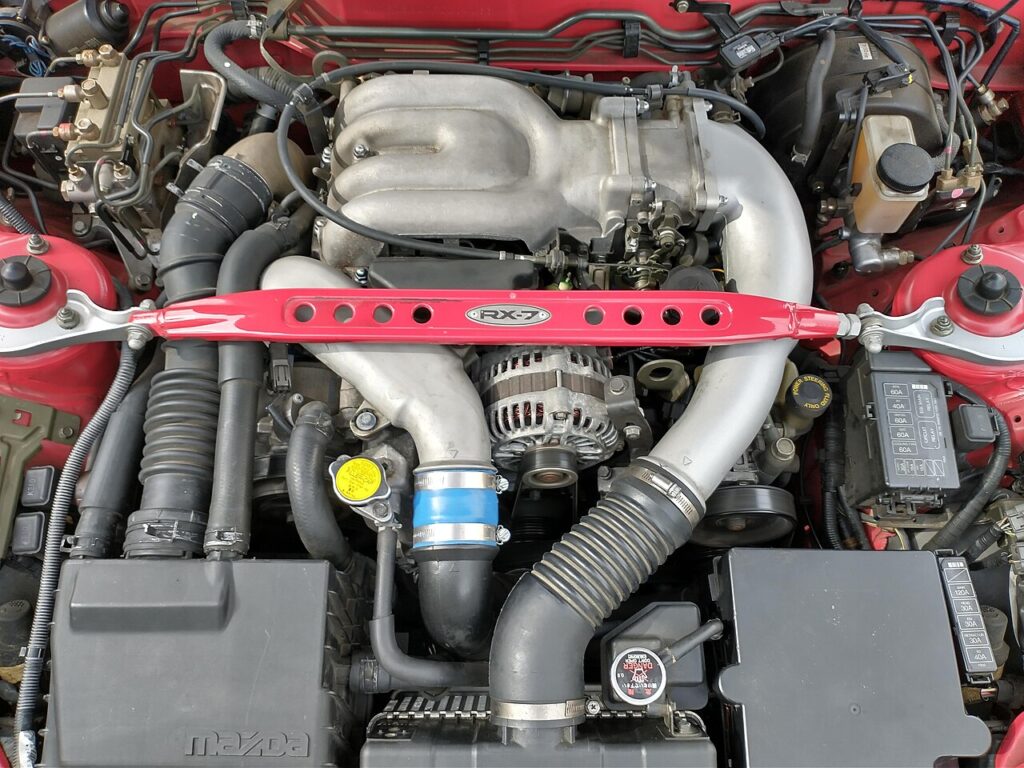
Image source: Wikimedia Commons (see file page, CC BY-SA 4.0)
The stock 13B-REW’s sequential twin-turbo system is a genuine engineering achievement — at the time of its introduction, sequential forced induction of this sophistication was rare even in high-end sports cars. But the system was designed around a stock 255hp output and factory reliability requirements. The moment you start pushing for more power, the stock turbo setup becomes the limiting factor.
Japanese turbo and engine builders have been solving this problem since the early 1990s, and the solutions available in 2026 are better than ever.
Street-Level Upgrades
For FD3S owners who want meaningful performance gains while retaining the sequential turbo behavior and daily-driver usability, stock-location turbo upgrades are the starting point. HKS and Trust/GReddy both offer bolt-on upgrade turbos engineered specifically for the FD3S’s sequential turbo configuration, delivering improved spool and increased flow without requiring full system replacement. Gains in the 280–320hp range are achievable with supporting modifications.
Track-Level Upgrades: Single Turbo Conversion
Single-turbo conversions are where the FD3S’s power potential truly opens up. Replacing the sequential twin system with a single larger turbo — typically a T04, GT35, or purpose-built rotary-specific unit — simplifies the system dramatically and allows power levels from 350hp to well beyond 500hp depending on supporting modifications. HKS, Trust/GReddy, and RE Amemiya all offer single-turbo conversion kits with varying levels of supporting hardware included.
Professional Race: Ported Housings and Beyond
Porting the rotor housings — modifying the intake and exhaust port shape to improve flow — is the rotary-equivalent of head porting on a piston engine. Street porting provides a modest power and response improvement with minimal drivability impact. Bridge porting and peripheral porting deliver significantly larger gains but typically require higher minimum rpm to operate effectively, making them better suited to dedicated track builds than street use.
Key brands: HKS, Trust/GReddy, RE Amemiya
Best for: Street (bolt-on upgrades) → Track day (single turbo) → Circuit/race (ported housings + full build)
Browse HKS parts on Discovery Japan Mall →
Tuning Category #2 – Cooling System Upgrades
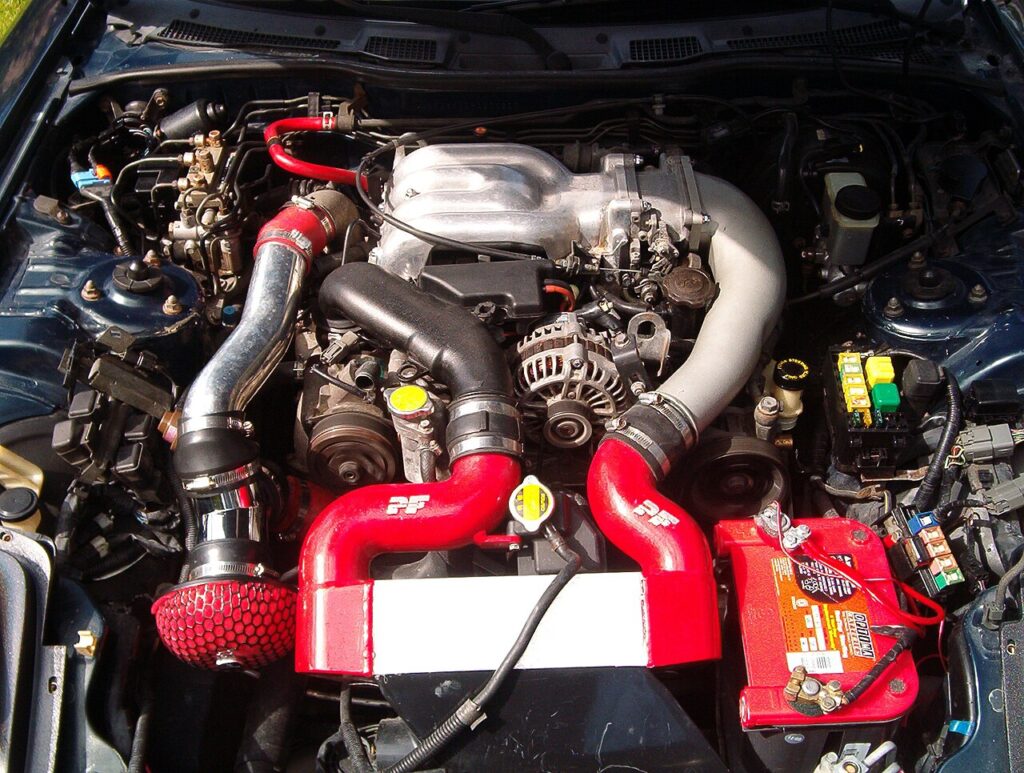
Image source: Wikimedia Commons (see file page for author & license)
If the engine health section above didn’t make this clear enough: cooling is not optional on a performance FD3S build. The 13B-REW runs hot by the standards of modern piston engines, and as power output increases, so does heat production. Apex seal longevity is directly correlated with consistent operating temperatures — run the engine hot repeatedly, and seal life shortens dramatically.
Oil Cooling
An oil cooler is widely regarded as one of the most impactful first cooling upgrades for the 13B-REW, and it should be among the first modifications on any performance build. The oil in a rotary engine doesn’t just lubricate — it also plays a key role in cooling the rotor housings. Keeping oil temperature in the 80–100°C range under hard driving is the target. Front-mount oil cooler kits from Trust/GReddy and RE Amemiya are widely considered the benchmark products for FD3S builds, offering purpose-designed mounting brackets and oil line routing for clean, professional installation.
Water Cooling and Radiator Upgrades
Aluminum racing radiators with increased core thickness improve coolant heat rejection significantly over the stock unit. Koyo Seiki, a Japanese radiator specialist with extensive motorsport credentials, produces FD3S-specific aluminum radiators that are a popular upgrade for anything beyond a mild street build. Upgraded thermostats and water temperature gauges complete the cooling system refresh.
Water-to-Oil Cooler Kits
Water-to-oil cooler kits — which use the engine coolant circuit to regulate oil temperature as well as cool it — are available from several Japanese suppliers and are particularly valued in colder climates where pure front-mount oil coolers can result in oil temperatures that are too low in early-morning driving.
Key brands: Trust/GReddy, RE Amemiya, HKS, Koyo Seiki
Best for: Every FD3S with any performance modification — this category has no “street vs. race” distinction. Cooling is universal.
Browse RX-7 cooling parts on Discovery Japan Mall →
Tuning Category #3 – Exhaust & Intake Systems
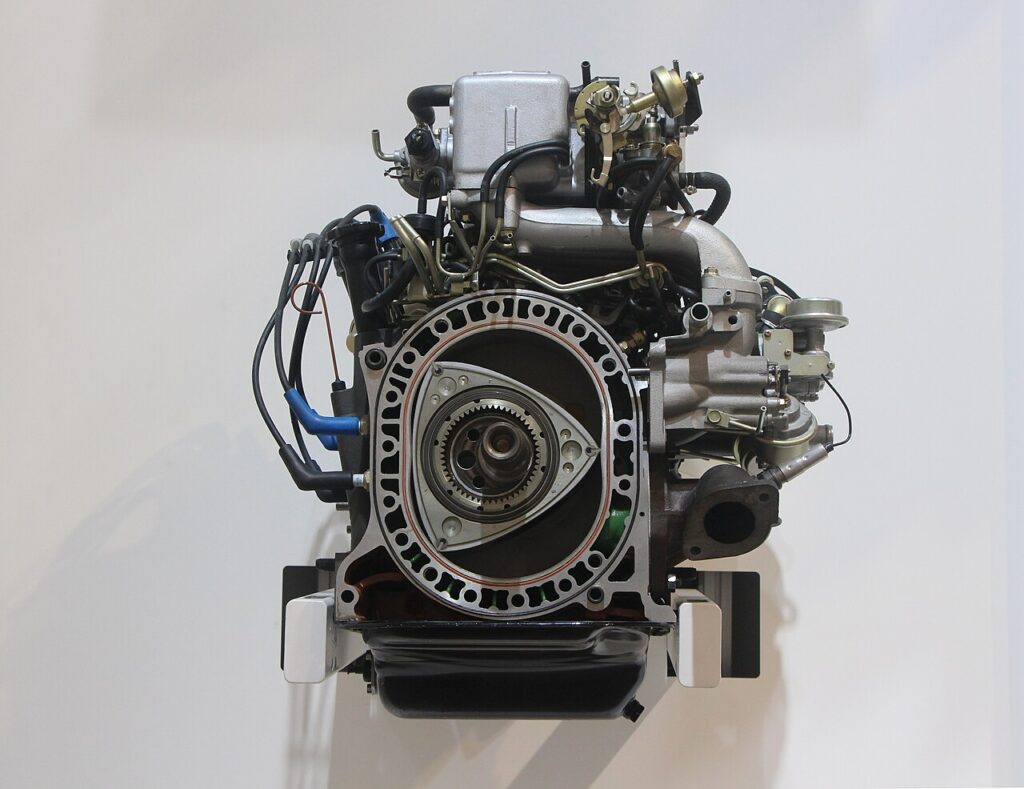
Image source: Wikimedia Commons (Wikisympathisant, CC BY-SA 4.0)
The FD3S exhaust system is more complex than most performance cars due to the sequential twin-turbo architecture — two turbos, separate pre-cat piping, a complex routing path under the car. This complexity means that exhaust upgrades on the FD3S require purpose-designed parts, not generic aftermarket components. Japanese manufacturers who have been building FD3S-specific exhaust parts for decades have a significant advantage here.
RE Amemiya: A Benchmark in RX-7 Tuning
RE Amemiya is, in many ways, one of the most recognized names in RX-7 tuning. Founded by Isami Amemiya specifically around the rotary engine, RE Amemiya’s stainless steel front pipes, downpipes, and manifolds are well-regarded in the rotary community for their quality and race-heritage development. When an RE Amemiya exhaust component fits your FD3S, it fits because someone spent years in racing ensuring it would.
Intake Systems
Cold air intake kits for the FD3S — replacing the restrictive factory airbox with a short ram or cold air routing to a high-flow filter — provide modest but real power and response improvements. More critically, improved intake heat management helps prevent heat soak in the intake tract, which is particularly important on a turbocharged rotary where intake air temperature directly affects knock sensitivity. HKS and Trust/GReddy produce FD3S-specific intake kits with intake air temperature in mind.
High-Flow Catalysts
The stock catalytic converter on the FD3S is a notable restriction for any performance build. High-flow replacement catalysts from Japanese suppliers reduce backpressure significantly while retaining emissions compliance in many jurisdictions — an important consideration for street-driven cars.
Key brands: RE Amemiya, HKS, Trust/GReddy, Mazdaspeed
Best for: Street (intake + high-flow cat) → Track day (full front pipe + cat-back) → Circuit (full exhaust + manifold)
Browse Japanese exhaust and intake parts on Discovery Japan Mall →
Tuning Category #4 – Suspension & Handling
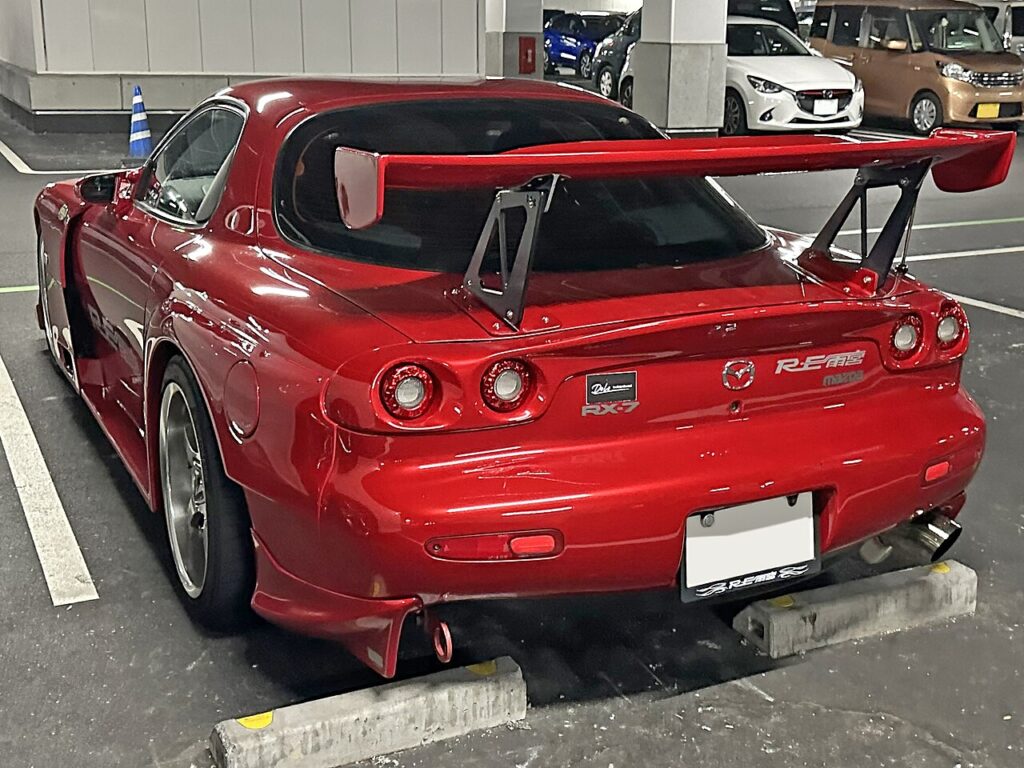
Image source: Wikimedia Commons, photo by Tokumeigakarinoaoshima (CC0 / Public Domain)
Here’s a counterintuitive truth about FD3S suspension tuning: the stock suspension is genuinely good. Mazda’s engineers spent serious development time on the FD3S’s handling dynamics, and the result is a car with naturally balanced, communicative handling that many cars costing twice as much can’t match. The goal of suspension upgrades on an FD3S is not to fix a bad chassis — it’s to reveal the full potential of a great one.
Coilovers: The Foundation
A quality coilover kit is the most important suspension upgrade for any FD3S owner who wants to drive the car with intent. Lowering the center of gravity, increasing spring rate appropriately, and gaining full ride height and damping adjustability transforms an already good-handling car into something exceptional. TEIN, Japan’s largest suspension manufacturer, produces several FD3S coilover options from the street-focused Flex Z to the more aggressive Street Advance Z. HKS’s Hipermax series is equally popular for its ride quality combined with genuine performance capability — a balance that’s hard to find in coilovers designed primarily for one or the other.
Sway Bars and Tower Braces
Adjustable front and rear sway bars from Cusco and RE Amemiya allow fine-tuning of the FD3S’s natural balance. The car’s stock front-rear balance is a strength — the goal is to preserve it while reducing body roll. Strut tower bars and chassis braces stiffen the body structure, improving steering response and the feeling of connection through the steering wheel.
Alignment and Geometry
Adjustable control arms — allowing proper alignment correction after lowering — are available from Cusco and RE Amemiya. This is often overlooked by first-time suspension builders, but running incorrect alignment on a lowered FD3S will destroy tire wear and actually degrade handling compared to stock.
Key brands: TEIN, HKS Hipermax, Ohlins Japan, Cusco, RE Amemiya
Best for: Street (TEIN Flex Z, HKS Hipermax) → Track day (stiffer spring rates, full geometry correction) → Circuit (race-spec Ohlins, aggressive alignment)
Browse TEIN and Japanese suspension parts on Discovery Japan Mall →
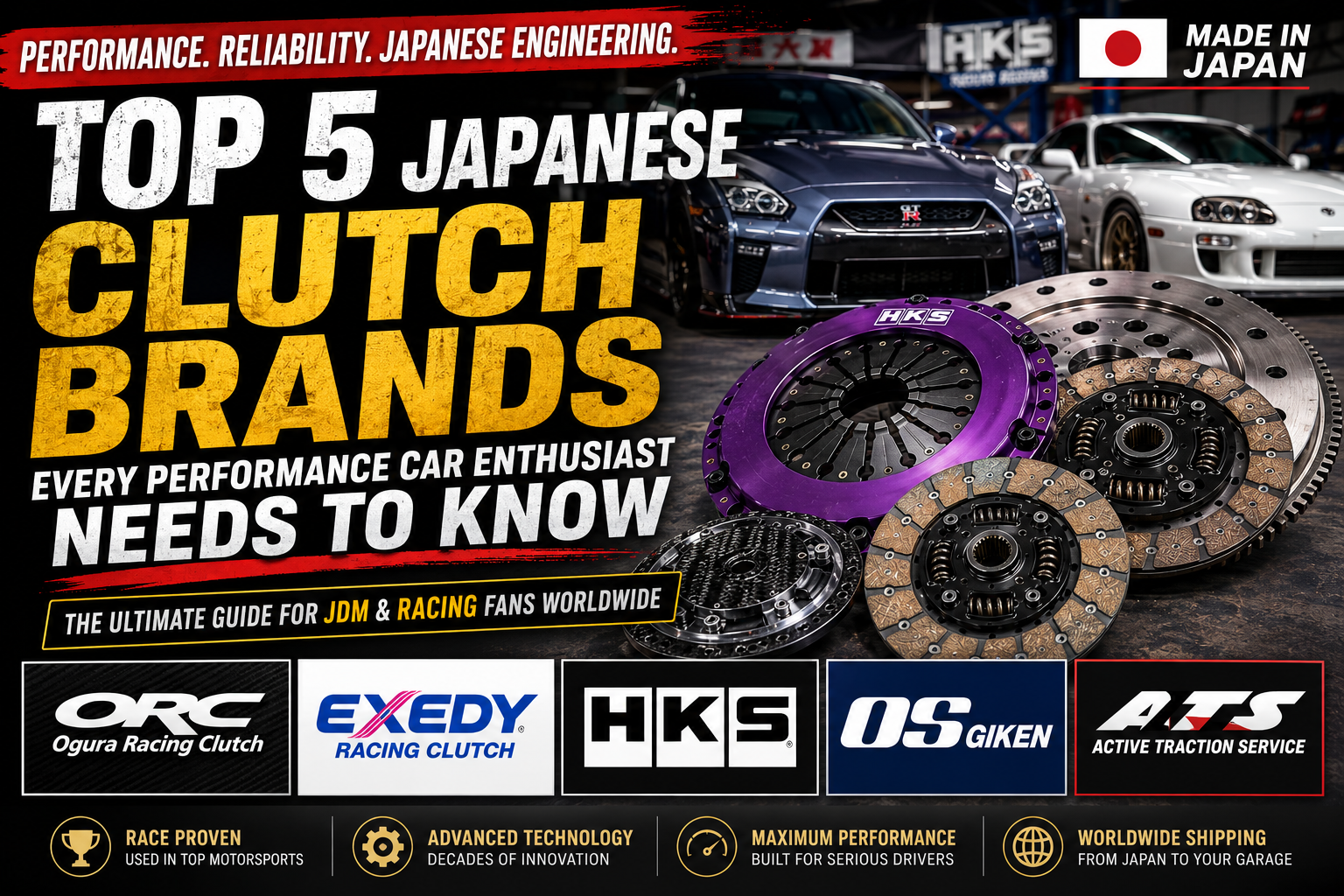
Tuning Category #5 – Clutch & Drivetrain Upgrades
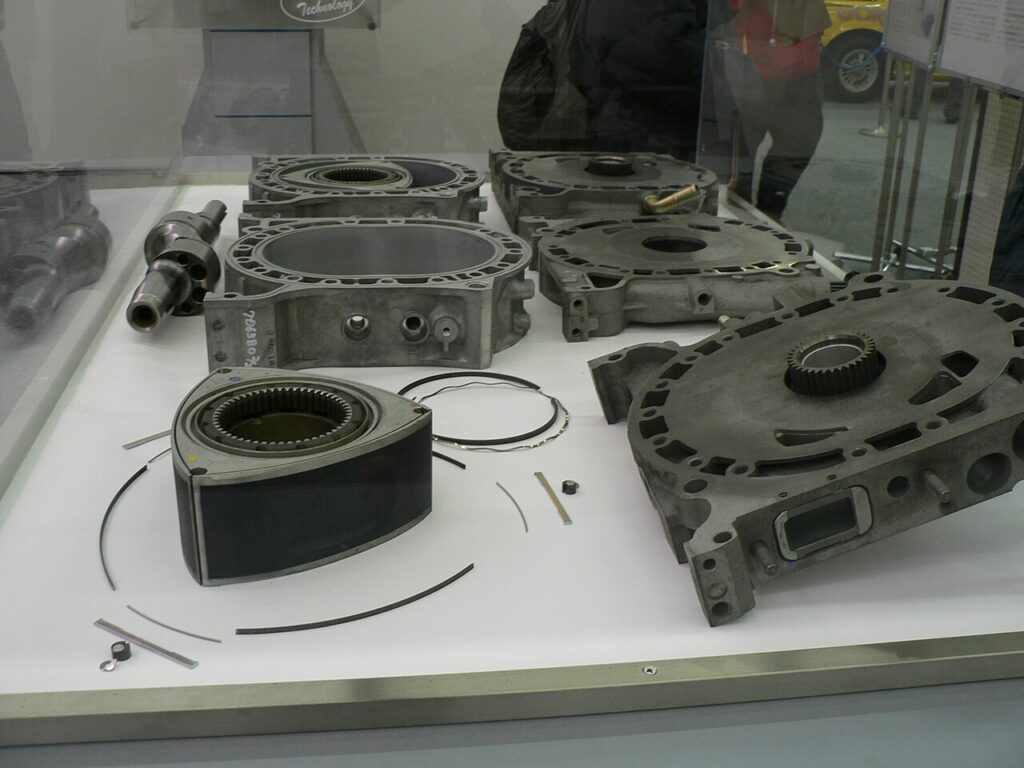
Image source: Wikimedia Commons (see file page for author & license)
The FD3S’s stock clutch was engineered to handle stock power with adequate longevity and smooth engagement. Add meaningful power — and even a well-built street build can push the 13B-REW to 320hp or more — and the stock clutch begins to slip under hard acceleration. For track use or any serious power increase, a clutch upgrade is not optional.
Japan has a strong tradition of performance clutch manufacturing, with several brands holding well-established reputations in global motorsport, and several options are specifically well-suited to the FD3S’s combination of moderate torque, high rpm capability, and the specific demands of rotary power delivery.
Street Replacement and Sport Upgrades
EXEDY — one of the world’s largest OEM clutch suppliers, producing clutches for Toyota, Honda, Mazda, and virtually every other Japanese manufacturer — offers FD3S-specific clutch kits from direct OEM replacements through Stage 2 and Stage 3 performance upgrades. EXEDY’s Stage 2 kit is a popular first clutch upgrade for street-driven FD3Ss with mild power increases, offering improved clamping force with only a modest increase in pedal effort.
Track and Circuit: OS Giken
OS Giken holds something approaching cult status in Japanese time attack and circuit racing circles. Founded when Yukinori Okazaki’s race engines literally outgrew the available clutch options and he designed his own, OS Giken’s TC (Twin-Clutch) series is a favorite for serious FD3S circuit builds. OS Giken’s approach — smaller diameter, lighter discs for reduced drivetrain inertia — makes the 13B-REW’s rev characteristics even sharper, which is exactly what a rotary tuner is looking for.
High-Power Builds: ATS Carbon Twin
For FD3S builds pushing 500hp or beyond, ATS’s Carbon Twin series offers a unique solution to the traditional problem with carbon clutches: engagement brutality. ATS pioneered a non-mesh random-weaving carbon disc construction that gives dramatically smoother engagement than conventional carbon discs, making even high-spec setups genuinely streetable. With heat resistance to 2,000°C and disc weights around 400g, the ATS Carbon Twin is a serious tool for serious builds.
Key brands: EXEDY, OS Giken, ATS, ORC, HKS
Best for: Street (EXEDY OEM/Stage 2) → Track day (EXEDY Stage 3, HKS LA) → Circuit/race (OS Giken TC, ATS Carbon Twin)
Browse OS Giken clutch parts on Discovery Japan Mall →
Tuning Category #6 – Brakes & Wheels
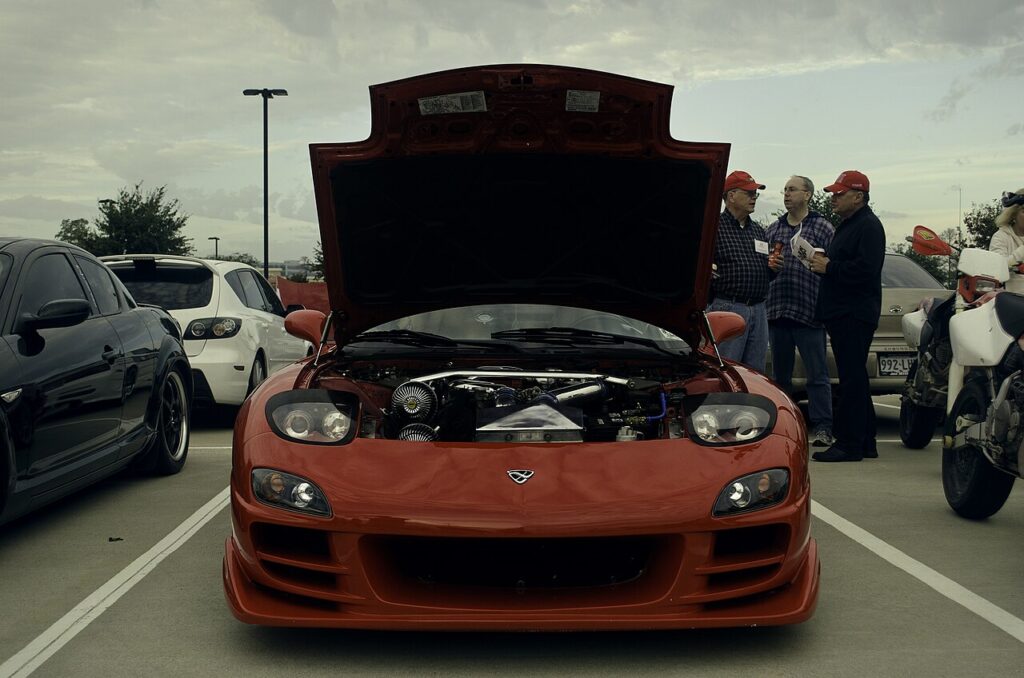
Image source: Wikimedia Commons (see file page for author & license)
The FD3S’s stock braking system is adequate for road use but shows its limits quickly under repeated hard braking on track. Heat buildup in the stock brake pads leads to fade, and the stock rotors — while not particularly bad — don’t have the thermal mass of a purpose-built performance unit. For any FD3S that sees track use, brake upgrades are essential safety equipment, not just a performance option.
Brake Pads: The First Upgrade
High-performance brake pads are a high-value brake upgrade — they work with your existing caliper and rotor, and can provide a meaningful improvement in fade resistance and initial bite compared to OEM pads. Endless and Project Mu are the dominant Japanese pad brands in circuit racing. Endless’s ME20 and CC-Rg compounds, and Project Mu’s HC+ and B-Spec compounds, are widely used by FD3S track day drivers and full circuit racers alike.
Big Brake Kits
Four-pot and six-pot big brake kits — featuring larger rotor diameters and multi-piston calipers for improved thermal capacity and clamping force — are available from several Japanese suppliers including Endless and Brembo Japan. For circuit racing or time attack builds, upgraded braking is critical to consistent lap time and driver confidence.
Wheels: The Volk TE37 and the FD3S
Few wheel-car combinations in JDM culture are as iconic as the RAYS Volk Racing TE37 on a Mazda FD3S. The TE37 — a forged aluminum 6-spoke wheel renowned for its strength-to-weight ratio — in 17-inch diameter has been fitted to FD3Ss by everyone from RE Amemiya’s race team to weekend track day drivers. The FD3S weighs only 1,260kg; reducing unsprung weight with lightweight forged wheels can contribute to a measurable reduction in unsprung mass, with handling benefits that many drivers notice in steering response and cornering feel. Enkei’s RPF1 is a more accessible forged option that also works beautifully on the FD3S platform.
Key brands: Endless, Project Mu, Brembo Japan, RAYS (Volk Racing), Enkei
Best for: Street (upgraded pads) → Track day (upgraded pads + slotted rotors) → Circuit (big brake kit + forged wheels)
Browse Endless brake parts on Discovery Japan Mall →
Tuning Category #7 – ECU & Fuel Management

Image source: Wikimedia Commons (see file page for author & license)
The stock FD3S ECU is a capable unit for managing the factory sequential turbo system — but it was not designed for significant power increases, aftermarket turbo configurations, or the fuel and ignition demands of a heavily modified 13B-REW. Once your build pushes meaningfully beyond 320hp, the factory ECU becomes a bottleneck, and proper engine management becomes the difference between a reliable, well-tuned build and one that’s constantly fighting detonation and fuel delivery issues.
HKS F-CON V Pro: The Rotary Standard
The HKS F-CON V Pro standalone ECU has been the go-to engine management solution for 13B-REW builds for decades, and for good reason. HKS developed the F-CON with specific rotary engine considerations built in — the 13B-REW’s ignition timing requirements, its fuel delivery characteristics, and the sequential turbo logic are all handled within the F-CON’s mapping architecture. It’s a proven, well-supported system with a large community of Japanese tuners who have mapped hundreds of FD3S builds.
Fuel System Upgrades
As power output increases, the factory fuel system reaches its limits. High-flow fuel injectors — typically 550cc or 740cc units for mid-level builds, larger for high-power applications — replace the stock injectors to ensure adequate fuel delivery under boost. A high-flow in-tank fuel pump (Walbro or equivalent) ensures consistent fuel pressure at high demand. Rising-rate fuel pressure regulators are used on builds that retain piggyback ECU configurations rather than standalone management.
Ignition Upgrades
The rotary engine’s ignition system handles two spark plugs per rotor face (leading and trailing), making ignition quality particularly critical for complete combustion and knock resistance. Upgraded ignition coils and higher-quality spark plugs are a worthwhile investment on any boosted FD3S build.
Key brands: HKS, Trust/GReddy
Best for: Street (piggyback tune, injector upgrade) → Track day (F-CON V Pro, fuel system) → Circuit (full standalone, custom mapping)
Browse HKS ECU and fuel management parts on Discovery Japan Mall →
Tuning Category #8 – Aero & Exterior Upgrades
Image source: Wikimedia Commons (see file page for author & license)
The FD3S is one of the few cars where aero isn’t just about aesthetics — it’s a meaningful performance conversation. Mazda’s engineers started from a Cd of 0.29, exceptional for a 1991 sports car, and built a body that was as aerodynamically considered as it was beautiful. When you modify that body with purpose-built Japanese aero, you’re working with, not against, what the engineers originally intended.
But let’s be honest: FD3S aero is also one of the most culturally loaded topics in all of JDM. The cars you saw at Japanese circuits in the 1990s, the builds that defined what a Japanese sports car could look like at speed — the aero tells a story.
RE Amemiya — Race Heritage in Every Panel
RE Amemiya’s aero kits are, for many enthusiasts, the definitive FD3S look. The AD series — AD-01, AD-02, AD-09 — are developed directly from RE Amemiya’s race cars, which competed in the JGTC and All Japan GT Championship. Front bumper spoilers, side skirts, rear diffusers, GT wing stays, and carbon hood options all carry the same development DNA as hardware developed through competition at venues including Fuji and Suzuka. Fitment is exceptional because RE Amemiya has been building these parts for the FD3S longer than most tuning companies have existed. For the FD3S owner who wants race heritage they can actually bolt on, RE Amemiya is the answer.
Fujita Engineering (FEED) — Functional Downforce by Design
Fujita Engineering, operating under the FEED brand, approaches FD3S aero from a measurable performance standpoint. The FEED Afflux GT-spec front bumper, side skirts, rear wing, and diffuser kits are designed with downforce measurement in mind — not just visual aggression. FEED is well-regarded in time attack circles for its emphasis on functional aerodynamic design rather than purely visual styling. The FEED carbon bonnet is a popular weight-saving upgrade for track-focused builds. Visit Fujita Engineering FEED official website for their current lineup.
Veilside — The Global Icon
No honest discussion of FD3S aero can omit Veilside. The Veilside Combat Evolution wide-body kit — made globally famous by its appearance in The Fast and the Furious: Tokyo Drift — is arguably the most recognized FD3S aero package in the world outside Japan. Veilside’s wide-body approach significantly widens the FD3S’s stance, allows for much wider wheel and tire combinations, and creates a visual presence that demands attention. It’s a specific aesthetic choice, but it’s a culturally significant one.
BN Sports — Street-Friendly Wide Body
BN Sports produces wide-body kits for the FD3S with an emphasis on OEM-compatible fitment and street usability. Popular in D1 Grand Prix builds and street builds alike, BN Sports kits offer the wide-body look with a more accessible installation process than some of the more radical options.
Fitment note: Most Japanese aero kits are designed for JDM-specification FD3S body panels. US-specification (export) cars may require minor modification at panel edges — always verify with the seller before ordering.
Key brands: RE Amemiya, Fujita Engineering (FEED), Veilside, BN Sports, Mazdaspeed
Best for: Street/show (Veilside, BN Sports) → Track functional (FEED Afflux GT) → Race heritage (RE Amemiya AD series)
Browse RE Amemiya and Japanese aero parts on Discovery Japan Mall →
The RX-7 FD3S Rebuild & Tuning Scene on YouTube: Channels Every Rotary Fan Should Be Watching
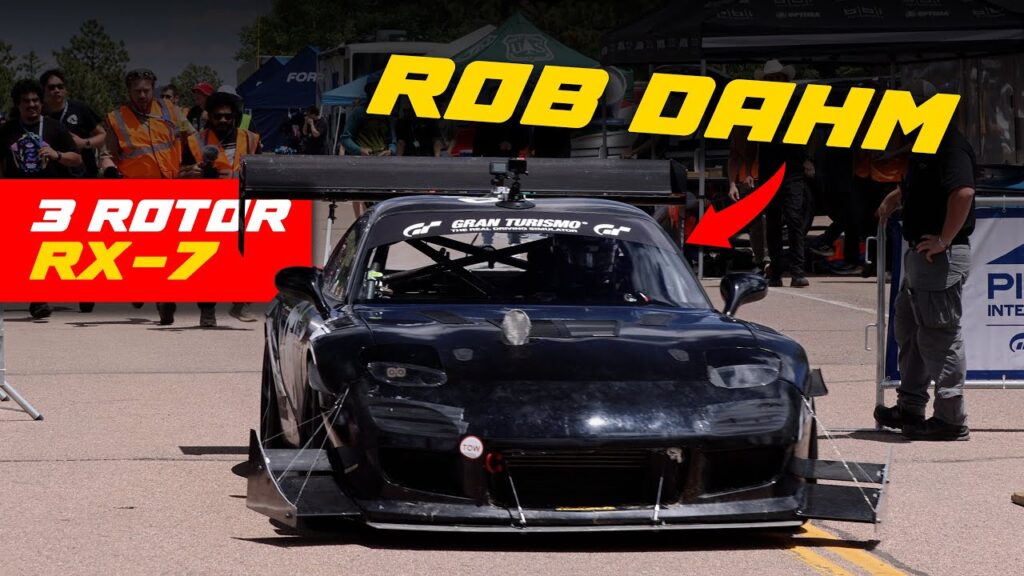
Image source: Rob Dahm — YouTube (video thumbnail)
One of the most remarkable things about the FD3S community in 2026 is how global it has become — and YouTube has been the engine of that globalization. Every year, on July 7th (7’s Day / セブンズデー), rotary enthusiasts across Japan gather at circuits and parking areas to celebrate their cars. Hundreds of FD3Ss, FC3Ss, RX-8s, and more exotic rotary machinery fill venues like Mobara Twin Circuit and mountain roads in Gunma Prefecture. Thanks to YouTube, that event is watched by enthusiasts in California, Australia, Germany, and everywhere else that has ever had an FD3S fan.
If you’re serious about understanding the FD3S — its tuning culture, its rebuilding challenges, and the community that has formed around it — these are the channels worth your time.
Rob Dahm — Pushing the FD3S Further Than Anyone Else on YouTube
Rob Dahm’s Rob Dahm on YouTube is not a conventional tuning channel. It’s a multi-year engineering project series, centered on builds that make the FD3S platform do things nobody thought possible. His world-first AWD turbocharged 4-rotor RX-7 (“Project Ahura”) documented years of engineering work in extraordinary detail. More recently, his 3-rotor FD3S competed at the Pikes Peak International Hill Climb in 2024, reaching the summit with a time of 11:04.797. If you’ve ever wondered how far the FD3S platform can be pushed — Rob’s channel is the answer. Even if your own build is a sensible street car, watching Rob work offers unusually detailed insight into the 13B’s engineering and the outer limits of the FD3S platform.
Noriyaro — The Inside View of Japan’s Rotary Scene
Australian-born Alexi Smith, known online as Noriyaro, has been living in Japan and documenting its car culture for well over a decade. His Noriyaro on YouTube channel — approaching 750,000 subscribers — is one of the best English-language sources for Japan’s grassroots motorsport and car culture. Alexi has covered 7’s Day, the Mt. Haruna rotary meeting (held on the mountain that inspired Initial D’s Mt. Akina), D1 Grand Prix paddocks, and visits to shops like RE Amemiya in their natural environment. For Western fans who want to understand why Japanese rotary culture exists the way it does — the history, the community, the cars — Noriyaro is an essential watch.
Japanese DIY Restoration Series — Where the Heart Is
Some of the most compelling FD3S content on YouTube isn’t produced by professional creators with large budgets. The Japanese DIY restoration series have built dedicated international audiences by doing something simpler: showing real people bringing real cars back to life.
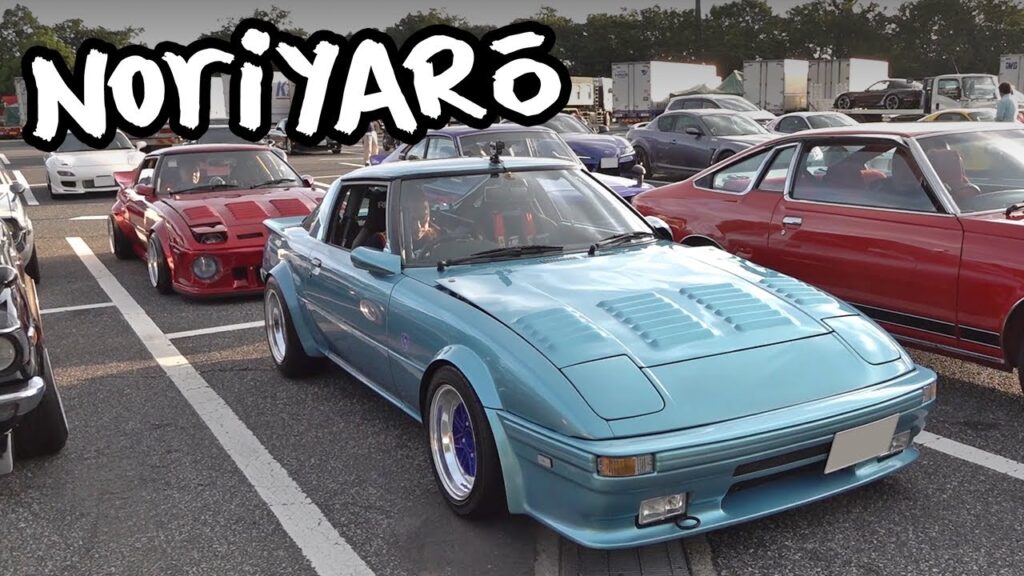
Image source: Noriyaro — YouTube (video thumbnail)
“甦れ!RX-7 FD3S” (Revival! RX-7 FD3S) — searchable on YouTube — follows two non-professional enthusiasts, including a mechanic with a 25-year gap from the industry, rescuing a completely derelict FD3S from a field and restoring it to driving condition over 90+ episodes. The series began in November 2020 and completed in June 2025. You don’t need to understand Japanese to feel what’s happening in these videos. A rusted, field-find FD3S slowly becoming a running, driving car again — that’s universal.
Similarly popular is a series that begins with the purchase of a broken, non-running FD3S sourced from Yahoo Auctions Japan — the Japanese equivalent of eBay — and documents the full restoration including a complete 13B-REW engine rebuild across 60+ episodes. These series have directly fueled global interest in FD3S parts sourcing and, in turn, created demand for exactly the kind of cross-border parts access that Discovery Japan Mall exists to provide.
Build Level Comparison: Which Upgrade Path Is Right for You?
Image source: Wikimedia Commons, photo by Tokumeigakarinoaoshima (CC0 / Public Domain)
| Build Level | Target Use | Key Upgrades | Estimated Power | Japanese Brands Featured | Browse on DJM |
|---|---|---|---|---|---|
| Street Build | Daily driving + occasional spirited runs | Oil cooler, radiator, exhaust, suspension coilovers, clutch replacement | ~280–320hp | EXEDY, TEIN, HKS, Trust/GReddy | Shop → |
| Sport Build | Weekend warrior + occasional track days | Above + turbo upgrade, upgraded brake pads, ECU tune, fuel injectors | ~350–450hp | HKS, Trust/GReddy, OS Giken, Endless | Shop → |
| Circuit / Race Build | Time attack + dedicated circuit racing | Full menu: engine rebuild, single turbo, full suspension, race clutch, big brakes, standalone ECU | 500hp+ | RE Amemiya, OS Giken, ATS, RAYS Volk Racing, EXEDY | Shop → |
| Aero / Exterior Build | Street presence + track-functional downforce | Front bumper, side skirts, rear wing, diffuser, lightweight forged wheels | N/A (aero focus) | RE Amemiya, FEED, Veilside, BN Sports, RAYS | Shop → |
How to Order RX-7 FD3S Tuning Parts from Japan
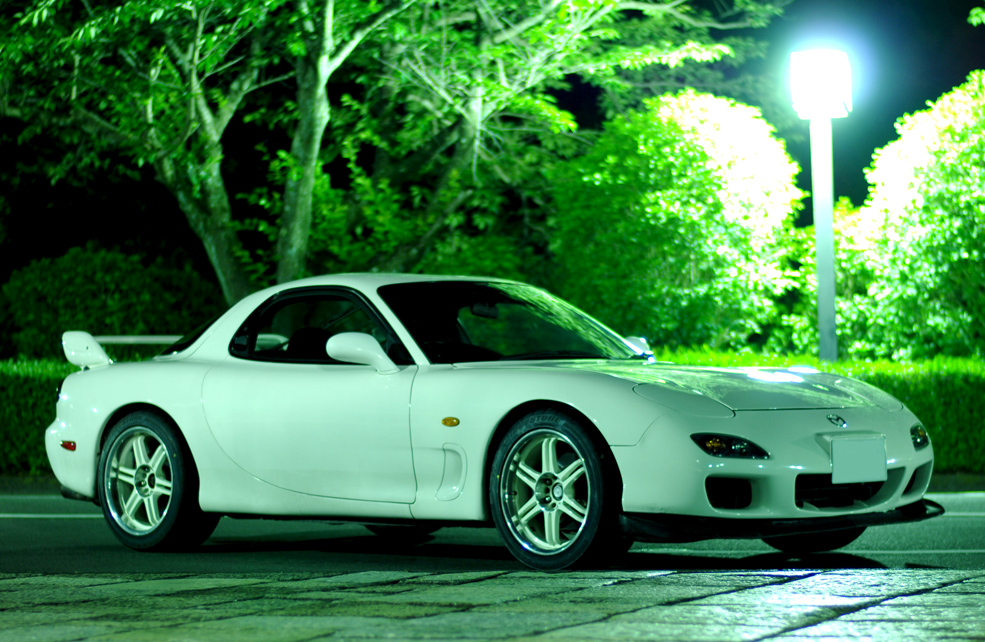
Image source: Wikimedia Commons, photo by Skiaw (CC BY-SA 3.0)
Twenty years ago, sourcing genuine Japanese performance parts for an FD3S from outside Japan was a serious undertaking — import agents, language barriers, uncertain shipping timelines, and no consumer protection if something went wrong. The situation today is dramatically different.
Discovery Japan Mall (discovery-japan.me) is a Japanese cross-border e-commerce platform that ships authentic Japanese automotive parts worldwide, including to the United States. The catalog covers clutch components, suspension parts, brake upgrades, and a broad range of FD3S-specific products from the Japanese brands covered in this guide — all shipped directly from Japan.
A few practical notes for US-based buyers:
- Confirm fitment for your specific FD3S variant. The FD3S was produced from 1992–2002 across multiple specifications (Type R, Type RB, Spirit R, etc.) and US-specification cars differ from JDM-specification in several ways. Always verify part compatibility with your specific car before ordering.
- Customs and import duties. Automotive parts shipped from Japan to the US are subject to standard import duties. Factor this into your total cost calculation when comparing prices.
- Shipping times. Most Japanese parts ship via EMS, DHL, or FedEx. Standard transit times to the US East Coast are typically 5–10 business days from Japan.
- Genuine Japanese brands. Every part on Discovery Japan Mall comes from the Japanese market — not grey-market replicas or domestic-market substitutes. If it says HKS, it’s HKS from Japan.
Browse all RX-7 FD3S parts on Discovery Japan Mall →
Frequently Asked Questions (FAQ)
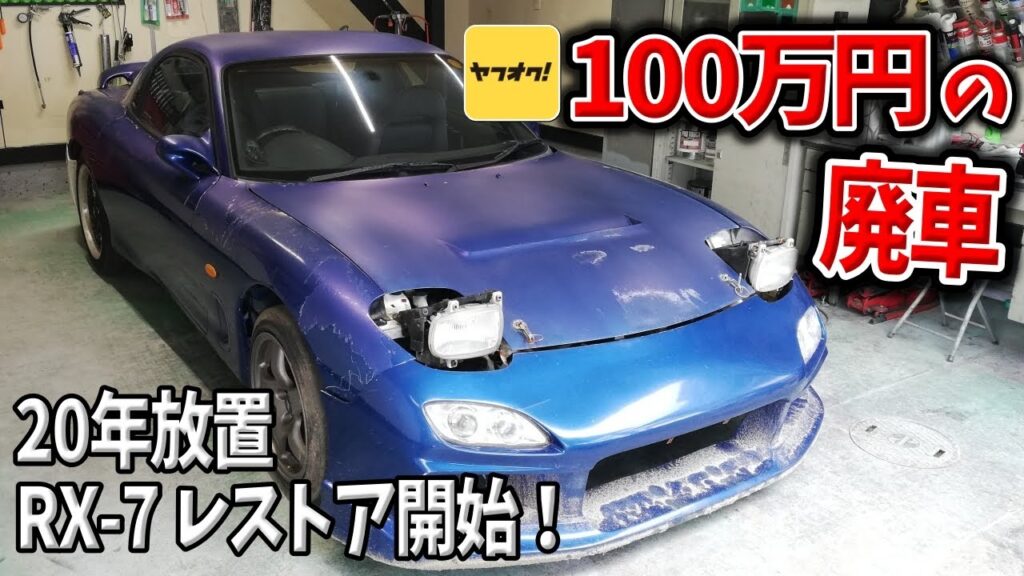
Image source: FD3S restoration series — YouTube (video thumbnail)
What is the first modification I should make to an FD3S?
The first modification on an FD3S should be an oil cooler, not a power upgrade. The 13B-REW rotary engine is heat-sensitive, and managing oil temperature is directly linked to apex seal longevity. A front-mount oil cooler from a Japanese brand like Trust/GReddy or RE Amemiya should be fitted before any power increase is attempted. Find RX-7 cooling parts on Discovery Japan Mall.
How much horsepower can a 13B-REW make with tuning?
A healthy 13B-REW can realistically reach 350–450hp on a single-turbo conversion with appropriate fuel and ECU management. With full engine preparation including ported housings, high-flow fuel system, and purpose-built turbocharging, 500–600hp is achievable. Builds beyond this level exist — including Rob Dahm’s multi-rotor projects — but require extensive engine work beyond the scope of a standard rebuild.
Is the RX-7 FD3S reliable if properly maintained and tuned?
The RX-7 FD3S can be highly reliable when maintained correctly — but “correctly” has specific meaning for a rotary engine. Regular oil changes with quality rotary-appropriate oil, keeping coolant temperatures in range, never shutting the engine down immediately after hard use, and respecting the 13B-REW’s warm-up requirements are all essential. A properly maintained FD3S with upgraded cooling and a competent tune is not an unreliable car.
Can I order RX-7 FD3S tuning parts from outside Japan?
Ordering RX-7 FD3S tuning parts from Japan is straightforward in 2026. Discovery Japan Mall ships authentic Japanese automotive parts — including clutch components, suspension, brake parts, and more — directly to customers in the United States and worldwide. Browse the full Car & Bike Parts section on Discovery Japan Mall to find parts for your build.
What clutch should I use for a 400hp+ FD3S build?
For a 400hp+ FD3S build, the OS Giken TC Twin-Clutch series or EXEDY’s Stage 3/Racing kit are the most commonly recommended options in the Japanese circuit racing community. For builds pushing 500hp and above with street usability requirements, the ATS Carbon Twin offers exceptional torque capacity with carbon disc engagement characteristics that are more manageable in daily driving than conventional metal-face race clutches. Find Japanese clutch parts on Discovery Japan Mall.
Is a single-turbo conversion worth it on the FD3S?
A single-turbo conversion is worth it for FD3S owners targeting power levels above approximately 350hp or building specifically for circuit or time attack use. The sequential twin-turbo system is brilliant at stock power levels but adds complexity and cost at higher outputs. A well-executed single-turbo conversion using a quality Japanese kit from HKS or Trust/GReddy simplifies the system and unlocks significantly higher power potential.
What suspension setup do FD3S time attack cars use?
FD3S time attack cars in Japan typically use purpose-built coilover kits from Ohlins Japan or high-specification TEIN coilovers with aggressive spring rates (12–16kg/mm front, 8–12kg/mm rear for track use), combined with Cusco or RE Amemiya adjustable control arms for correct geometry, and adjustable sway bars for balance tuning. The goal is always to preserve the FD3S’s natural handling balance while removing body roll and sharpening response.
What is the most iconic aero kit for the RX-7 FD3S?
The most iconic FD3S aero is widely considered to be RE Amemiya’s GT-spec bodywork, developed directly from their JGTC race cars and available as a road-car kit through the AD series. For street-functional downforce with measurable aerodynamic effect, Fujita Engineering’s FEED Afflux GT kits are the benchmark in time attack circles. Veilside’s Combat Evolution wide-body kit remains the most internationally recognized FD3S aero package globally.
Are there good YouTube channels for learning about RX-7 FD3S builds?
There are excellent YouTube channels for RX-7 FD3S content. Rob Dahm (English) documents extreme multi-rotor FD3S builds including a 3-rotor Pikes Peak car. Noriyaro (English, based in Japan) covers the Japanese grassroots rotary scene including 7’s Day and D1 Grand Prix builds. Several Japanese creators have documented complete FD3S restorations from field-find junk to finished driving car across 60–90 episode series — compelling viewing even without Japanese language ability.
Is a wide-body conversion worth it on an FD3S?
A wide-body conversion on the FD3S is worth it for builds targeting larger wheel and tire fitment, or for dedicated show and motorsport aesthetics. Brands like Veilside and BN Sports offer bolt-on wide-body kits with varying levels of installation complexity. For pure track performance gains without body modification, functional aero from RE Amemiya or FEED delivers more measurable benefit at lower overall cost and complexity.
Final Thoughts: The FD3S Deserves the Best — Give It Japanese Quality
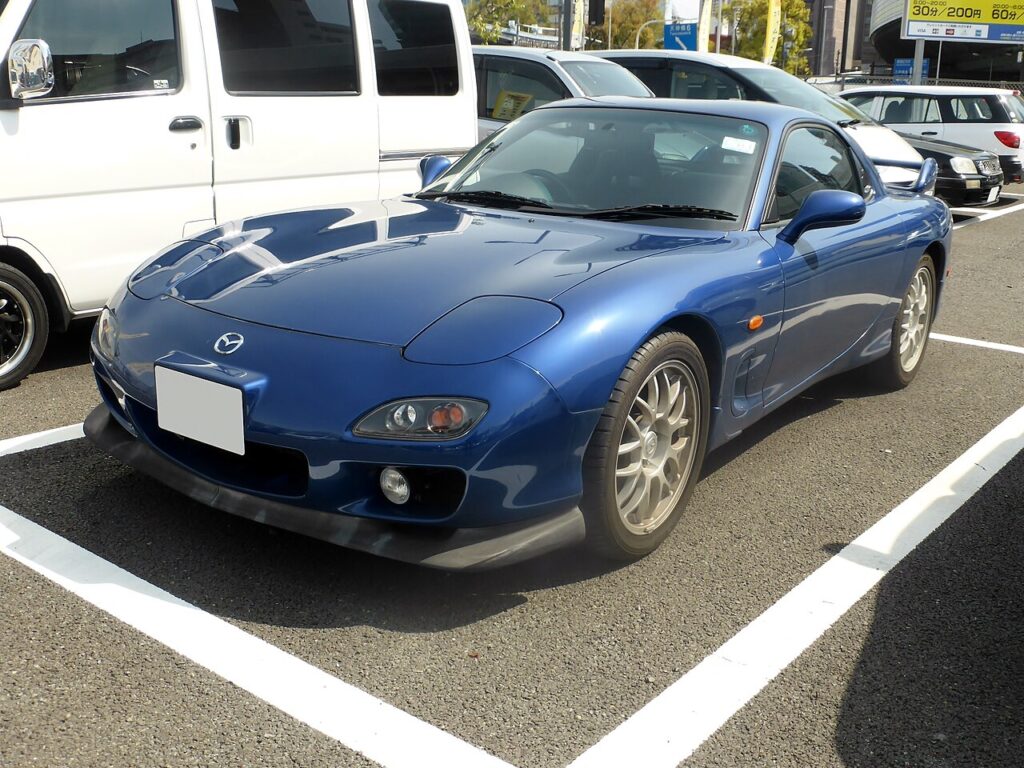
Image source: Wikimedia Commons, photo by Tokumeigakarinoaoshima (CC0 / Public Domain)
The Mazda RX-7 FD3S is one of those rare machines that genuinely earns the word “legend.” Not because of marketing. Not because of nostalgia. Because of what it actually does when you drive it — the way it communicates through the steering, the way a well-built 13B-REW pulls through to the redline, the way the chassis responds when you ask it to perform. These qualities don’t fade with age. They’re built into the car.
What does fade is components. The stock clutch that was fine at 255hp struggles at 350hp. The stock cooling system that was adequate for road use becomes marginal under sustained track stress. The stock suspension, already excellent, has more to give when you replace it with purpose-built Japanese coilovers and geometry correction. Every upgrade category in this guide is an opportunity to restore, and then exceed, what the FD3S was at its best from the factory.
Japan built the FD3S. Japan also continues to produce some of the most purpose-developed parts available for it. The brands in this guide — RE Amemiya, HKS, Trust/GReddy, TEIN, OS Giken, EXEDY, ATS, RAYS, Endless, FEED — are not random aftermarket suppliers. They are companies that have spent decades understanding the FD3S, competing with it, and engineering solutions specifically for it. That knowledge is embedded in every part they produce.
Whether you’re planning a street refresh, a time attack build, or a full restoration project inspired by the YouTube series you’ve been watching for months — the parts you need are available from Japan, and they ship worldwide.
Comments