![[2026 Latest Edition] Amazon Best Seller Rankings: Top 5 Popular Hasegawa Plastic Models and How to Choose](https://www.discovery-japan-partner.com/wp-content/uploads/2026/08/ChatGPT-Image-2026年8月28日-15_26_55.png)
Searching for “popular Hasegawa plastic models” often turns up such a wide range of genres — aircraft, ships, car models — that it’s hard to know where to start. This article is written for beginner-to-intermediate plastic model builders, carefully selecting Hasegawa’s top 5 popular kits and walking through how to choose the right one.
- What Is Hasegawa? A Brand Introduction for Plastic Model Beginners
- How to Read Amazon’s Best Seller Rankings and Our Selection Criteria for This List
- Top 5 Popular Hasegawa Plastic Models
- [For Beginners] The Basics of Choosing a Plastic Model and the Tools You’ll Need
- Top 5 Comparison Chart: Find the Kit That’s Right for You
- Where Can You Buy Hasegawa Plastic Models? Notes on Purchasing
- Frequently Asked Questions (FAQ)
- Can beginners build Hasegawa plastic models?
- What’s the difference between Hasegawa and other makers like Tamiya or Bandai?
- What scale should I choose for my first plastic model?
- What tools do I absolutely need to get started with plastic models?
- Can Hasegawa kits be completed without painting?
- Why do popular plastic models often go out of stock or require waiting for a re-release?
- Which genre is best for a plastic model beginner to start with?
- Conclusion: Start With Just One — Try Building a Hasegawa Plastic Model
What Is Hasegawa? A Brand Introduction for Plastic Model Beginners
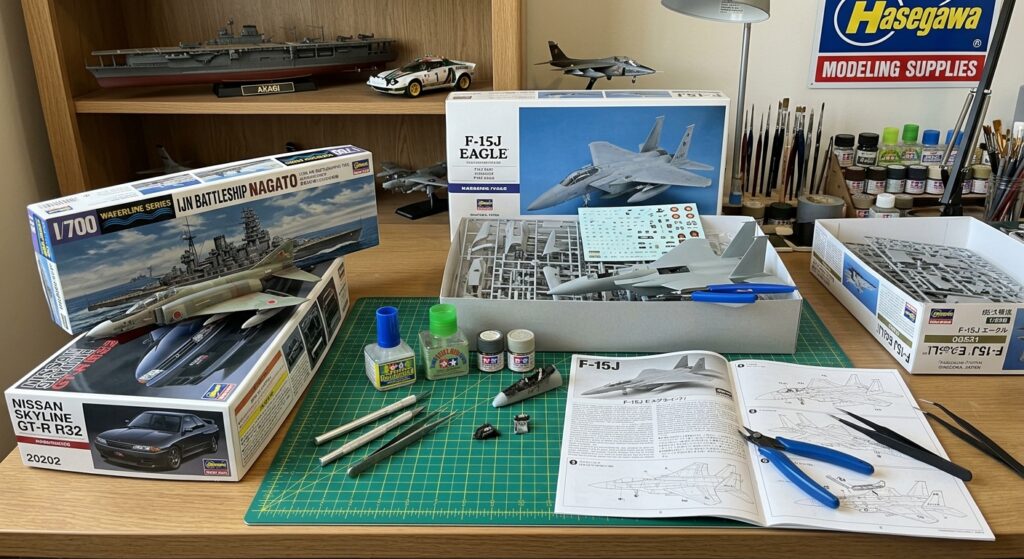
Hasegawa is a long-established plastic model manufacturer headquartered in Yaizu City, Shizuoka Prefecture. It originally started as a wooden model maker and now offers scale models across a wide range of genres, including aircraft, ships, car models, and motorcycles.
- Strong genres: Especially strong in aircraft plastic models, with an extensive lineup of ship models (such as the 1/700 Waterline series) and car models as well
- Brand strengths: Known for excellent part fit and ease of assembly, even for beginners. Its instruction manuals are also praised for being easy to follow
- How it differs from other makers: Tamiya offers a wide range of beginner-friendly kits across many genres, while Bandai excels at character-based kits such as Gunpla. Hasegawa, by contrast, is known for realistically reproducing real-world aircraft, ships, and cars as authentic scale models
Scale notations such as “1/72,” “1/48,” and “1/24” indicate the reduction ratio compared to the real object. The smaller the denominator, the larger the finished model — for example, 1/24 is a relatively large scale commonly used for car models, while 1/72 and 1/48 are the standard scales for aircraft plastic models.
How to Read Amazon’s Best Seller Rankings and Our Selection Criteria for This List
For this article, we referred to the Amazon Hobby Best Sellers ranking and its page 2 of the ranking as a general reference, and cross-checked with kakaku.com’s popularity rankings and information from the official Hasegawa website.
Keep in mind that best-seller rankings often include niche kits aimed at advanced builders, as well as limited-edition anime tie-in products near the top — so “high ranking” doesn’t automatically mean “good for beginners.” From that pool, we’ve specifically selected kits that are easy for beginner-to-intermediate builders to pick up as one of their first projects.
Top 5 Popular Hasegawa Plastic Models
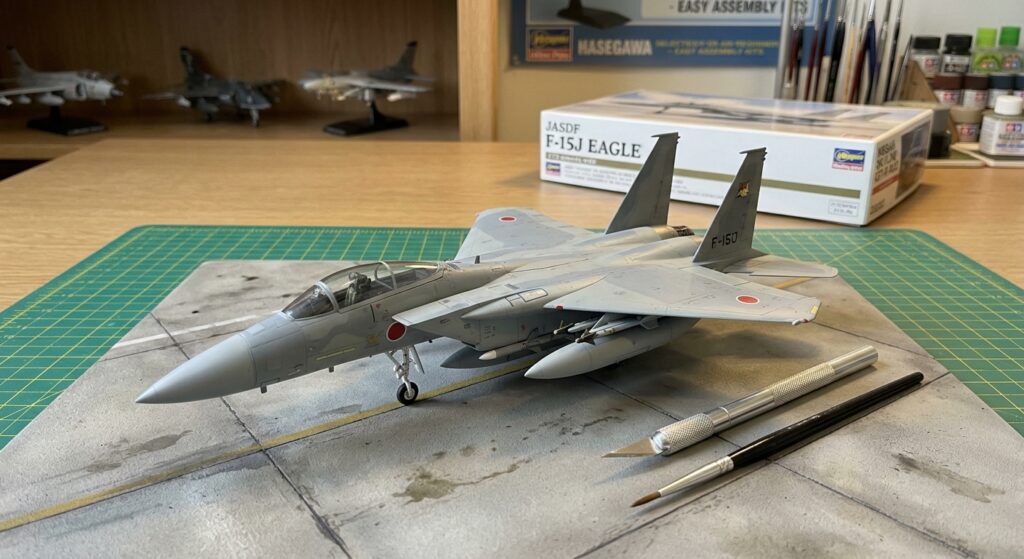
#1: 1/72 JASDF F-15J Eagle (C7)
- Scale/Genre: 1/72, aircraft plastic model (Japan Air Self-Defense Force’s main fighter jet)
- Approximate price range: Around ¥1,000 and up (actual retail prices vary, so please check at the time of purchase)
- Recommended skill level: Beginner
- Why it’s popular: As the JASDF’s frontline fighter, it’s highly recognizable, and with its affordable price and relatively low part count, it has long been a favorite entry-level kit for aircraft modeling
- Assembly tips: Since there are fewer parts, taking your time to clean up the seam lines (where parts join together) will noticeably improve the finished look
- Who it’s for: Fans of fighter jets and aircraft in general, and anyone who wants to complete their very first kit quickly and easily
View on Discovery Japan Mall →
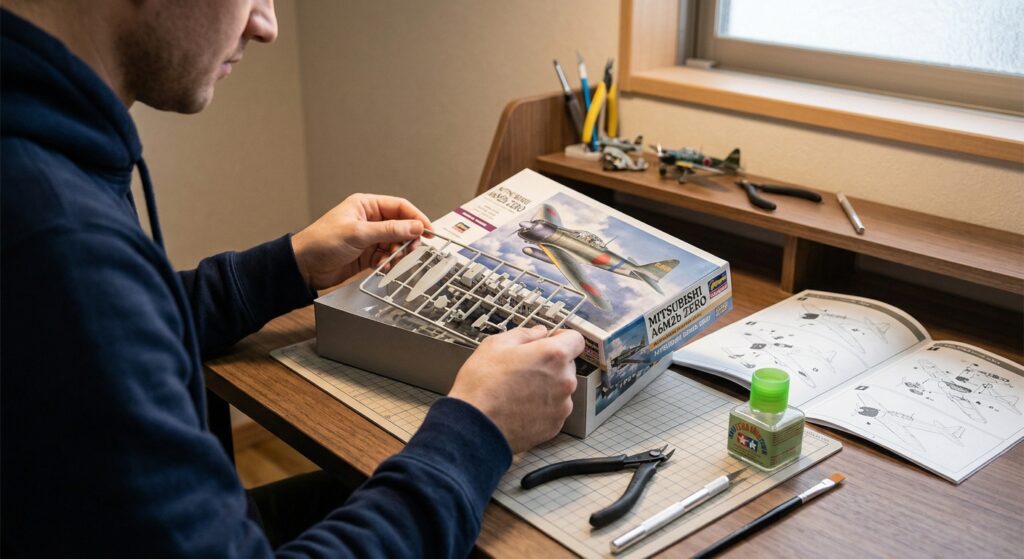
#2: 1/48 Mitsubishi A6M Zero Fighter, Type 32
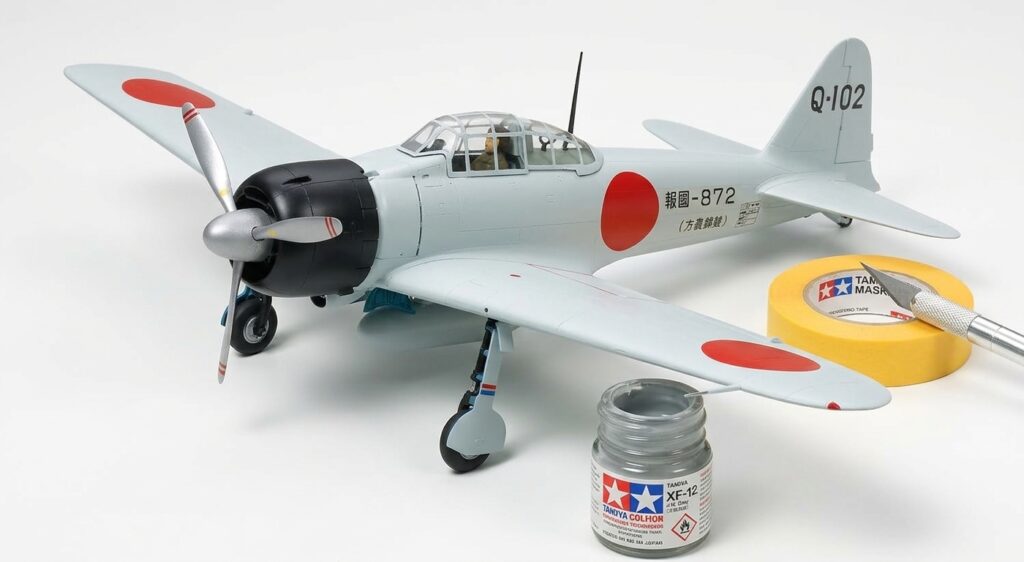
- Scale/Genre: 1/48, aircraft plastic model (Imperial Japanese Navy aircraft from the Pacific War era)
- Approximate price range: Mid ¥2,000s and up (actual retail prices vary, so please check at the time of purchase)
- Recommended skill level: Beginner to intermediate
- Why it’s popular: Known as the “Zero Fighter,” it enjoys very high name recognition and a loyal following among fans of WWII-era Japanese military aircraft
- Assembly tips: Camouflage paint schemes and markings require some paintwork, making it a great opportunity to practice masking-tape techniques
- Who it’s for: History and military enthusiasts, and beginners looking to take their first step into painting
View on Discovery Japan Mall →
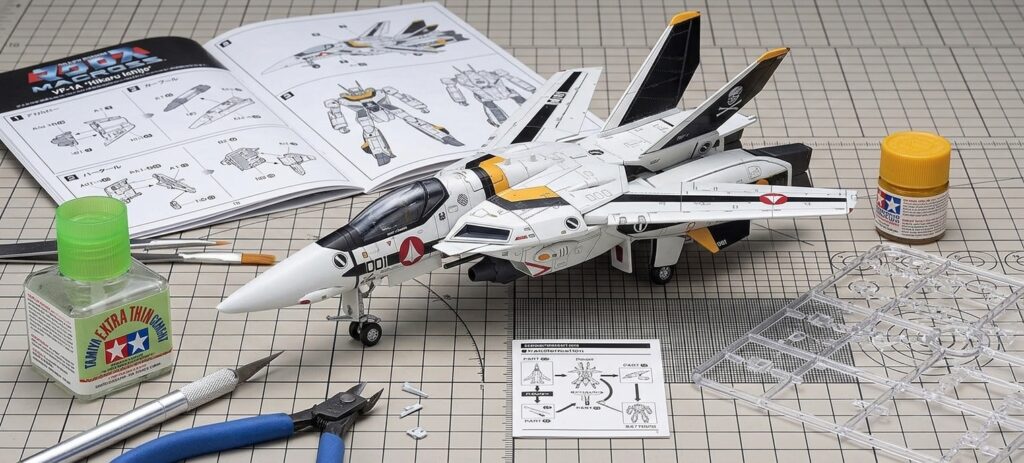
#3: 1/72 VF-1 Valkyrie (Macross Series)
- Scale/Genre: 1/72, anime mecha plastic model (from the “Super Dimension Fortress Macross” series)
- Approximate price range: Roughly ¥1,500 to the ¥3,000s, depending on the variant (actual retail prices vary, so please check at the time of purchase)
- Recommended skill level: Intermediate
- Why it’s popular: It regularly ranks near the top of kakaku.com’s popularity rankings and continues to draw steady interest from anime fans and mecha model enthusiasts alike
- Assembly tips: Some versions reproduce the transformation between fighter and humanoid forms, so part counts run higher — following the instructions carefully as you go is key
- Who it’s for: Fans of the Macross series, and anyone wanting to try a sci-fi mecha kit as a change of pace from real-world subjects
View on Discovery Japan Mall →
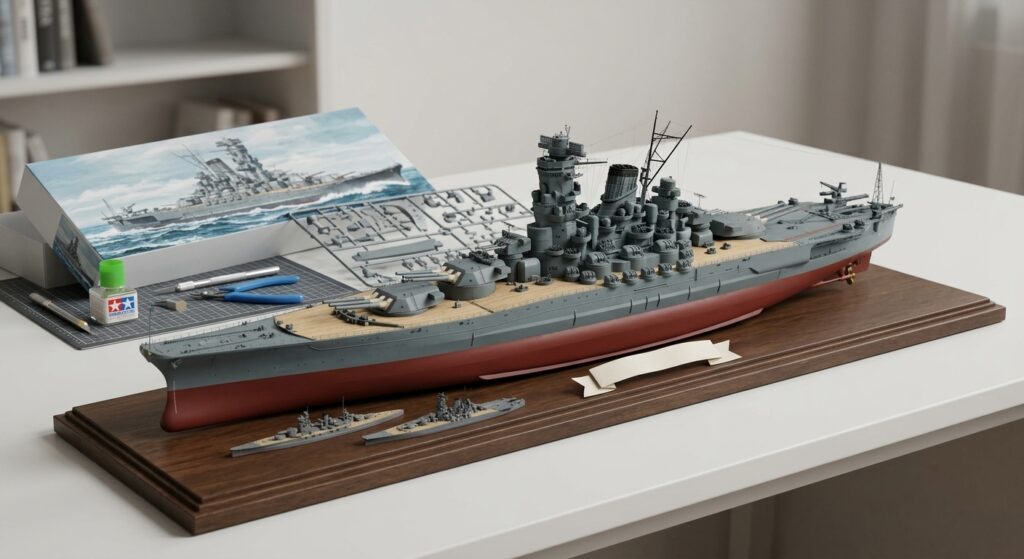
#4: 1/450 Imperial Japanese Navy Battleship Yamato
- Scale/Genre: 1/450, ship model (a large-scale kit of the battleship Yamato)
- Approximate price range: Around ¥7,000 (actual retail prices vary, so please check at the time of purchase)
- Recommended skill level: Beginner to intermediate
- Why it’s popular: Larger than the standard 1/700 scale, this kit is engineered with fewer part divisions to keep assembly simple, making it a popular “gateway” kit for builders new to the Yamato
- Assembly tips: At roughly 580mm in overall length, it’s a large model, so it’s worth planning display space in advance
- Who it’s for: Anyone trying a ship model for the first time, and those who want an impressively large finished piece to display
View on Discovery Japan Mall →
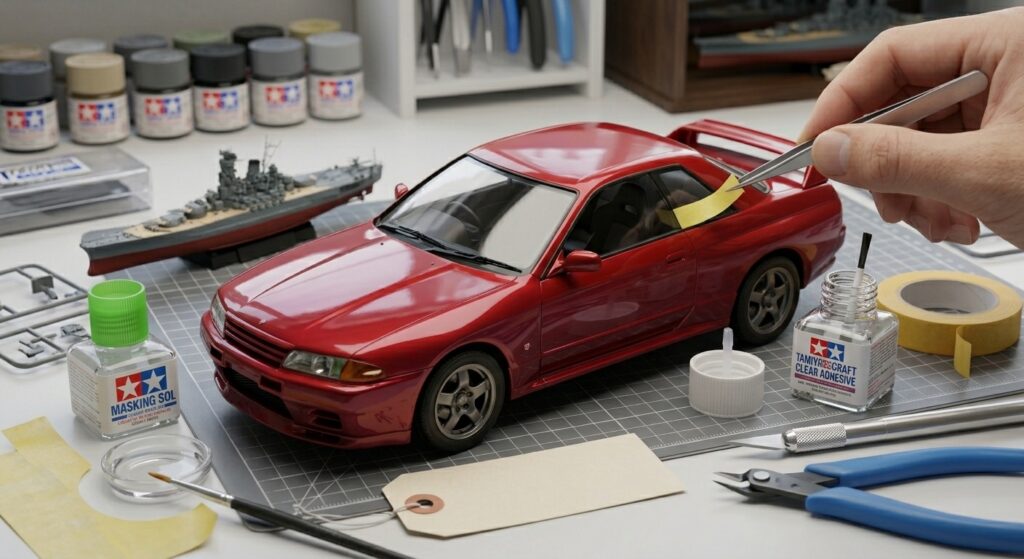
#5: 1/24 Nissan Skyline GT-R (BNR32)
- Scale/Genre: 1/24, car model (a 1990s Japanese sports car)
- Approximate price range: Appears to be in the ¥3,000s (actual retail prices vary, so please check at the time of purchase)
- Recommended skill level: Beginner to intermediate
- Why it’s popular: Amid ongoing interest in classic and JDM sports cars, this reproduction of the era’s Skyline GT-R appears to be a consistent draw among car model fans
- Assembly tips: Since it combines body painting with clear window parts, learning to switch between masking and adhesive techniques as needed is an important skill here
- Who it’s for: Car enthusiasts, and anyone wanting to branch out into car models after building aircraft or ships
View on Discovery Japan Mall →
[For Beginners] The Basics of Choosing a Plastic Model and the Tools You’ll Need
When choosing a kit as a beginner, it’s a good idea to first think about how much display space you have. A 1/72 or 1/144 aircraft model is roughly palm-sized, while a 1/24 car model or a large 1/450-scale ship model will need about a shelf’s worth of space.
Here are the essential tools to have on hand:
- Nippers (for cutting parts away from the sprue/frame)
- A hobby knife (for cleaning up the cut points)
- Sandpaper or a sanding stick (for smoothing surfaces)
- Plastic model cement (some snap-fit kits don’t require any adhesive at all)
- A full set of paints (though it’s entirely possible to finish a kit unpainted, as a simple “build only”)
Kits that make good “first builds” tend to share a few traits: a low part count, good part fit, and an easy-to-follow instruction manual. Among the five kits featured here, simpler aircraft models like the F-15J Eagle are especially well suited as a first project for plastic model beginners.
![[For Beginners] The Basics of Choosing a Plastic Model and the Tools You'll Need](https://www.discovery-japan-partner.com/wp-content/uploads/2026/08/Gemini_Generated_Image_mwh8hdmwh8hdmwh8-1024x559.jpeg)
Top 5 Comparison Chart: Find the Kit That’s Right for You
| Rank | Product Name | Genre / Scale | Difficulty | Approximate Price Range | Best For |
|---|---|---|---|---|---|
| #1 | F-15J Eagle | Aircraft / 1/72 | Beginner | Around ¥1,000+ | Anyone who wants a quick, easy build |
| #2 | Zero Fighter, Type 32 | Aircraft / 1/48 | Beginner–Intermediate | Mid ¥2,000s+ | Military and history fans |
| #3 | VF-1 Valkyrie | Anime Mecha / 1/72 | Intermediate | ¥1,500–¥3,000s | Macross fans, sci-fi mecha enthusiasts |
| #4 | Battleship Yamato | Ship / 1/450 | Beginner–Intermediate | Around ¥7,000 | Anyone who wants an impressive display piece |
| #5 | Skyline GT-R (BNR32) | Car Model / 1/24 | Beginner–Intermediate | ¥3,000s | Car enthusiasts, classic JDM fans |
Where Can You Buy Hasegawa Plastic Models? Notes on Purchasing
Hasegawa plastic models are available at hobby shops, the hobby sections of electronics retailers, and online marketplaces such as Amazon and Rakuten. The official Hasegawa website product pages let you check the latest item numbers and specifications.
Popular kits — and kits that have just been reissued after a production run ended (known as a “re-release”) — tend to sell out quickly. If you find a kit you’re interested in, it’s a good idea to check availability sooner rather than later.
Frequently Asked Questions (FAQ)
Can beginners build Hasegawa plastic models?
Yes, beginners can absolutely build Hasegawa plastic models. Kits with lower part counts, like the F-15J Eagle, offer excellent part fit and clear instructions, making them a great choice for a first build.
What’s the difference between Hasegawa and other makers like Tamiya or Bandai?
The difference lies mainly in their specialties. Hasegawa focuses on realistic scale reproductions of real aircraft, ships, and cars, Tamiya covers a broad range of beginner-friendly genres, and Bandai specializes in character-based kits such as Gunpla.
What scale should I choose for my first plastic model?
A 1/72 aircraft model is a great choice for your first plastic model. It’s a manageable finished size, generally has fewer parts, and doesn’t take up much display space.
What tools do I absolutely need to get started with plastic models?
At minimum, you’ll need nippers, a hobby knife, sandpaper, and plastic cement. If you plan to paint, having paints along with a brush or airbrush will also improve the final result.
Can Hasegawa kits be completed without painting?
Yes, Hasegawa kits can be completed without any painting at all. Since the plastic itself is molded in the appropriate colors, an unpainted “build-only” finish can still look great — a good way to enjoy just the assembly process at first.
Why do popular plastic models often go out of stock or require waiting for a re-release?
Popular kits tend to sell out because production runs are limited and re-release timing isn’t fixed in advance. If there’s a kit you’re interested in, we recommend checking [INTERNAL_LINK: Insert the relevant page URL here] regularly for restocks.
Which genre is best for a plastic model beginner to start with?
Aircraft models are a great starting point for beginners, since they typically have fewer parts and can be completed relatively quickly. Once you’re comfortable, you can branch out into ship models or car models.
Conclusion: Start With Just One — Try Building a Hasegawa Plastic Model
In this article, we covered the top 5 popular Hasegawa plastic models and how to choose one, built around the theme of “popular Hasegawa plastic models.” If you’re a beginner, we recommend starting with a kit that has fewer parts and is easy to assemble, then gradually branching out into ship models, car models, and other genres as you go. Once you’ve found a kit that catches your eye, we hope you’ll give it a try.
View on Discovery Japan Mall →
Comments