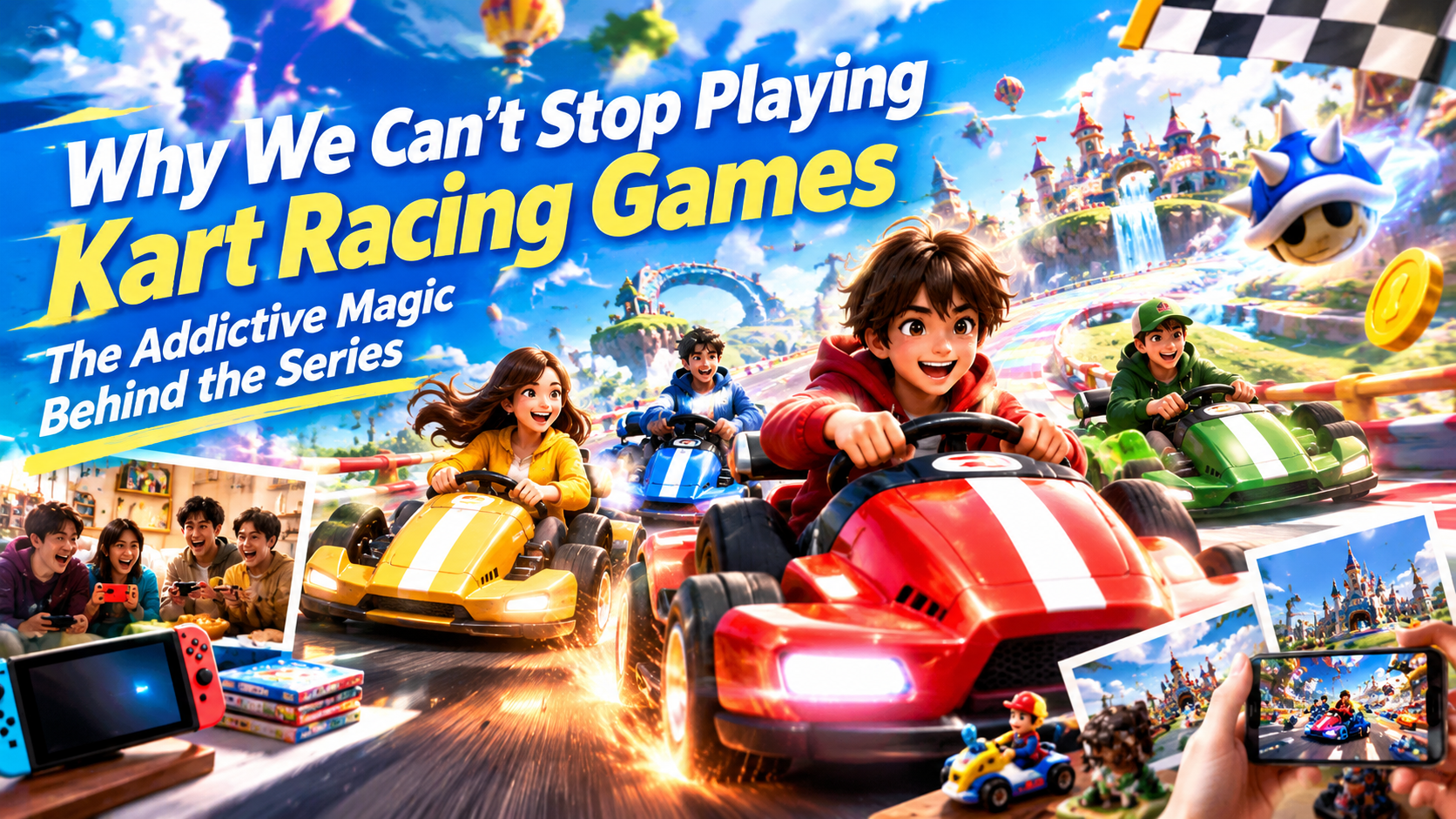
- Introduction: Why Mario Kart Is So Addictive
- The Perfect Game Loop: Easy to Start, Impossible to Put Down
- Power-Ups and Powerful Items: The Heart of the Chaos
- Battle Mode: Balloon Battle, Coin Runners, and Other Time Sinks
- Online Play and Social Competition: Friends, Strangers, and Endless Rivalries
- Courses and Booster Course Content: Variety That Keeps You Coming Back
- The Psychology of “Just One More Race”
- Mario Kart in Real Life: Merchandise, Experiences, and the Lifestyle Loop
Introduction: Why Mario Kart Is So Addictive
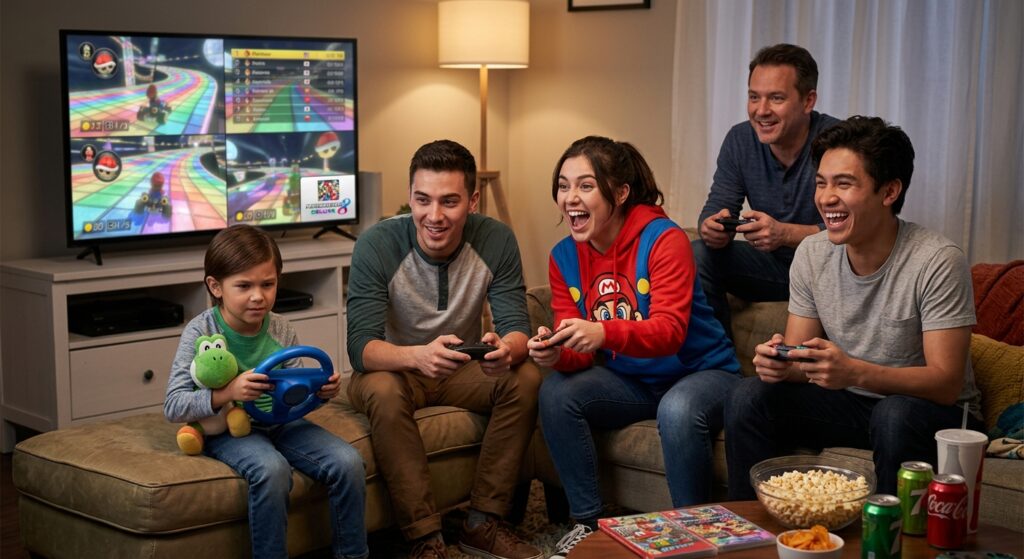
It’s 1 a.m. on a Friday. Four friends are huddled around a Nintendo Switch, screaming as a Blue Shell obliterates the leader on the final stretch of Rainbow Road. “One more cup” was the promise three hours ago. Nobody has moved.
Mario Kart is a long-running multiplayer kart-racing franchise developed by Nintendo, creating unforgettable moments since 1992. Today, Mario Kart 8 Deluxe is the definitive entry in the series, bringing together iconic characters, imaginative tracks, and exciting multiplayer action on Nintendo Switch. The franchise has sold over 206 million copies worldwide, with Mario Kart 8 Deluxe alone surpassing 71.5 million units, making it the best-selling Nintendo Switch game.
So what makes this mario kart game impossible to put down? It comes down to a few core pillars:
- Simple controls that anyone can learn in seconds
- Deep strategy that rewards years of mastery
- Constant comeback mechanics that keep every race tense
- Social chaos that turns every session into shared memories
At Discovery Japan Mall, we see this passion firsthand-fans in Japan and around the world explore our catalog for Nintendo Switch consoles, Mario Kart 8 Deluxe, racing wheels, and character goods. The obsession is real, and in this article, we’ll break down exactly why.
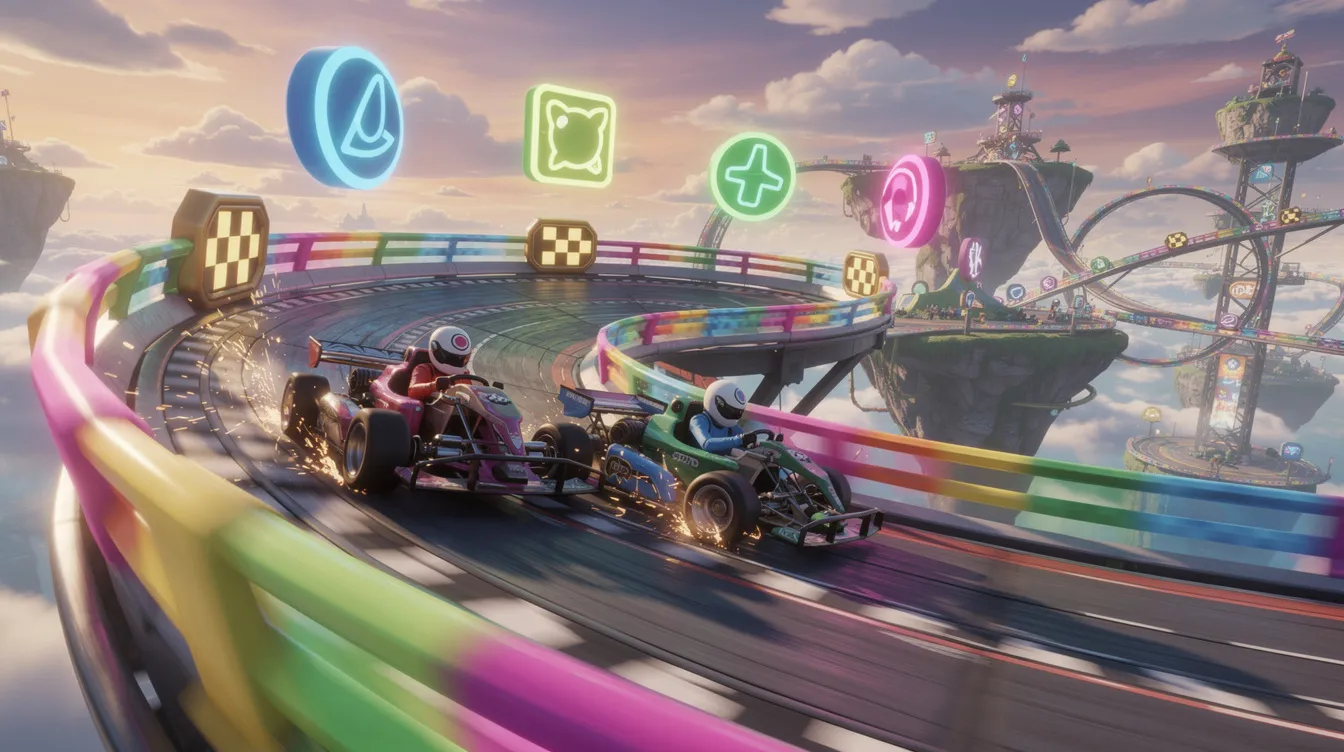
The Perfect Game Loop: Easy to Start, Impossible to Put Down
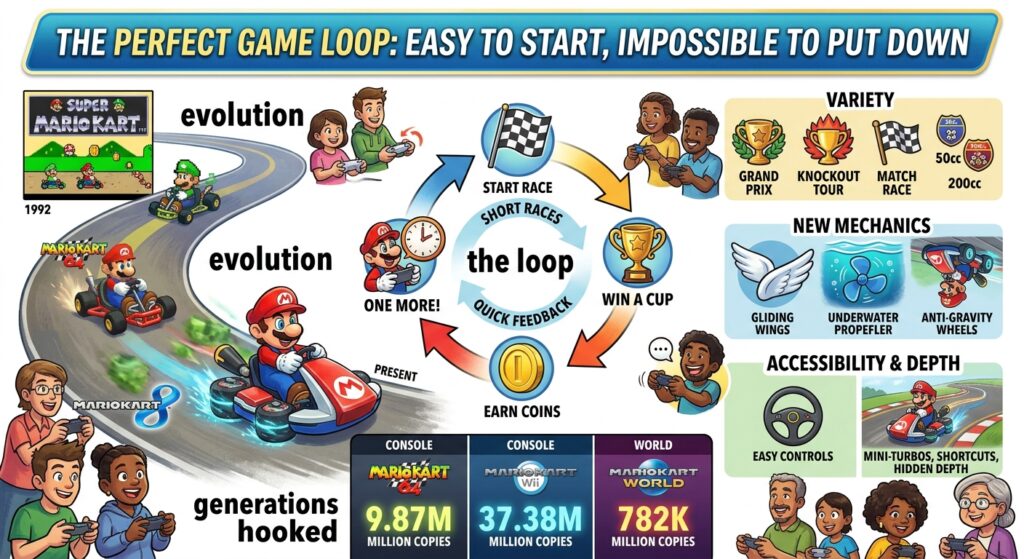
The series began with Super Mario Kart on the Super Nintendo Entertainment System in 1992, featuring eight playable characters and 2D sprite-based visuals. Since then, Mario Kart has evolved from those sprite-based origins to fully 3D high-definition graphics, but the core game loop has stayed brilliantly intact: short races that constantly whisper “one more.”
Here’s why that loop is so efficient at trapping your time:
- A standard race lasts 2–5 minutes. A Grand Prix cup is four races-roughly 10–20 minutes depending on the speed class (50cc through 200cc). That grain size makes it dangerously easy to say “just one more cup.”
- Mario Kart features a Grand Prix mode with 24 drivers, plus modes like Knockout Tour mode that eliminates players at five checkpoints, and players can race in Match Race mode against each other-each offering a slightly different reason to keep going.
- Mario Kart 7 introduced gliding and underwater driving mechanics, while Mario Kart 8 features anti-gravity segments allowing karts to drive vertically and upside-down. Each new game adds new playable characters to the roster and fresh mechanics that make you want to explore every track again.
- Controls are forgiving-accelerate, steer, drift, use items. Players can even use motion controls for a more physical experience. But depth emerges over time through mini-turbos, optimal racing lines, and shortcuts that competitive players spend years perfecting.
The numbers tell the story of how this system hooks people across generations. Mario Kart 64 sold 9.87 million copies worldwide. Mario Kart Wii sold 37.38 million copies globally. Mario Kart World sold 782,566 copies in four days in Japan alone. Each generation falls into the same loop.
Micro-goals amplify the pull: earning as many coins as possible to unlock kart parts, improving your screen time trial records, climbing online ranks. Every race feeds a progression system that makes the next one feel necessary.
Power-Ups and Powerful Items: The Heart of the Chaos
Items are the reason no two races ever feel the same. Mario Kart utilizes signature power-ups to sabotage opponents or gain speed boosts, and players obtain these power-ups from item boxes scattered across every course. That randomness is the engine of addiction.
The core item roster creates constant reversals:
- Mushrooms provide a speed boost, letting you cut through off-road shortcuts or blast past rivals on straightaways.
- Red and Green Shells can be thrown at opponents-reds track targets, greens reward precise aim.
- Bullet Bills grant invincibility and auto-pilot players forward, turning a last-place disaster into a mid-pack recovery in seconds.
- Lightning shrinks every racer on screen. Stars make you invincible. The Blue Shell homes in on whoever is in first place.
- The Super Horn-rare and precious-can destroy an incoming Blue Shell, creating the kind of moment that makes an entire room erupt.
The game uses rubber banding to balance item distribution. Players trailing far behind receive access to powerful items like Lightning and Bullet Bill, while leaders mostly get defensive tools like bananas and coins. This system means every race stays tense until the final second. You’re never truly safe in first, and you’re never truly out of it in last.
Item slots in Mario Kart 8 Deluxe hold two items simultaneously, adding a layer of strategic planning to an already chaotic system. Do you burn your mushroom for a shortcut now, or save it as a defensive option? That decision-making, combined with the randomness, is what makes the gameplay feel endlessly fresh.
Battle Mode: Balloon Battle, Coin Runners, and Other Time Sinks
Battle mode changes the aim entirely-from “cross the finish line first” to “outlast and outwit everyone on the screen.” Battle Mode focuses on defeating opponents with power-ups, and it is especially addictive in group play.
Here’s why each mode becomes its own time sink:
- Balloon Battle: Each player starts with a set number of balloons and loses one when hit. The tension of hunting other players while protecting your last balloon creates a survival-game intensity that demands rematches.
- Coin Runners: Players scramble to collect and hold as many coins as possible while attacking rivals. Losing a massive coin pile right before time runs out triggers an immediate “again, NOW” response from everyone in the room.
- Bob-omb Blast: Every item box gives bob ombs only. The arena becomes a chain reaction of explosions, and the emotional high of landing a perfect throw on an opponent who just stole your lead is unmatched.
- Shine Thief: One player holds a shine sprite while everyone else tries to take it. Holding it long enough to win requires both evasion and strategy.
- Renegade Roundup: A cops-and-robbers new mode where one team tries to capture the other before time runs out, adding an asymmetric twist to battles.
Mario Kart 8 Deluxe includes five battle rule sets, each with dedicated arenas designed for both local multiplayer and online play. A casual “let’s try one round” of balloon battle routinely turns into an hour-long session.
Online Play and Social Competition: Friends, Strangers, and Endless Rivalries
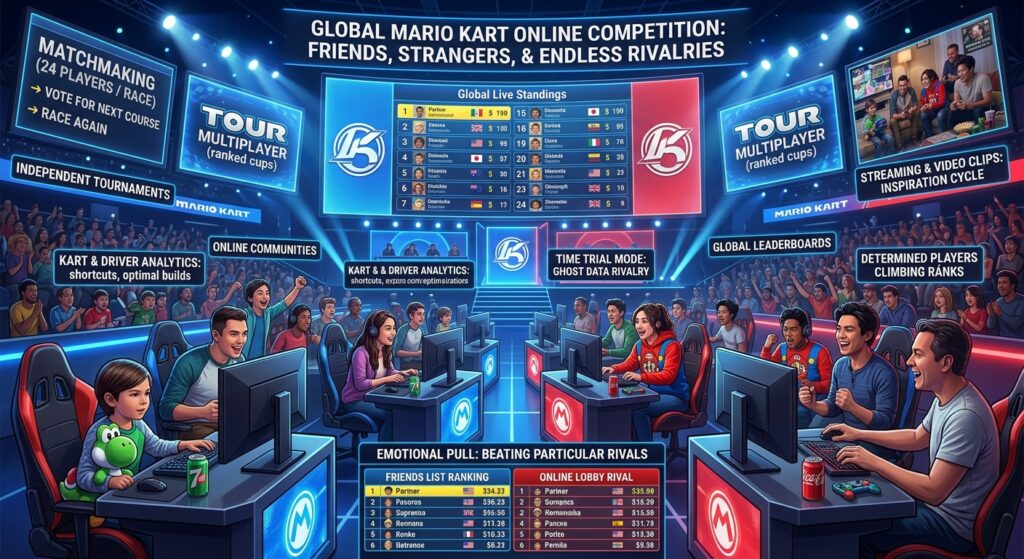
Online multiplayer features were first introduced in Mario Kart DS in 2005, and they fundamentally transformed the mario kart series from a living-room experience into a global competition. Nintendo Switch Online launched in 2018 for competitive play, and the system it enables in Mario Kart 8 Deluxe is ruthlessly efficient at keeping you connected.
- Mario Kart 8 Deluxe supports up to 24 players in races, and up to 24 characters can compete in each race. Matchmaking cycles you through race → vote for the next course → race again with almost zero downtime.
- Competitive players analyze kart combinations and track shortcuts to gain even the smallest advantage. Independent tournaments and online communities enhance competitive play, creating a ladder that determined players climb for months.
- Time Trial mode allows players to race against the clock-or against ghost data from friends and global leaders-turning solo practice into its own rivalry.
- Mario Kart Tour brought ranked cups and multiplayer mode to a compatible smartphone, letting users compete during commutes or breaks.
- Streaming and video clips fuel the cycle: watching someone pull off a last-second comeback on a YouTube video makes you think “I want to try that,” and suddenly you’re back in the game.
The emotional pull of wanting to beat a particular rival-whether a friend on your friends list or a regular opponent in an online lobby-is one of the most powerful forces keeping players in their seats.
Courses and Booster Course Content: Variety That Keeps You Coming Back
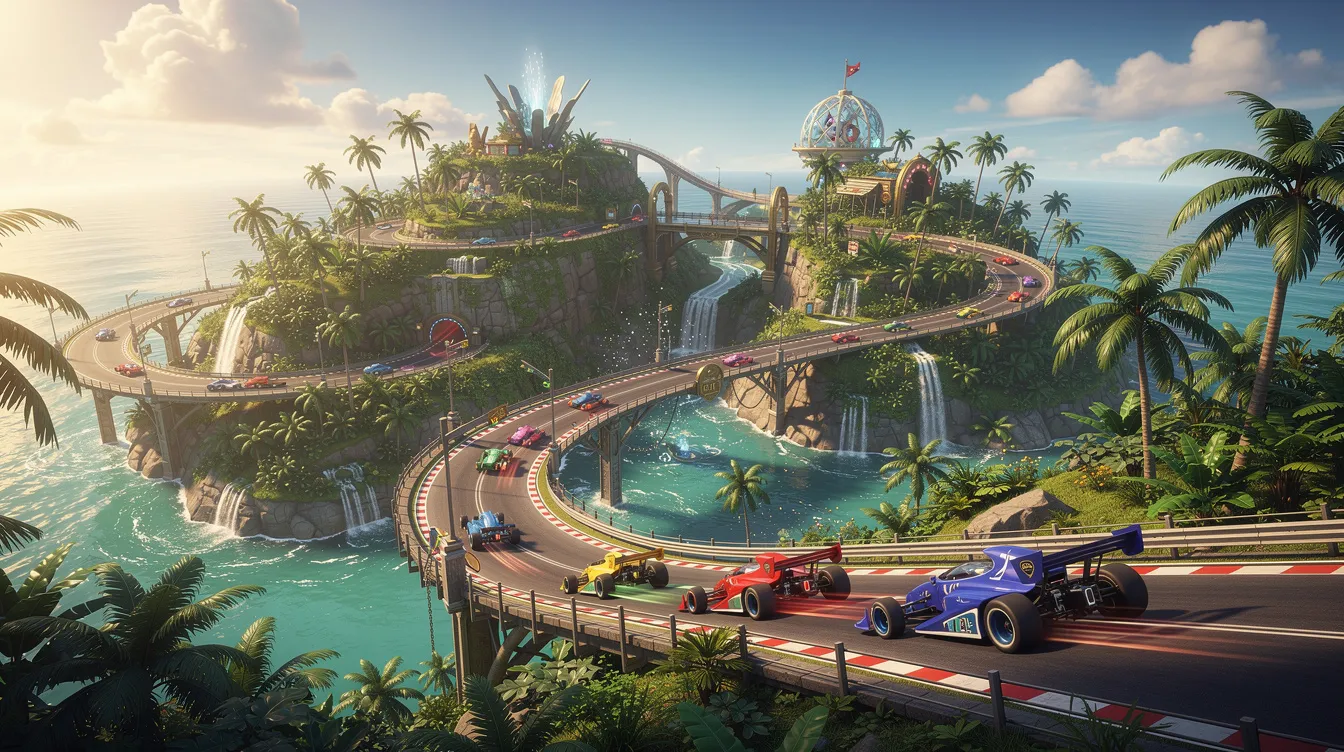
Course variety is a major reason players never feel fully “done” with any mario kart game. The count of available tracks in Mario Kart 8 Deluxe is staggering.
- The base game shipped with 48 tracks. The Booster Course Pass then added another 48, including city-inspired courses from Mario Kart Tour and tracks from other Nintendo franchises. The Booster Course Pass revived community involvement in competitive play, giving veterans and newcomers alike fresh content to master.
- Classic tracks like SNES Rainbow Road and N64 Kalimari Desert sit alongside reimagined favorites from Mario Kart Wii, real-world-inspired courses like Tokyo Blur and Paris Promenade, and tracks featuring crossovers with characters and themes from other Nintendo franchises.
- Mario Kart World introduces new characters and outfit options alongside additional courses, ensuring the franchise keeps expanding.
Rotating favorites in family or friend groups-always picking Rainbow Road for the final race of the night-becomes a ritual that prolongs sessions. The feeling of “I haven’t played them all yet” combined with the desire to master each track’s shortcuts determines how many hours you’ll spend before stepping away.
The Psychology of “Just One More Race”
Understanding why you can’t stop requires looking at the psychological mechanics behind the gameplay.
- Variable rewards: Every race is different. The item box roulette, the behavior of other players, and your own performance create unpredictable outcomes that function like a variable reward schedule-the same mechanism that makes slot machines compelling.
- Near-miss effect: Losing first place on the final corner because you got hit by a Red Shell produces a powerful “I almost had it” feeling. Research shows narrow losses drive more engagement than predictable ones.
- Progression systems: Collecting as many coins as possible to unlock kart parts, raising your points total, earning most points in a Grand Prix-these micro-targets provide frequent dopamine hits that sustain long-term play.
- Social reinforcement: Winning in front of friends or redeeming yourself after a humiliating crash is its own emotional reward. The talk and message exchanges after a session keep the experience alive between play sessions.
The magic isn’t in any single mechanic-it’s in how all of them combine to make every race feel like it could be the best one yet.
Mario Kart in Real Life: Merchandise, Experiences, and the Lifestyle Loop
The Mario Kart experience doesn’t end when you turn off the switch. Real-world products and attractions pull you right back into the world.
- Official merchandise like the Takara Tomy Tomica Drift Tomica Mario Kart Drift Starter Set and racing wheel accessories let fans recreate the thrill at home. Discovery Japan Mall carries these alongside puzzles, images of favorite characters, and screenshots-worthy collectibles.
- Mario Kart Live: Home Circuit blends physical remote-controlled karts with augmented reality, turning your living room floor into a race track you control from your screen.
- Physical experiences like the Mario Kart: Bowser’s Challenge ride at Super Nintendo World in Japan recreate the chaos of power ups and chaotic racing in real space.
Owning Mario Kart-themed goods or visiting themed attractions keeps memories of races vivid, making you more likely to pick up the controller when you get home. The game evolves into a lifestyle: from casual play to collecting, traveling, and sharing experiences on page after page of social media. That combined loop of digital and physical engagement is what keeps Mario Kart present in everyday life-and why, after more than three decades, millions of racers around the world still can’t stop saying “just one more race.”
Comments