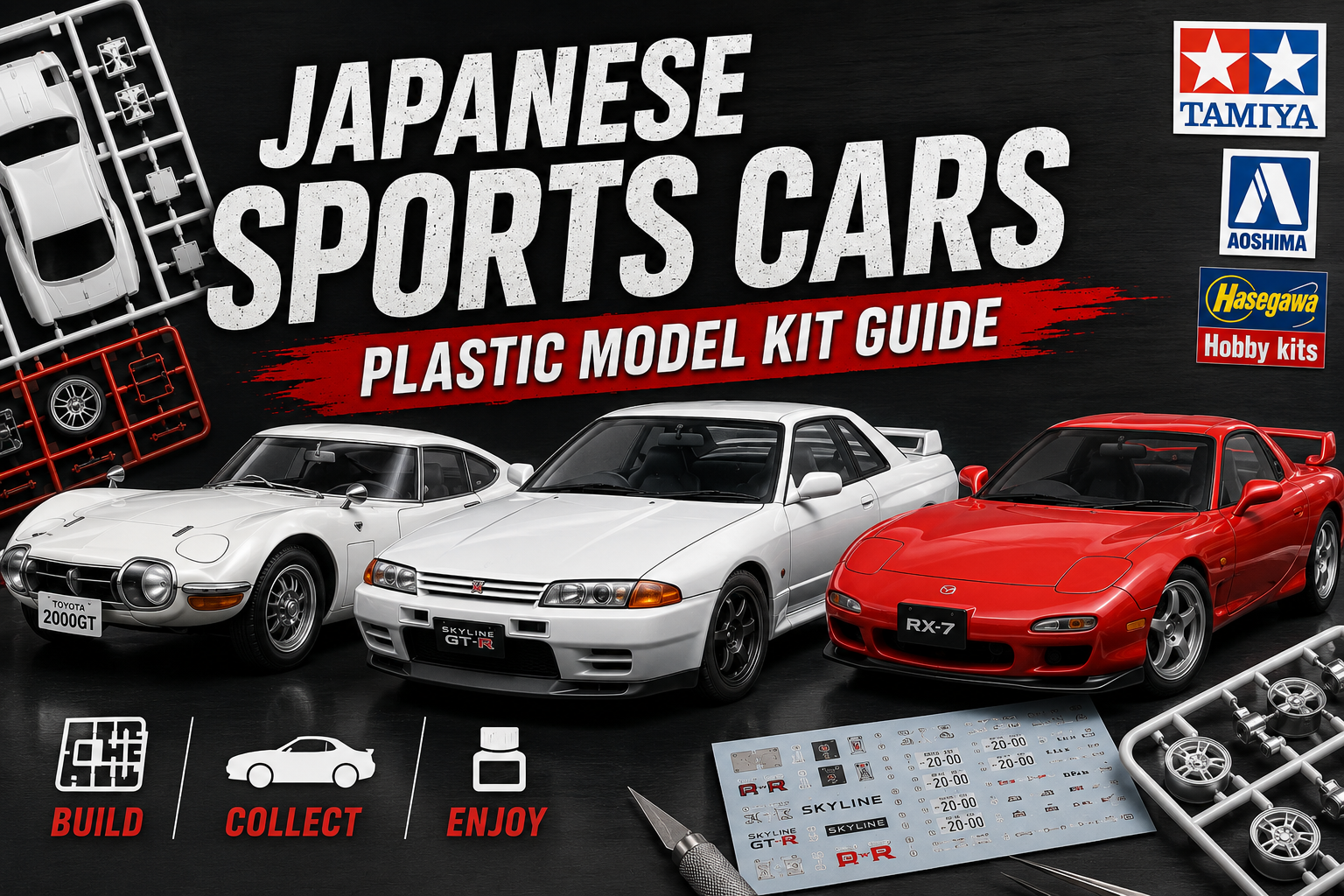
If you are searching for a japanese sports cars plastic model kit, the best choice is usually the one that matches your favorite car, your skill level, and the retailer you trust to ship it safely. Japanese sports car kits are popular because they combine real automotive culture with precise engineering, from classic Fairlady Z builds to modern GR Supra and BRZ projects.
This guide explains what makes these kits special, which brands to look for, how to choose the right kit, and how Discovery Japan Mall compares with marketplaces and overseas hobby shops.
- Quick Answer: Where to Buy Japanese Sports Car Plastic Model Kits Now
- What Makes Japanese Model Car Kits Special?
- Key Japanese Model Car Kits and Brands
- Highlighted Japanese Model Car Kits (With Thumbnails and Links)
- How to Choose the Right Japanese Model Car Kits for You
- Retailer Comparison: Discovery Japan Mall vs Other Shops
- Building Tips for Japanese Model Car Kits
- Frequently Asked Questions About Japanese Model Car Kits
Quick Answer: Where to Buy Japanese Sports Car Plastic Model Kits Now
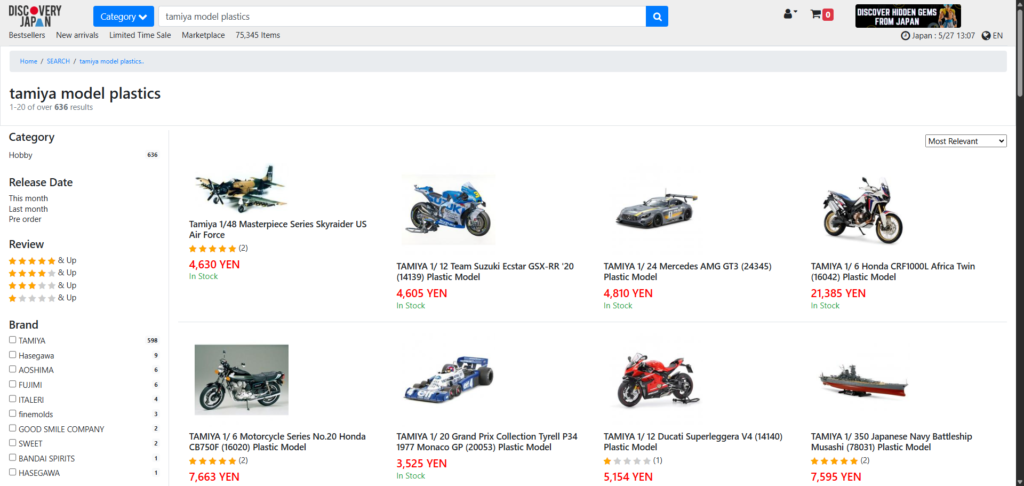
Discovery Japan Mall is a convenient place to buy japanese model car kits from trusted Japanese brands such as Tamiya, Aoshima, Hasegawa, and Fujimi. Because products are shipped directly from Japan, collectors can often find new Japanese releases earlier than they appear in overseas hobby shops, with international shipping options that include tracking.
Popular Japanese sports car kits you can look for through Discovery Japan Mall include:
- Tamiya 1/24 Nissan Fairlady 240Z Street-Custom
- Tamiya 1/24 Toyota GR Supra
- Tamiya 1/24 Toyota GR 86
- Tamiya 1/24 Subaru BRZ ZD8
- Tamiya 1/24 Mazda Savanna RX-7
- Aoshima Nissan GT-R R35 and Lancer Evolution kits

This article also compares major retailers, including eBay, eBay Live-style marketplace events, and overseas hobby shops, so you can see why Discovery Japan Mall is often the safer and more specialized choice for buying Japanese sports car kits.
What Makes Japanese Model Car Kits Special?
Japanese sports car plastic model kits are popular worldwide because the real cars already have strong identities. The Nissan Fairlady Z, Toyota GR 86, Mazda MX-5, Mazda RX-7, Nissan GT-R, and Toyota GR Supra all have shapes that translate beautifully into 1/24 scale.

The best japanese model car kits are known for capturing precise body lines: the RX-7 FD3S curves, the wide stance of the R35 GT-R, the long hood of the Fairlady 240Z, and the clean modern proportions of the GR 86 and BRZ. Japanese manufacturers such as Tamiya, Aoshima, Hasegawa, and Fujimi are especially respected for sharp panel lines, clear lenses, realistic tires, and carefully engineered assembly.
Several technical details make high-quality kits stand out:
- Thin, conformable waterslide decals settle smoothly over the model’s body lines with setting solutions for detailed finishes.
- Complex body shells are molded as a single piece using Slide-Mold Technology to eliminate ugly seam lines.
- Separate braking components allow brake discs and calipers to be independent pieces in high-end kits, enhancing realism.
- High-end model kits often include photo-etched parts which can add realistic details like seatbelts and mesh grilles.
- Poly-caps in the front wheels allow you to turn the wheels for dynamic shelf display in model kits with poseable steering.
The subject range is also wide. Builders can choose 1970s classics such as the Fairlady 240Z and 240ZG, 1980s and 1990s icons such as the Mazda Savanna RX-7, or current performance cars such as the GR Supra, GR 86, BRZ ZD8, and Nissan Z.

Key Japanese Model Car Kits and Brands
A few Japanese brands dominate the plastic sports car kit market because they consistently deliver accurate shapes, reliable fit, and strong subject variety. When shopping for plastic model kits of Japanese sports cars, prioritize brands known for engineering precision like Tamiya, Aoshima, and Hasegawa.
Tamiya is often the safest recommendation for beginners and returning builders. The fit is usually clean, instructions are clear, and the finished models look sharp without requiring heavy modification. Strong examples include the 1/24 Mazda Savanna RX-7 (Item 24375), Nissan Fairlady 240Z Street-Custom (24367), Toyota GR Supra (24351), Toyota GR 86 (24361), Subaru BRZ ZD8 (24362), and Mazda MX-5 RF (24353). Tamiya’s official product information for the 240Z Street-Custom notes details such as right-hand-drive and left-hand-drive options, rubber tires, metal transfers, and aluminum intake parts.

Aoshima is ideal if you like tuning culture. The brand offers a wide variety of street, drift, custom, and performance subjects, including R35 Nissan GT-R NISMO kits, Lancer Evolution III kits, and wheel sets such as 14-inch KAKOU TECCHIN and Techno-Phantom. Aoshima is also known for Snap Kit releases that are easier for new builders.

Hasegawa is strong for classic Japanese sports cars and race-inspired subjects. Builders who like early Fairlady Z variants, older Skylines, or historic Japanese racing shapes often find Hasegawa kits rewarding, though some parts can be more delicate.

Fujimi and other Japanese brands often appeal to builders who want detail-rich bodies, option parts, and unusual variants. These kits may take more patience, but they can be excellent choices for experienced modelers who enjoy extra customization.

Discovery Japan Mall focuses on sourcing authentic Japanese kits from these brands and shipping them from Japan, helping buyers avoid uncertainty around origin, licensing, and missing parts.
Highlighted Japanese Model Car Kits (With Thumbnails and Links)
Here are concrete Japanese sports car model kits that customers can typically search for through Discovery Japan Mall. Availability can change, so check each product page for current stock before placing an order.

- The Nissan Fairlady 240Z is available as a 1/24 scale model kit, showcasing its classic sports car design.
- This kit is especially interesting for Z-car fans because it includes street-custom details such as lowered stance parts, wider wheels, and detail options.
- It is a satisfying intermediate project because it requires glue, paint, decals, and careful body finishing.
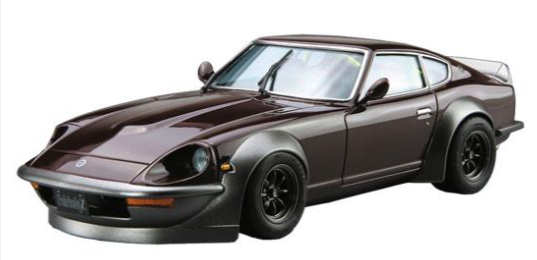
- The 240ZG is the long-nose, over-fender version of the classic Z, making it one of the most recognizable Japanese sports car silhouettes.
- A good choice for builders who enjoy 1970s bodywork, chrome details, and period-correct color choices.
- Works well as a clean factory-style build or as a light custom project.

- The Toyota GR Supra is also offered as a 1/24 scale model kit, reflecting its status as a modern Japanese sports car icon.
- The clean modern body shape makes paint preparation and gloss finishing especially important.
- A strong pick for builders who prefer current performance cars over vintage subjects.

- These are excellent choices for builders who like modern lightweight sports coupes.
- The body proportions are simple enough for beginners but still detailed enough for careful interior painting.
- They are good practice kits for learning masking, clear-part installation, and realistic wheel finishes.

- The 1/24 scale Mazda Savanna RX-7 is a popular model kit among Japanese sports car enthusiasts.
- Its compact rotary sports car shape makes it visually different from Z-cars, Supras, and GT-Rs.
- A good subject for subtle custom touches, including wheel changes and period-style paint.

- The MX-5 RF is ideal if you prefer compact roadsters and clean body lines.
- Its smaller body makes surface preparation and color selection especially noticeable.
- A nice weekend-to-multi-evening project for builders who want a modern Mazda display piece.

- Great for builders who like aggressive modern Japanese performance cars.
- Aoshima variants often connect well with tuning culture, custom wheels, and stance-focused builds.
- The GT-R shape benefits from careful brake caliper painting and realistic metallic finishes.

- A practical option for newer builders who want a Japanese performance icon without a complex build.
- Snap-style kits reduce the barrier to entry compared with traditional glue kits.
- Good for learning basic part cleanup, decal placement, and display finishing.
How to Choose the Right Japanese Model Car Kits for You
The right kit depends on what you want from the build. Some buyers want an easy display model, while others want engine wiring, photo-etched details, and a multi-week painting project.
Use these decision points before you order:
- Skill level: Beginner-friendly options are divided into two categories: “Snap-Fit” (no glue or paint required) and “Curbside” Traditional Kits (glue required, but no complex engine assembly).
- Traditional glue kits: Tamiya and Hasegawa sports car kits often reward careful painting, sanding, and test-fitting, making them better for builders with some experience.
- Scale: 1/24 is the standard scale for Japanese sports cars because it balances detail, price, and shelf space. Larger 1/20 kits, such as Toyota Celica LB Turbo Gr.5-style race subjects, provide more presence and detail but require more room.
- Era: Choose 1970s classics like the Fairlady 240Z or 240ZG if you like vintage lines, 1990s icons like the RX-7 if you like golden-era Japanese performance, or modern cars like the GR Supra, GR 86, BRZ ZD8, and Nissan Z if you prefer current styling.
- Detail level: Look for kits labeled “Full Engine Detail” with separate blocks, manifolds, and batteries for detailed engine assembly.
- Display style: Curbside kits are faster and cleaner for shelf display, while full-detail kits are better if you enjoy opening hoods, engine bays, and extra painting.
- Special parts: Photo-etched grilles, metal transfers, separate brake parts, and clear lenses add realism but also increase build complexity.
For example, a beginner who loves modern cars could start with a GR 86, BRZ, or Aoshima Snap Kit. An experienced builder who loves classics may prefer the Fairlady 240ZG or the 240Z Street-Custom with more painting and detail work.
Retailer Comparison: Discovery Japan Mall vs Other Shops
Japanese sports car kits are sold through several global channels, but the buying experience can differ significantly. Price, shipping origin, packaging quality, and product authenticity all matter when the kit includes clear parts, decals, plated pieces, and delicate body shells.
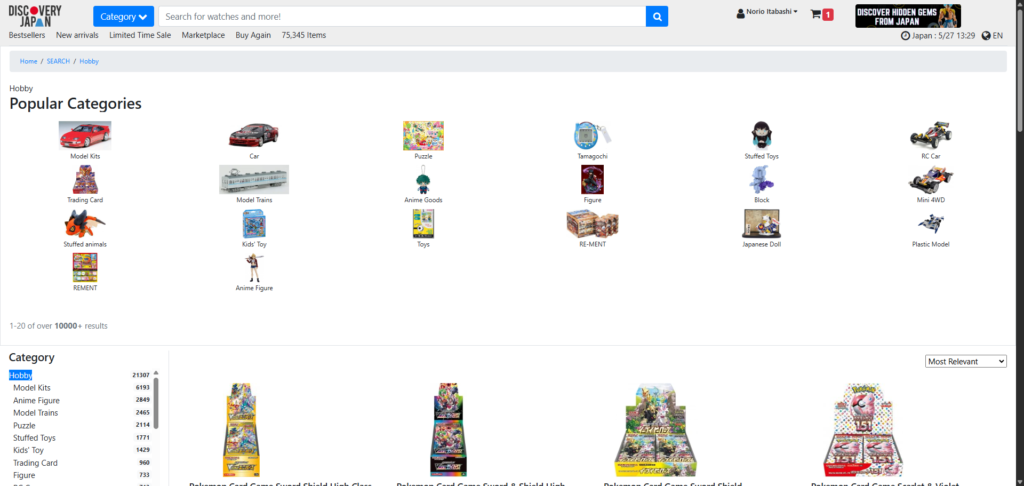
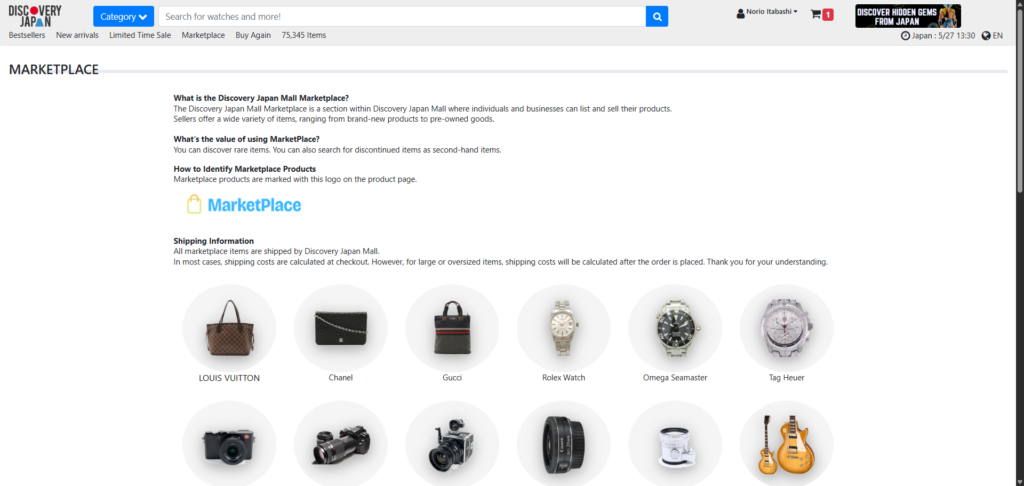
Discovery Japan Mall sources Japanese model kits directly from Japan and focuses on authentic products from brands such as Tamiya, Aoshima, Hasegawa, and Fujimi. Product pages are designed to help international buyers understand the item before purchase, and categories such as Japanese cars and sports car model kits make browsing easier. Discovery Japan Mall’s customer service information states that orders placed before 12:00 noon JST are generally processed within three business days, with economy airmail often estimated at 14–28 business days after processing and faster options such as ePacket or EMS available depending on destination.
Marketplaces like eBay offer wide variety, including rare and out-of-print kits. The trade-off is inconsistency. Sellers may ship from Japan, Hong Kong, the United States, or other locations, and shipping cost, delivery time, packaging, and product condition can vary widely. Some listings offer discounts such as 10% off 4+ items or coupon promotions, and eBay Live-style events may surface unusual finds, but buyers still need to check seller ratings and return terms. Some marketplace pages may also trigger bot checks, a security service, or another security page that interrupts normal browsing.
Overseas hobby shops in the US, UK, and other regions can be convenient when the kit is already imported locally. However, prices are often higher because of distributor margins, and niche Japanese sports car stock may be limited. New Japanese releases can also arrive later than they do in Japan. Some shops occasionally show maintenance downtime or “closed for maintenance” messages, which can delay a purchase.
| Retailer type | Price level | Shipping origin | Shipping speed | Latest Japanese releases | Packaging quality | English support |
|---|---|---|---|---|---|---|
| Discovery Japan Mall | Moderate to competitive | Japan | Economy and faster tracked options | Strong access to new Japan releases | Careful packing to protect boxes and clear parts | Product pages and support for international buyers |
| Marketplaces like eBay | Highly variable | Japan, Hong Kong, US, other regions | Variable | Good for rare items, inconsistent for new releases | Seller dependent | Platform in English, seller communication varies |
| Overseas hobby shops | Often higher after import margin | Local warehouse or importer | Fast if local stock exists | May lag behind Japan | Usually decent | Usually strong local-language support |
Discovery Japan Mall’s advantage is consistency. You can browse a stable website, check a product page, place an order with clear shipping options, and buy from a retailer focused on authentic Japanese hobby goods. The careful packing is especially important because it helps protect fragile kit boxes, clear parts, chrome sprues, and decals during international shipping.
For consistent access to genuine Japanese sports car kits, Discovery Japan Mall is usually the safest and most specialized choice.
Building Tips for Japanese Model Car Kits
Good tools and careful preparation help you get the most from Japanese model car kits. Even a well-engineered kit can look average if the body is rushed, so give extra attention to cleanup, paint, and final assembly.
Start with the basics:
- Side cutters or flush cutters for removing parts cleanly
- Hobby knife for trimming gates and mold lines
- Sanding sticks in several grits, such as 400, 800, 1000, and 1200
- Plastic cement for traditional glue kits
- Masking tape for windows, trim, and two-tone areas
- Primer, body color, gloss clear, and detail paints
Body preparation matters most on sports cars. Clean mold lines on bodies like the Fairlady 240ZG or RX-7 before primer. Test-fit bumpers, headlights, clear parts, mirrors, and chassis pieces before paint. If the body shell is painted first and a bumper fit problem appears later, the repair is much harder.
For painting, use light coats instead of one heavy coat. A Toyota GR Supra red, Nissan 240Z orange, or metallic GT-R finish will look much better over smooth primer. Apply decals over a gloss coat to reduce silvering, then seal them carefully with clear coat. Racing-style kits, such as Toyota Celica LB Turbo Gr.5 subjects, benefit from slow decal work and decal setting solutions.
Interior detailing is where a model starts to feel real. Pick out seats, dashboards, steering wheels, roll cages, and door panels with slightly different shades. Use reference photos from real GR 86 or BRZ interiors if you want the cabin to look authentic.
Simple custom touches can make a big difference:
- Lower the stance slightly for a street-custom look.
- Paint brake calipers on GT-R or Supra kits in a contrasting color.
- Add Aoshima 14-inch Techno-Phantom wheels to a period-style build.
- Use panel line wash around doors, hood gaps, and fuel caps.
- Add photo-etched seatbelts or mesh grilles on higher-end kits.
Discovery Japan Mall can be used to source not only the kits but also many Japanese tools, paints, and accessories suitable for this type of build.
Frequently Asked Questions About Japanese Model Car Kits
New builders often have the same questions when they compare Japanese sports car plastic model kits. These answers will help you choose with more confidence.
Do Japanese sports car model kits come pre-painted?
Most Tamiya, Aoshima, Hasegawa, and Fujimi kits are unpainted plastic and require paint, glue, and tools. Some Snap-Fit kits may be molded in color, but traditional kits look best when painted and finished properly.
What scale is best for beginners?
1/24 scale is the best starting point for most builders. It is large enough for good detail but small enough to finish without needing a huge display area. Kits such as the Tamiya Toyota GR 86 or Subaru BRZ are good choices for modern sports car fans.
How long does it take to build a 1/24 Japanese sports car kit?
A simple curbside build can take a weekend if you keep the paintwork basic. A detailed build with primer, gloss body color, decals, interior detailing, and polishing can take several weeks of evening sessions.
Can I find rare or older Japanese sports car kits?
Yes, but availability changes. Japanese brands sometimes reissue older kits, including classic Fairlady, Skyline, Prelude, RX-7, and Lancer subjects. Discovery Japan Mall is useful because it sources from Japan and may list re-released classics when they return to stock.
Is shipping from Japan expensive or slow?
Shipping cost depends on destination, box size, and selected method. Discovery Japan Mall offers international shipping options, including economy and faster tracked services. Economy shipping may take longer, but tracking and careful packing help make international ordering more predictable.
Which brand should I choose first?
Tamiya is usually the easiest first choice because of fit and instructions. Aoshima is excellent if you like tuned variants and Snap-Fit options. Hasegawa is strong for classic and race-inspired subjects, while Fujimi is worth exploring when you want unusual versions or extra detail.
What should I buy with my first kit?
At minimum, buy side cutters, plastic cement, a hobby knife, sanding sticks, masking tape, primer, paint, and clear coat. If you want better decal results, add decal setting solution so waterslide decals conform smoothly to the body lines.
A japanese sports cars plastic model kit is more than a small replica; it is a way to enjoy Japanese car culture on your desk, shelf, or workbench. Browse Discovery Japan Mall for your next Fairlady Z, GR Supra, RX-7, GT-R, GR 86, or BRZ project and build it with confidence.
Comments