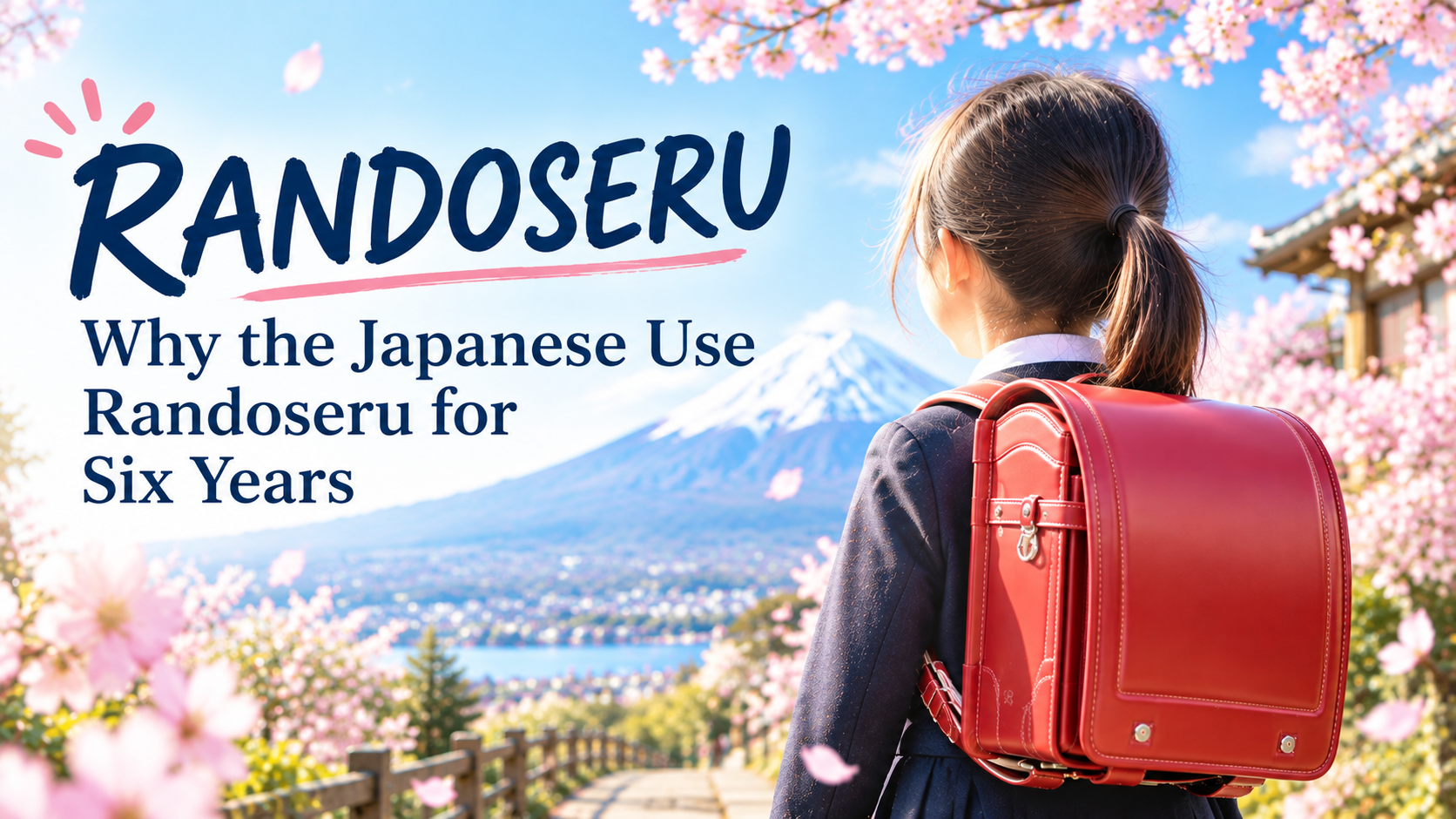
If you have ever seen a picture of Japanese elementary school children walking to class, you have almost certainly noticed the distinctive box-shaped backpack on every child’s back. That bag is a randoseru, and it is far more than a simple school bag. Here is everything you need to know.
- What Is a Randoseru?
- History of the Japanese Randoseru
- Design and Structure: What Makes a Randoseru Different?
- Colors and Styles: From Black Randoseru and Red Randoseru to a Full Spectrum
- How Long Does a Randoseru Last? “Six Years, No Excuses”
- Comfort, Weight, and Shoulder Straps
- Buying a Randoseru: Where, When, and How
- New, Outlet, and Second-Hand Randoseru
What Is a Randoseru?
A randoseru is a rigid, box-shaped backpack used by nearly all elementary school children in Japan. The name randoseru is derived from the Dutch word “ransel,” meaning backpack. Unlike an ordinary soft-sided backpack you might find in a Western classroom, a typical randoseru features a firm internal frame, a deep flap lid, and structured compartments built to protect textbooks, notebooks, and pencil cases.
A randoseruis designed to be a child’s main school bag for six years, from first grade through sixth grade in elementary school. Materials range from genuine leather (cowhide) to synthetic leather like Clarino, and newer lightweight canvas types. The rigid form keeps the bag from sagging under weight, something most Western school bags simply cannot match.
Receiving a randoseru is a major milestone for children entering school in Japan. The randoseru represents a traditional childhood in Japan and symbolizes entering a new life stage for children. It also carries parental hope for a child’s academic success, good manners, and fitting into school life. Discovery Japan Mall helps overseas families and collectors buy authentic Japanese randoseru online, shipping directly from Japan.
- Engineered for six years of daily use across all elementary school grades
- Rigid, structured body with deep flap lid and internal compartments
- Made from leather, synthetic leather, or canvas
- Far more durable and structured than typical Western backpacks
History of the Japanese Randoseru
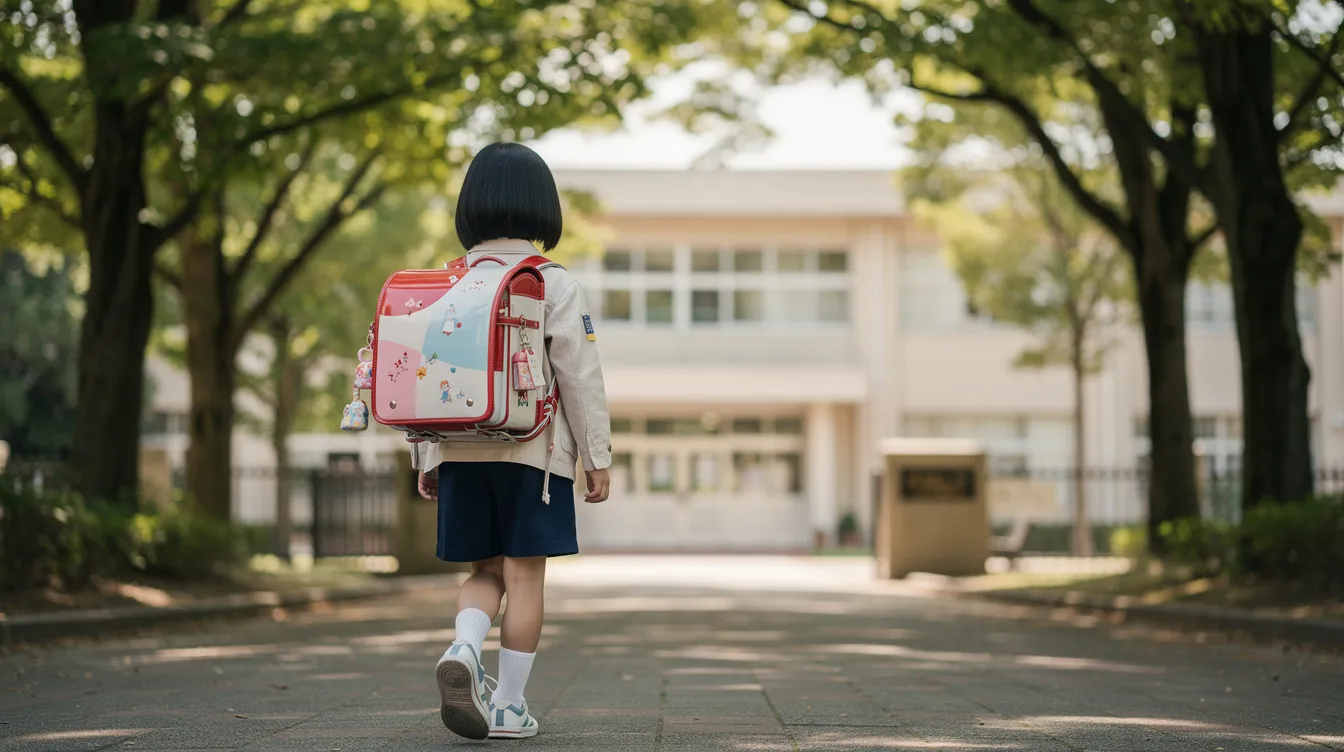
Randoseru originated from Dutch and German military knapsacks introduced to Japan during the late Edo and early Meiji periods in the mid-1800s. The Japanese military adopted these rucksacks, and the concept quickly moved beyond the battlefield.
In 1885, the elite Gakushūin schoolrequired students to walk to class and carry their own supplies in a military-style leather backpack. Two years later, Prime Minister Itō Hirobumi presented a box-shaped leather bag to the future Emperor Taishō upon entering Gakushūin in 1887. Randoseru backpacks have been used since 1887, and that moment cemented the form as a symbol of the Japanese education system.
Randoseru remained expensive and mostly limited to wealthy families until after World War II. As Japan’s economy recovered in the 1950s and 1960s, compulsory education reforms made the bags accessible to public elementary school students across the country. By the beginning of Japan’s post-war economic boom, the randoseru was standard equipment in every classroom.
Key design evolutions followed: the shift from B5-size to A4 flat file compatibility around the early 2000s, the move from heavy leather to lighter synthetics, and significant improvements to shoulder straps and back panels. Today, the tradition continues as strongly as ever.
- Late 1800s: Dutch-influenced military rucksacks adopted in Japan
- 1885: Gakushūin mandates backpacks for students
- 1887: Imperial presentation formalizes the randoseru form
- Post-1947: Compulsory education spreads use nationwide
- 2000s–2010s: A4 sizing, synthetic materials, expanded color options
Design and Structure: What Makes a Randoseru Different?
The iconic box shape, deep lid, and curved back panel instantly set a randoseru apart from any casual school bag. Every element is purpose-built: the rigid rectangular main body resists deformation, the flap lid with locking buckles protects contents from rain and impact, and the side gussets maintain the bag’s form even when filled with heavy textbooks.
Core components include metal fittings (rivets, hooks, buckles), internal partitions for organizing school materials, and ergonomicshoulder strapswith an S-curve design, multi-hole adjusters, and sometimes sliding metal rails so the fit grows with the child. Standard dimensions run roughly 31–33 cm in height, 23–26 cm in width, and 11–18 cm in depth.
Many randoseru feature reflective strips for visibility in low light, a critical traffic safety feature for kids who walk to and from school near cars and busy intersections. Some models include hooks for water bottles and safety buzzers. Remarkably, randoserucan act as flotation devices in emergencies because of the trapped air inside the rigid shell, and during disasters children may also use them to protect the head. Back panels use cushioned foam layers and air channels to keep children comfortable during a 20–30 minute walk.
- Rigid body and frame with flap lid and side gussets
- S-curve shoulder strapswith multiple adjustment points
- Internal compartments for textbooks, notebooks, stationery
- Reflective piping and safety hooks
- Cushioned, ventilated back panel
Colors and Styles: From Black Randoseru and Red Randoseru to a Full Spectrum
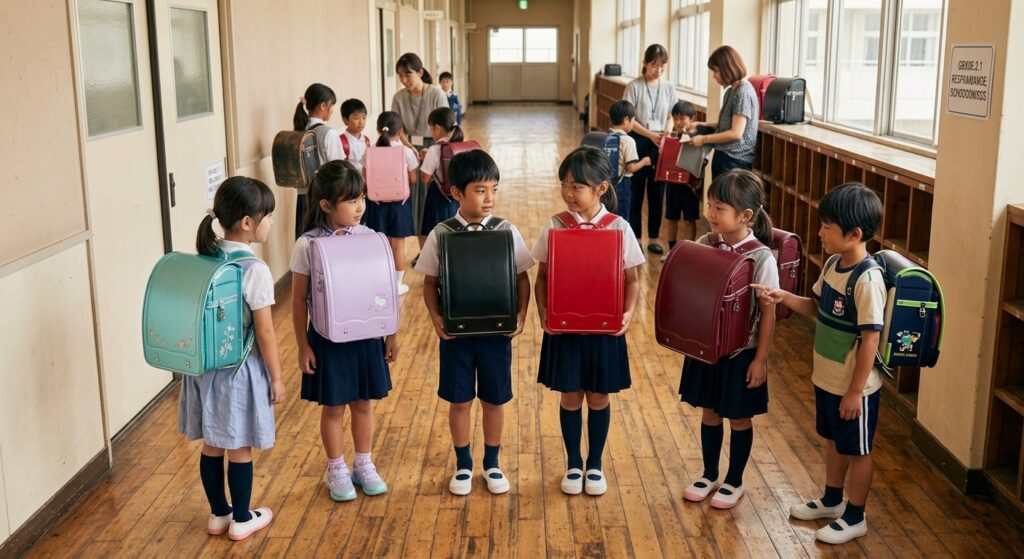
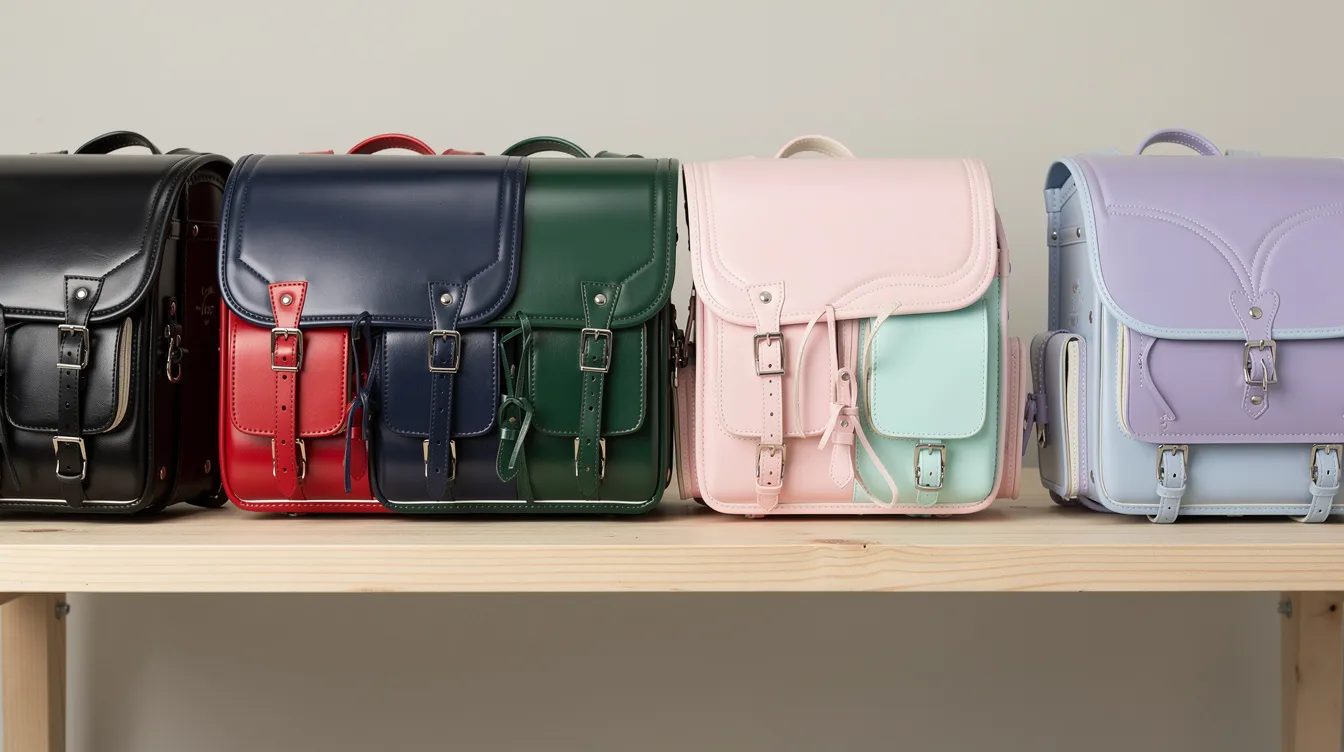
For most of the 20th century, the color code was simple: a black randoseru for boys and a red randoserufor girls. That was the expected look in every classroom, and many conservative schools still lean toward those classic choices.
Starting in the 1990s and accelerating through the 2000s, manufacturers broke the mold. Today, randoseru come in over twenty color options, including navy, brown, burgundy, pastel pink, light blue, lavender, and green. Modern randoseru can feature fun designs and popular characters from anime, Sanrio, and sports brand collaborations. Metallic finishes, two-tone stitching, and decorative embroidery have all become part of the fashion landscape. Randoseru are often seen in Japanese media and culture, further driving style diversity.
Many parents still choose black or red for practicality and tradition. Others let children pick a standout color to express identity, much like school uniforms and other school clothes can signal identity and social expectations. If you are talking through options with your child, keep in mind:
- Darker colors (black, navy, brown) hide dirt and wear better over six years
- Lighter and pastel shades stand out but may show scuffs sooner
- Some schools have rules or strong expectations about color
- Character collaborations are trendy but tastes change; a simple, classic style may age better
- Two-tone or embroidered designs offer a middle ground between plain and decorative
How Long Does a Randoseru Last? “Six Years, No Excuses”
A well-made randoseru is engineered to last the full six years of Japanese elementary school, used almost every school day regardless of weather. Randoseru are typically handmade and built to last six years, and that is not marketing language. It is a design requirement, because the bag is built to do a job for all six years of daily use.
They contain over 300 individual components for durability: leather or synthetic panels, metal frames, rivets, buckles, cushioning layers, and stitching reinforcements at every stress point. Randoseru are tested for impact resistance and water exposure in the factory. SEIBAN, for example, claims its bags withstand loads up to 80 kg without permanent deformation. Randoseru are often handmade, ensuring high construction quality down to details like hand-folded corners that resist abrasion.
In Japan, manufacturers commonly offer repair services rather than expecting families to buy a replacement. Broken zippers, worn straps, or cracked buckles can be fixed, reflecting a culture that values life-long craftsmanship over waste and disposability.
If you are ordering overseas through Discovery Japan Mall, check the maker’s warranty terms, understand repair service availability for international shipments, and follow maintenance instructions (especially for leather care) to keep the bag in top form.
- Designed specifically for six years of daily elementary school use
- Hundreds of parts, each selected and tested for longevity
- Factory durability testing covers buckle cycling, load, abrasion, and water resistance
- Repair services prioritized over replacement
Comfort, Weight, and Shoulder Straps
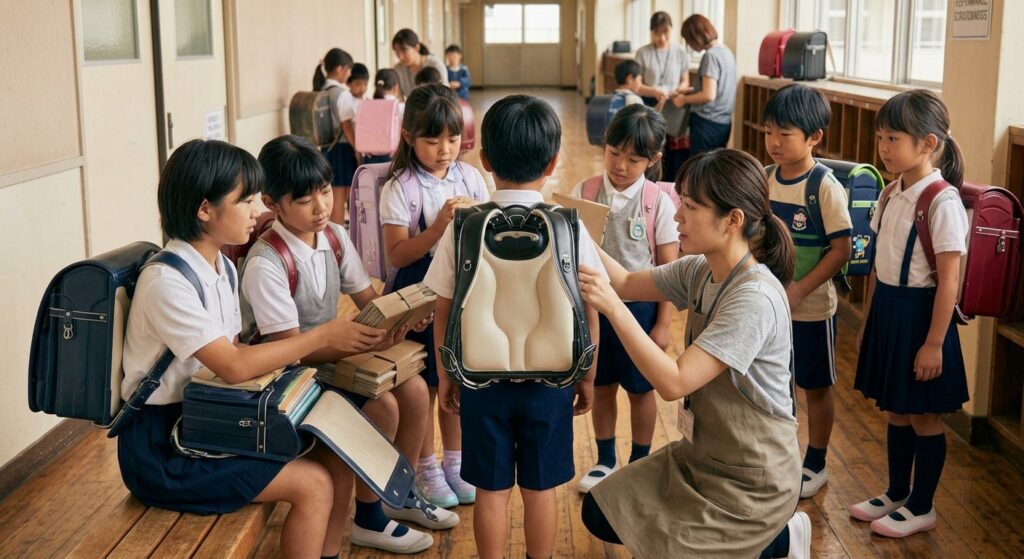
There is a real tension in randoseru design: the bag must be sturdy enough to hold its shape and protect heavy textbooks, but it cannot be so heavy that it strains a young child’s back and shoulders. Randoseru typically weigh between 1 and 1.5 kilograms empty. Leather models tend toward 1,200–1,400 g, synthetic leather versions around 1,000–1,200 g, and lightweight canvas models can come in under 900 g.
Modern ergonomic straps do the heavy lifting, so to speak. Most randoseru use wide-padded, S-curved shoulder straps that distribute weight across the child’s upper body rather than pulling straight down. Many offer multiple adjustment holes or sliding rails so the same bag fits a first grade student and a sixth grader.
Back cushioning includes air channels and 3D foam pads that reduce pressure points and improve ventilation, a welcome feature for students who walk long distances in warm weather. If you are a parent choosing a randoseru, here is a practical checklist:
- Have the child try the bag filled with simulated textbook weight to give both child and parent a better idea of how it feels in real use
- Check that the bottom of the bag sits near the child’s lower back or hip
- Ensure no gap between the curved back panel and the child’s spine
- Verify straps are adjustable enough to carry them through six years of growth
- Test how the bag feels after a 20–30 minute walk
Buying a Randoseru: Where, When, and How
In Japan, the practice of “ran-katsu” (randoseru hunting) is a family affair, and you may have heard how serious families can be about the timing and cost. You should start shopping for a new randoseru about a year before school begins, since most children start school in April. This shopping tradition reflects how seriously communities in Japan treat the school years and how the purchase marks a child’s path toward the responsibilities expected later in adult society. The best time to buy randoseru is January to June, with peak selection in department stores from March through August. Golden Week (late April–early May) often brings early-bird campaigns and special pricing. The usual course runs from early browsing in spring to a final purchase before the April school start.
Randoseru are typically gifted by grandparents in Japan. Grandparents often pay for the randoseru as a gift, making it a cross-generational tradition that bonds the whole family around the child’s first day of elementary school.
Randoseru prices range from ¥10,000 to over ¥100,000. On average, randoseru cost about ¥60,000. Here is how the price brackets break down:
| Tier | Price (¥) | Price (USD approx.) |
|---|---|---|
| Budget / Entry-level | ¥10,000–¥40,000 | ~$70–$300 |
| Mid-range | ¥50,000–¥80,000 | ~$400–$800 |
| Premium / Handmade | ¥80,000–¥120,000+ | ~$600–$1,000+ |
| Limited Edition | ¥120,000+ | Can exceed $1,000 |
| Entry-level randoseru models cost around US$200. Mid-range randoseru typically cost between US$400 and US$800. Limited edition randoseru can exceed US$1,000. The money goes toward quality materials, handmade construction, and a brand reputation backed by decades of craft. |
Main purchase channels include department stores, brand showrooms, pop-up events, official online shops, and international platforms like Discovery Japan Mall. To save, look for discontinued colors, previous-year models, floor displays, or second hand stores, and consider pairing your purchase with authentic Japanese-made watches that are often sold through the same retailers.
New, Outlet, and Second-Hand Randoseru
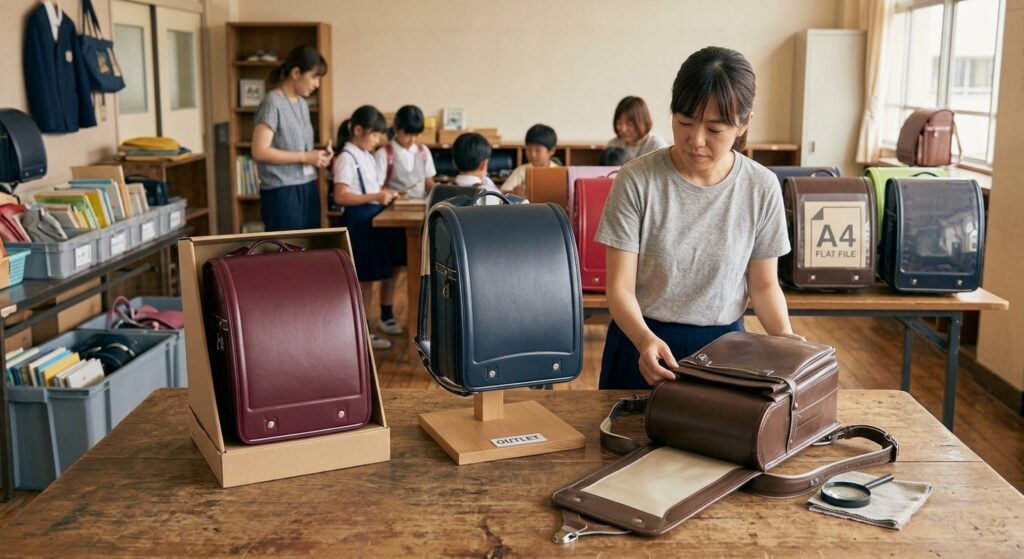
High-quality randoseru are available new at full price, as discounted outlet or floor models, and through second hand stores. Each option has trade-offs worth understanding.
Outlet and department store floor models are typically previous-year stock with minor cosmetic imperfections. Structurally, they retain full quality. Discounts of 30–50% are common, making them an appealing point of entry. Second hand stores and online resale platforms in Japan grade condition from almost-new to heavily used. When buying a used bag, always check photos of the shoulder straps, corners, and inner lining for signs of wear.
Advantages of a second-hand school bag include lower cost, eco-friendly reuse (less waste going to landfills), and less worry about scratches during the first school year. The trade-off: reduced or no warranty, potential structural fatigue, and older sizing that may not fit A4 flat files.
- Price: Outlet 30–50% off; second-hand even lower
- Condition: Inspect straps, corners, lining, and hardware
- Warranty: Often reduced or absent for used models
- Fit: Confirm A4 compatibility for current textbooks
- Brand: Established makers (Tsuchiya, SEIBAN) hold value and quality better over time

Comments