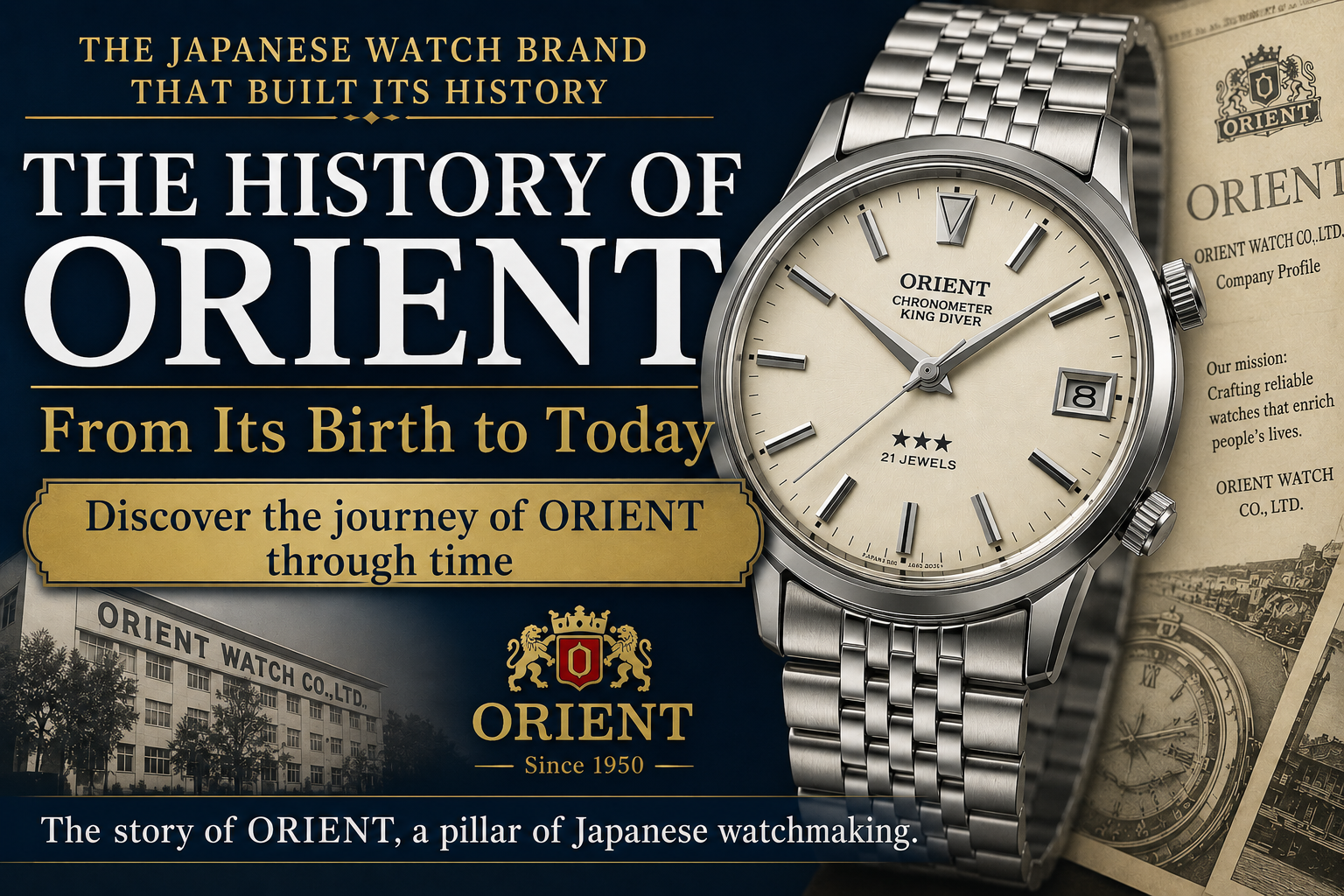
Right now, there is a Japanese watch brand that watch enthusiasts around the world are becoming obsessed with.
In an age where smartwatches are everywhere and anyone can check the exact time instantly on a smartphone, this company still continues to make fully mechanical watches — watches powered entirely without batteries.
Why are these seemingly “inefficient” mechanical watches still loved so passionately today, in a world that values convenience and speed above everything else?
Behind this story lies one of the biggest turning points in horological history: the “Quartz Shock,” and the stubborn determination of Japanese craftsmen who refused to abandon their beliefs, even when the world called them outdated.
- 1. The Day the Watch Industry Changed Forever — The Arrival of the “Quartz Shock”
- 2. When Master Craftsmanship Suddenly Became “Worthless”
- 3. ORIENT’s Craftsmen Refused to Let Mechanical Watches Die
- 4. The Great Comeback — Why the World Now Loves ORIENT STAR
- 1. True In-House Manufacturing Pride
- 2. Incredible Value for Money
- 3. Beautiful Designs Made to Be Admired
1. The Day the Watch Industry Changed Forever — The Arrival of the “Quartz Shock”
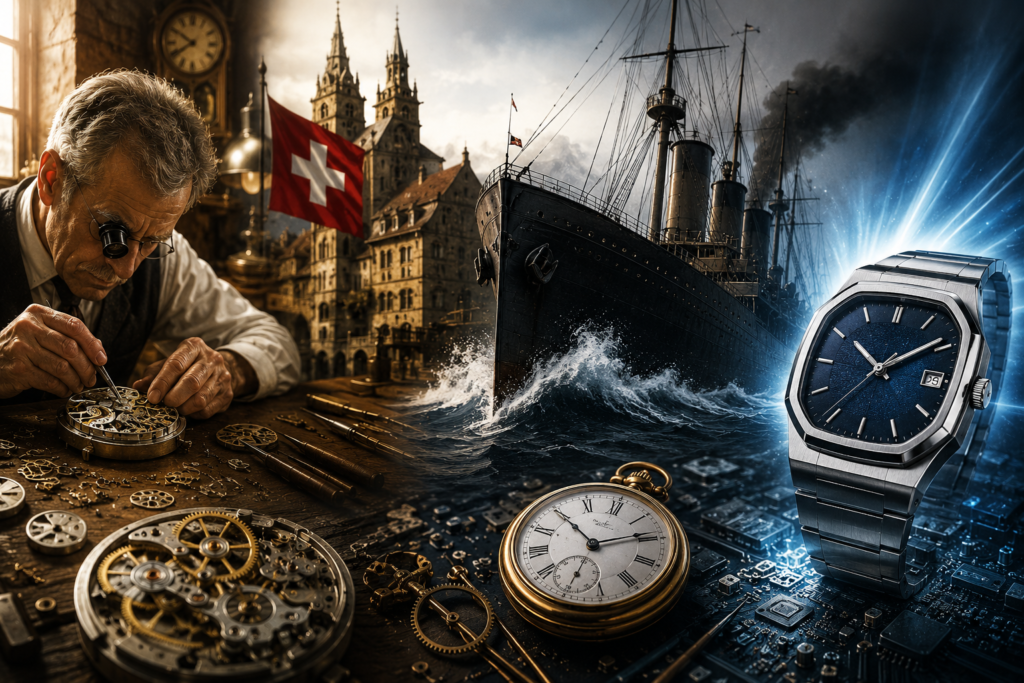
Until the 1960s, almost every watch in the world was mechanical.
Each one was assembled by skilled craftsmen using hundreds of tiny gears and springs. At the time, Switzerland ruled the watch industry, and Swiss watchmakers were incredibly proud of their craftsmanship.
But mechanical watches had one unavoidable weakness.
No matter how expensive or luxurious the watch was, it would still lose or gain around 10–20 seconds per day. Back then, that was completely normal. People routinely adjusted their watches every day using radio time signals.
Then Japan changed everything overnight.
On December 25, 1969, Japanese watchmaker Seiko released the world’s first quartz wristwatch: the “Quartz Astron.”
While mechanical watches drifted several seconds per day, this new battery-powered quartz watch only drifted a few seconds per month.
Its accuracy was hundreds of times better.
It was the “black ship” moment of the watch industry.
2. When Master Craftsmanship Suddenly Became “Worthless”
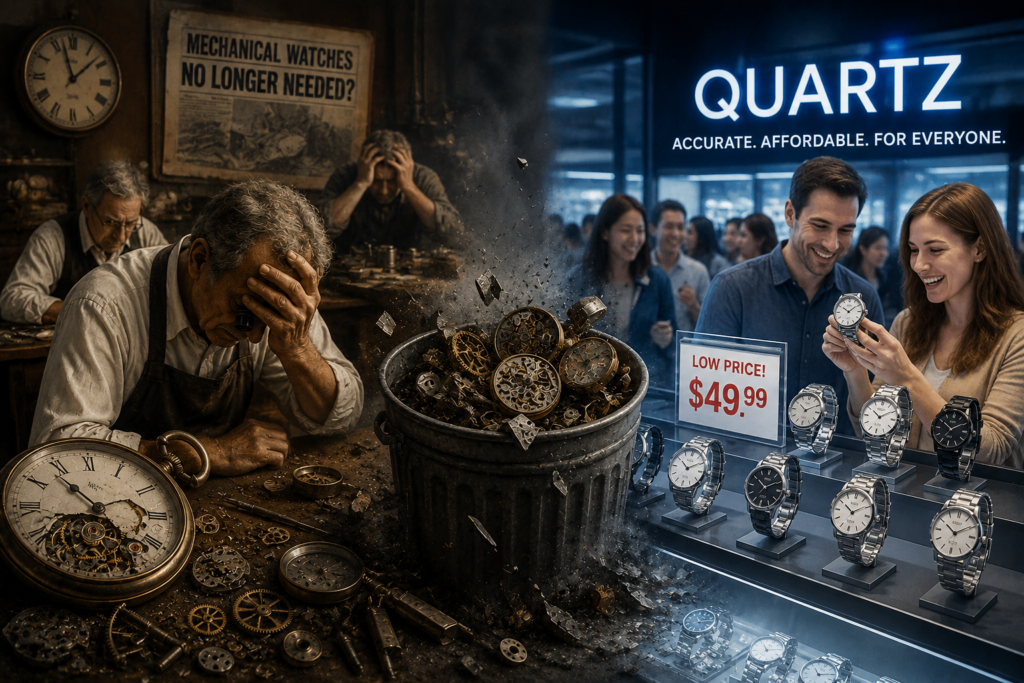
After Seiko opened the patent technology to the industry, quartz watches quickly entered mass production around the world.
Watches that were once expensive luxury items suddenly became cheap, accurate, and accessible to everyone.
The market reaction was brutal.
“Why would anyone buy an expensive mechanical watch that stops easily and loses time?”
Overnight, mechanical watches went from treasured craftsmanship to outdated, inconvenient products.
Swiss watch companies collapsed one after another.
The workforce in the Swiss watch industry fell to less than one-third of its peak, and many skilled craftsmen lost their jobs entirely.
This became known as the “Quartz Shock.”
At the time, the entire world believed the age of mechanical watches was over forever.
3. ORIENT’s Craftsmen Refused to Let Mechanical Watches Die
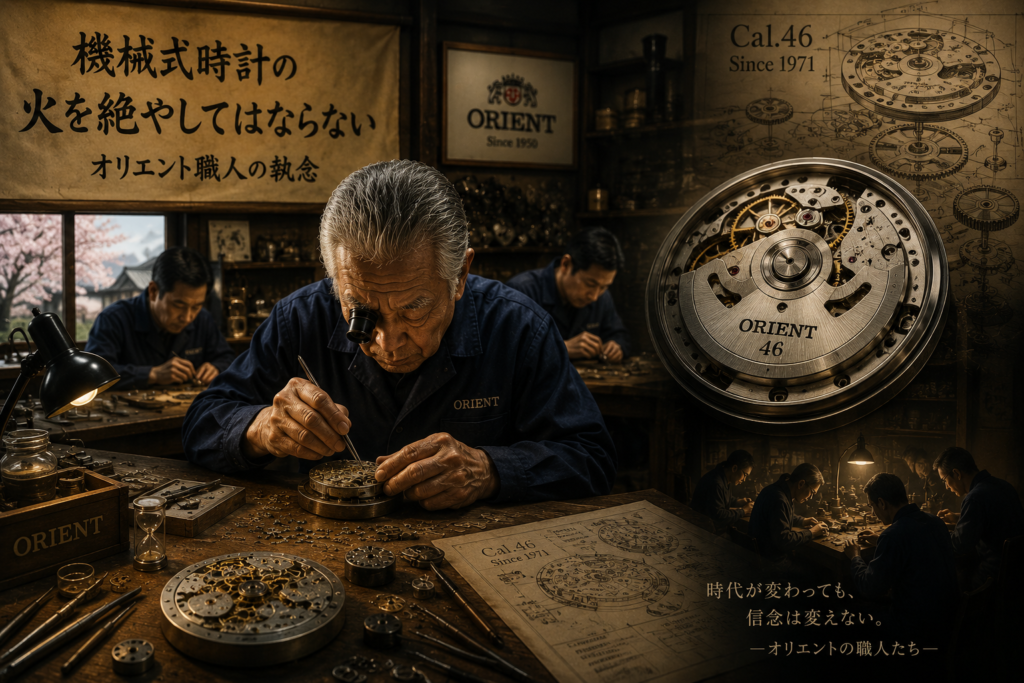
While manufacturers everywhere rushed toward quartz technology, one Japanese brand refused to give up: Orient Watch.
The craftsmen at ORIENT believed something very different.
“There is romance in a watch powered only by gears and springs. We cannot let this disappear.”
In 1971, ORIENT introduced the now-famous “46 caliber” movement.
Even as the market collapsed around them, even as quartz watches dominated the world, ORIENT continued improving its mechanical movements in silence.
For nearly 50 years, they protected and refined this technology almost like a hidden secret project.
While others abandoned mechanical watchmaking, ORIENT kept the flame alive.
4. The Great Comeback — Why the World Now Loves ORIENT STAR
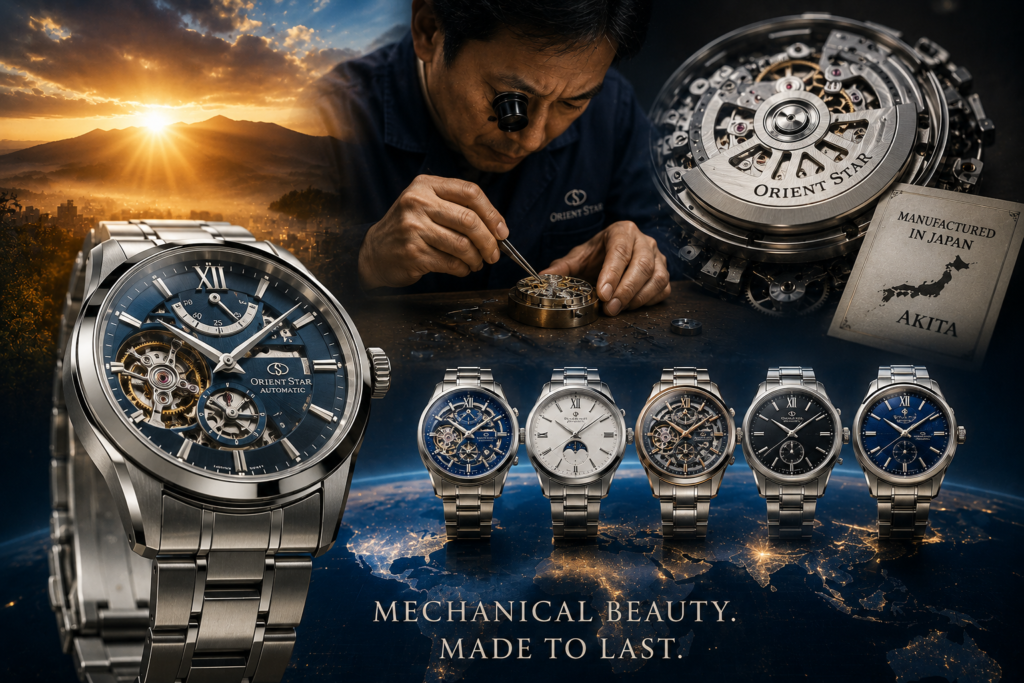
Fast forward to today.
Because smartphones can already tell us the exact time instantly, many people have started looking for something more emotional and meaningful.
A global appreciation for mechanical watches has returned.
And when that happened, the world rediscovered ORIENT.
After half a century of continuous refinement, ORIENT’s mechanical watches had quietly become incredibly sophisticated.
Today, the company’s premium line, Orient Star, is especially respected among watch enthusiasts worldwide.
Here are three reasons why collectors love ORIENT mechanical watches today.
1. True In-House Manufacturing Pride
Very few watch companies in the world can manufacture both movements and watch components entirely in-house.
Even today, skilled craftsmen in Akita, Japan continue assembling ORIENT watches by hand.
2. Incredible Value for Money
Swiss mechanical watches with similar quality often cost thousands — sometimes tens of thousands — of dollars.
Meanwhile, ORIENT offers genuine in-house mechanical watches at prices many people can still realistically afford.
That balance between quality and price is one of the biggest reasons collectors respect the brand.
3. Beautiful Designs Made to Be Admired
Many ORIENT models feature open-heart or skeleton-style dials that allow you to see the gears moving inside the watch.
These watches are not simply tools for telling time.
They are moving pieces of mechanical art.
The story of ORIENT is ultimately about craftsmen who refused to abandon their beliefs.
Even when the world said mechanical watches were obsolete, they continued protecting the technology they loved.
Powered only by springs, gears, and the movement of the human wrist, these watches continue ticking beautifully in the modern age.
And maybe that is exactly why people love them today.
FAQ
Q1. What was the “Quartz Shock”?
The “Quartz Shock” refers to the historical event that began in the late 1960s when Japanese company Seiko developed highly accurate and affordable quartz watches. This caused mechanical watches to rapidly lose popularity and severely damaged the traditional Swiss watch industry.
Q2. Is ORIENT a Japanese brand
Yes. Orient Watch is a Japanese watch brand established in 1950. Today, it operates under Seiko Epson and continues producing watches in Japan, including workshops in Akita Prefecture.
Q3. Why are ORIENT mechanical watches popular?
Their biggest strengths are high-quality in-house manufacturing and exceptional value for money. ORIENT also offers beautiful open-heart and skeleton-style designs that are loved by watch enthusiasts around the world.
Q4. What is the difference between mechanical and quartz watches?
Quartz watches are powered by batteries and are extremely accurate.
Mechanical watches, on the other hand, operate using springs and gears powered by either manual winding or the movement of the wearer’s wrist. They require maintenance, but many collectors appreciate them as long-lasting mechanical masterpieces.
Q5. What is the difference between ORIENT and ORIENT STAR?
“ORIENT” is the brand’s standard lineup, offering everything from casual watches to diver models.
Orient Star is the company’s premium collection, featuring higher-end materials, more refined finishing, and more sophisticated mechanical movements.


Comments