
Most anglers treat lures as simple tools, but Japanese designers view them as precision instruments. There is a technical philosophy that separates Japanese Domestic Market (JDM) engineering from the rest of the world. While many of us are taught to cover as much water as possible, Japanese designers build gear for a different reality: high-pressure environments where fish have seen it all.
If you have ever wondered why a Japanese lure costs twice as much as a standard one, the answer isn’t just marketing. It’s engineering for specific behavior. In this article, we’ll break down the technical secrets behind Japanese lure design and how you can use these tools to trigger bites when nothing else works.
- The philosophy of technical triggering vs power fishing
- Anatomy of a JDM lure: Engineering for specific behavior
- 3 innovative Japanese techniques you’re likely misusing
- Why Japanese lures are expensive (and why they’re worth it)
- Choosing the right Japanese gear for your local waters
- Start your technical fishing journey with authentic Japanese gear
- Frequently Asked Questions
- Why is Japanese lure design considered superior for high-pressure waters?
- What is the benefit of the Megabass LBO II system in Japanese lure design?
- How does Shimano Flash Boost contribute to Japanese lure design philosophy?
- Is the paint durability on Japanese lures a flaw in their design?
- Can I use Japanese lure design techniques for species other than bass?
The philosophy of technical triggering vs power fishing
To understand Japanese lure design, you first have to understand the environment that created it. Japan has some of the most pressured waters in the world. When thousands of anglers hit the same small lakes and rivers every week, the fish become incredibly wary. They don’t just react to movement; they analyze it.
This led to a shift away from the Western “power fishing” approach. Power fishing is about efficiency: covering water, making aggressive retrieves, and finding the active fish. It works great when fish are aggressive, but it often fails in high-pressure spots.
Japanese designers focus on “technical triggering.” This philosophy assumes the fish is already there and watching your lure. The goal isn’t just to “look like a baitfish.” It’s to create mechanical triggers that force a predatory response, even from a fish that isn’t hungry. We see this in our Sports & Outdoors category every day: gear that looks like art but performs like a machine.
A Japanese lure is a mechanical solution to a specific environmental problem. It’s designed to solve the “puzzle” of a wary fish through physics, hydrodynamics, and behavioral science.
Anatomy of a JDM lure: Engineering for specific behavior
When you hold a high-end Japanese lure, you are holding decades of R&D. Let’s look at the specific technologies that make these lures effective.
Weight Transfer Systems
One of the most significant innovations is the Linear Bearing Oscillator II (LBO II) from Megabass. Traditional weight transfer systems use a weight that slides back for the cast and forward for the retrieve. The Megabass LBO II uses 88 high-precision ball bearings to minimize friction.
This matters because of the “start-up” time. Most lures need a full foot of retrieve before the weight settles and the action begins. LBO II allows the lure to start its action within 0.1 seconds of hitting the water. In technical fishing, those first few inches are often where the bite happens.
Internal Reflection and Flash Boost
Shimano took a different approach with Flash Boost technology. Inside the lure, a small mirror is suspended on sensitive springs. Even when the lure is completely stationary, the mirror vibrates with the slightest water movement or even your heartbeat through the line.
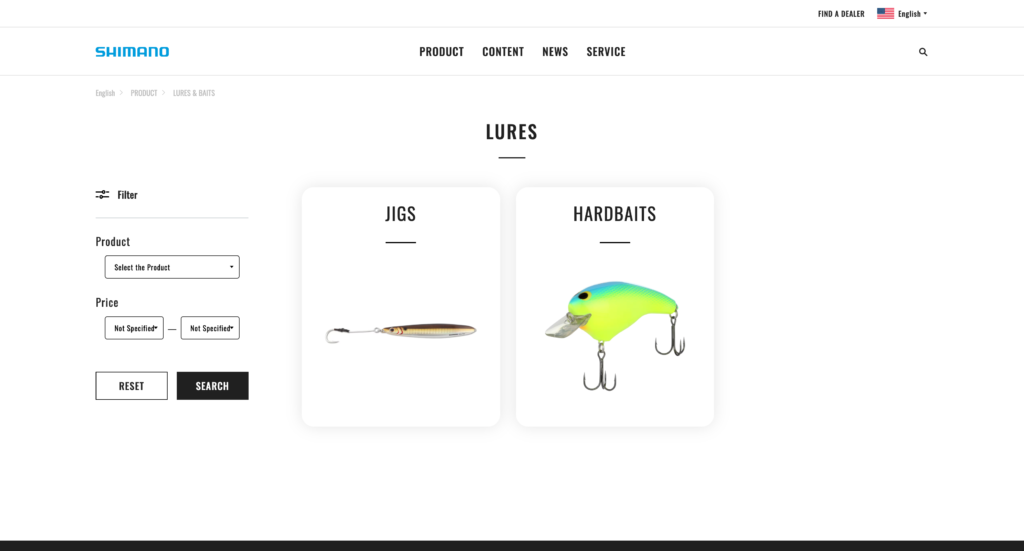
This creates continuous attraction during the pause. Most lures “die” when you stop moving them. A Flash Boost lure stays “alive,” reflecting light and triggering the curiosity of a predator that is stalking the bait.
Hydrodynamic Balancing
Japanese designers use minute weight adjustments to create what they call “idiosyncrasies” in action. On a standard lure, the goal is often perfect, rhythmic vibration. Japanese lures often have a built-in “hunt” or a slight stumble that occurs randomly during the retrieve. To a predator, this looks like a wounded baitfish losing its balance, which is a massive strike trigger.
Realistic Finishes
The visual appeal is the final layer. Some Japanese makers use real fish skin processed with glycerin and alcohol to maintain flexibility and durability. This isn’t just for show. The texture and the way these materials refract light are designed to fool fish in ultra-clear water where a plastic finish would look fake.
3 innovative Japanese techniques you’re likely misusing
Having the gear is only half the battle. You also have to use it the way the designers intended. Here are three techniques that originated in Japan that most Western anglers still use incorrectly.
1. The Free Rig: The hybrid solution
The Free Rig is a cross between a Texas rig and a Carolina rig. It uses a sinker with a closed loop that your line passes through freely.
The key mechanic is the separate fall rate. When you cast, the weight falls first and hits the bottom. Because the line is free, the soft plastic bait is left to fall naturally at its own much slower rate. This creates a “weightless” presentation in deep water.
The most common mistake? Using too much tension on the fall. If you keep a tight line, you pull the bait toward the weight, killing the “free” action. You have to let it fall on a slightly slack line to let the physics work.
2. Technical Topwaters: The Crawler revolution
Lures like the Jackall Pompadour and Deps NZ Crawler look like toys, but they are surface tension management machines.
The Jackall Pompadour features custom metal wings designed to stay stable from an extremely slow crawl to a high-speed retrieve. The secret is the “crawl.” Most anglers retrieve topwaters too fast. These lures are designed to be fished at a agonizingly slow pace, displacing water and making a distinct “scratching” sound that triggers big bass.
3. Glide Bait Finesse: The slow-motion hunt
The DRT Tiny Klash and Phat Lab Nekosogi changed how we think about big baits. The “wrong” way to fish these is like a traditional jerkbait, with constant aggressive snaps.
The “Japanese” way is a rhythmic retrieve with long, meaningful pauses. You want to utilize the lure’s natural momentum and its unique “idiosyncrasies” to do the work. It’s a game of patience and observation, watching how the fish reacts to the lure’s glide and then using a slight twitch to trigger the strike.
Why Japanese lures are expensive (and why they’re worth it)
It’s a common complaint: “Why should I pay $25 for a lure when a $5 one catches fish?” It’s a fair question. Let’s look at what goes into that price tag.
- Precision Manufacturing: Molding a lure with an internal spring-loaded mirror or a ball-bearing weight transfer system requires tighter tolerances than a hollow plastic shell.
- Quality Control: Most high-end Japanese lures are hand-tested. A technician literally watches the lure swim to ensure it runs true. If it doesn’t, it doesn’t leave the factory.
- R&D Investment: Companies like Megabass and Shimano spend millions studying fish behavior and fluid dynamics to find those tiny mechanical advantages.
There is often a “paint durability” controversy. Some anglers find that the paint on expensive JDM lures chips more easily than on cheaper Western ones. This is often an intentional design choice. Japanese designers prioritize the action and the refraction of the finish over its thickness. A thick, “bulletproof” clear coat can dampen the vibration of a finely tuned lure. They would rather you catch the fish of a lifetime on a lure with a chip than go fishless with a pristine one.
Choosing the right Japanese gear for your local waters
You don’t need to buy every JDM lure on the market. Start by identifying your biggest challenge. Is it clear water? High pressure? Deep-water fish that won’t bite a standard jig?
Matching your lures with the right tackle is also critical. For example, sinking braided line (like YGK G-Soul OHDRAGON) is popular in Japan for finesse techniques because it reduces line slack in windy conditions or deep water, giving you a more direct connection to the lure.
We also recommend looking at reels designed for technical casting. The Shimano Calcutta Conquest DC uses Digital Control (DC) braking to manage the high air resistance of technical lures like crawlers and glide baits. Similarly, the Shimano Scorpion DC provides that same technical edge at a different price point.
Start your technical fishing journey with authentic Japanese gear
Fishing is ultimately a technical challenge. While skill and local knowledge are the foundation, the tools you use change the range of outcomes available to you. Japanese lure design isn’t about “cheating”; it’s about expanding your technical repertoire to meet the demands of modern, high-pressure fishing.
Bottom line? If you’re still fishing the same way everyone else is, you’re competing for the same few aggressive fish. By understanding the engineering and philosophy behind Japanese gear, you can start triggering the fish that everyone else is leaving behind.
Explore our full range of Japan-made fishing tackle at Discovery Japan Mall and find the precision instruments you need for your next trip.
Frequently Asked Questions
Why is Japanese lure design considered superior for high-pressure waters?
Japanese lure design focuses on ‘technical triggering,’ which uses precision engineering like Flash Boost and LBO II to create subtle, realistic triggers that fool wary fish that have seen standard lures many times.
What is the benefit of the Megabass LBO II system in Japanese lure design?
The LBO II system uses 88 ball bearings to virtually eliminate friction during weight transfer. This allows the lure to start its action almost instantly (within 0.1 seconds) upon hitting the water, which is a critical feature in Japanese lure design.
How does Shimano Flash Boost contribute to Japanese lure design philosophy?
Flash Boost uses a spring-suspended mirror to create continuous light reflection even when the lure is stationary. This keeps the lure ‘alive’ during pauses, a key aspect of Japanese lure design for triggering bites from stalking predators.
Is the paint durability on Japanese lures a flaw in their design?
Not necessarily. In Japanese lure design, action and light refraction are often prioritized over finish thickness. A thinner coating allows for a sharper action, even if it is more prone to chipping than thicker, dampening coatings.
Can I use Japanese lure design techniques for species other than bass?
Yes. While many of these innovations started in the bass market, the principles of technical triggering, weight transfer, and realistic finishes are highly effective for trout, sea bass, and other predatory species globally.

Comments