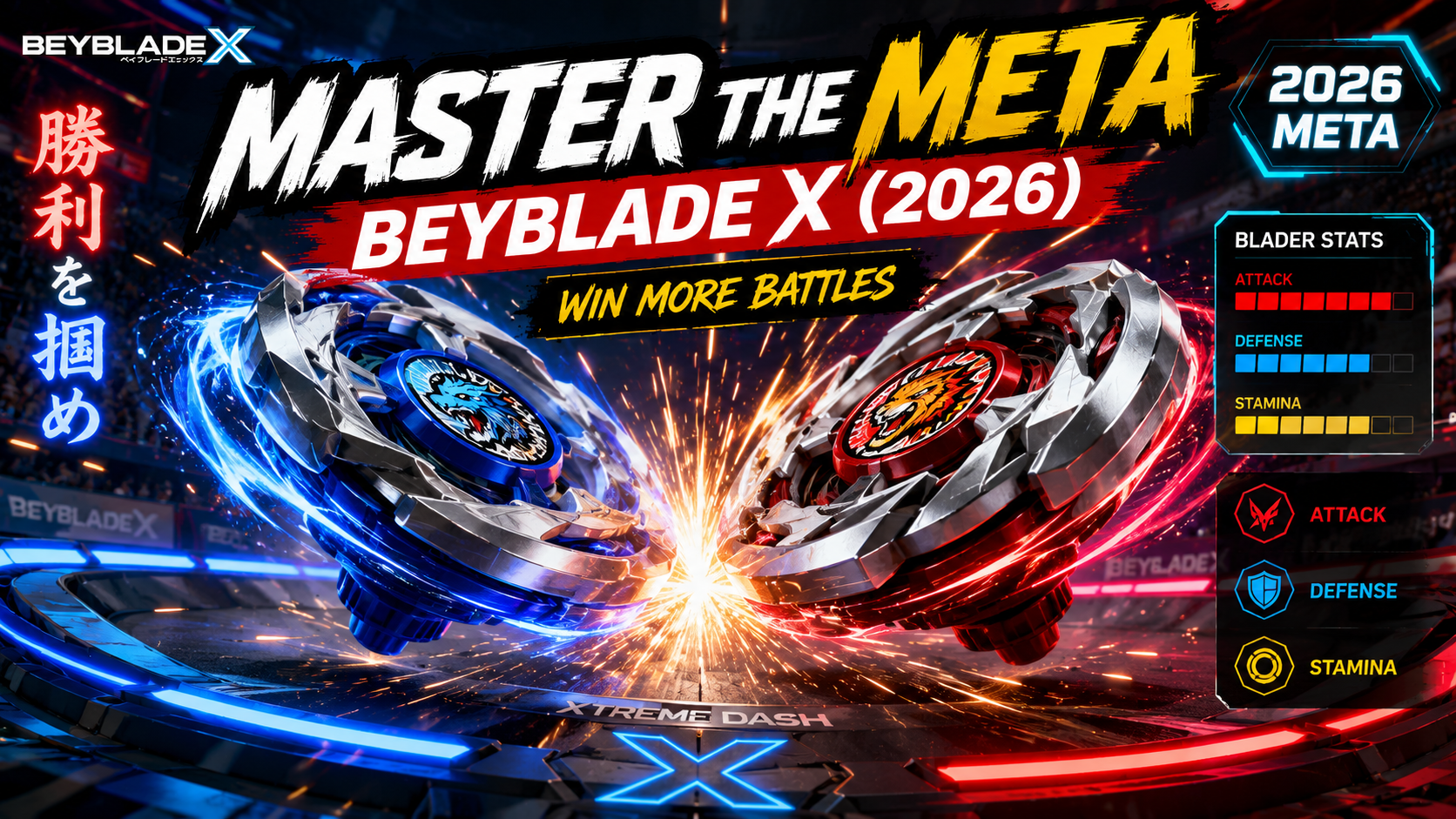
The world of competitive Beyblade is evolving faster than ever, and 2026 brings new challenges for even the most seasoned bladers. Whether you are looking to refine your technique or source the rarest Japanese releases, staying informed is the key to victory.
Beyblade has come a long way since its debut in 1999. What started as a modern take on the traditional Japanese “beigoma” spinning top has evolved into a global phenomenon. For those who grew up with the original plastic gen or the high-flying Burst era, the current landscape might look a bit different. We are now firmly in the era of Beyblade X, a generation that Takara Tomy has branded as “Gear Sports.” This isn’t just about toys anymore; it’s about high-speed collisions, precision engineering, and a professional competitive circuit that spans the globe.
If you are a collector or a competitive player, staying ahead of the meta is essential. The game has shifted from the “bursting” mechanics of the previous decade to a focus on extreme speed and metal-on-metal impact. Understanding these changes is the first step toward mastering the arena. In this guide, we’ll break down the best practices for Japanese toy lovers looking to elevate their game in 2026.
- What is Beyblade X? The new extreme sports era
- Mastering the meta: Attack, defense, stamina, and balance
- The Japanese edge: Why Takara Tomy remains the gold standard
- Best practices for competitive play: Launching and strategy
- Maintaining your collection: Care for metal-on-metal Beys
- Elevate your blading with authentic Japanese releases
- Frequently Asked Questions
- What are the most important BEYBLADE best practice for Japanese toy lovers to follow when starting with the X generation?
- How do I know if I’m getting an authentic Takara Tomy release for my BEYBLADE best practice for Japanese toy lovers collection?
- Is the Xtreme Stadium mandatory for BEYBLADE best practice for Japanese toy lovers who want to play Beyblade X?
- Can I mix parts from older generations in my BEYBLADE best practice for Japanese toy lovers strategy?
- How often should I clean my metal Beys as part of a BEYBLADE best practice for Japanese toy lovers routine?
What is Beyblade X? The new extreme sports era
Beyblade X represents the fourth generation of the franchise, launched by Takara Tomy in 2023.
While previous generations focused on customization and “bursting” (where a Beyblade would literal fall apart when hit hard enough), Beyblade X introduces a professional, “extreme sports” aesthetic. The branding has shifted from colorful, anime-centric designs to a more industrial, high-performance look that appeals to fans of all ages.
The core of this new era is the Xtreme Dash mechanic. Unlike previous stadiums which were mostly flat or featured simple slopes, the official Xtreme Stadium features a jagged “rail” along the inner perimeter. The “Bit” (performance tip) of a Beyblade X top features a matching gear that catches this rail, propelling the Beyblade at incredible speeds toward the center of the arena. This leads to what Takara Tomy calls “Extreme Finishes,” where a Beyblade is knocked into a high-speed pocket for maximum points.
Another major shift is the return to heavy metal components. The “Blade” (top layer) is primarily made of metal, ensuring that every collision sounds and feels substantial. This metal-on-metal contact is a hallmark of the generation and requires a different approach to both maintenance and strategy compared to the plastic-heavy Burst era. Whether you are a casual fan or a serious collector, the speed and intensity of Beyblade X make it the most exciting generation to date.
Mastering the meta: Attack, defense, stamina, and balance
Success in the stadium depends on understanding the fundamental types of Beyblades and how they interact. The “rock-paper-scissors” relationship between these types remains the foundation of the game, but the Xtreme Dash mechanic has added a layer of complexity to the BEYBLADE best practice for Japanese toy lovers.
Attack types: High speed and aggression

Attack types like the BX-01 Dran Sword 3-60F are designed for one thing: knockouts. These Beys feature flat or jagged bits that prioritize movement and speed. When an attack type catches the Xtreme Line, it can cross the stadium in a fraction of a second, delivering a blow that can end a match instantly. However, they lose stamina quickly and are prone to self-knockouts if launched too aggressively.
Defense types: The immovable objects

Defense types, such as the BX-04 Knight Shield 3-80N, are heavier and designed to occupy the center of the stadium. Their goal is to endure the initial onslaught of an attack type and outlast them. In the Beyblade X meta, defense types rely on weight and stability to resist being pushed into the Xtreme Line by an opponent.
Stamina types: Outspinning the competition

Stamina types like the BX-03 Wizard Arrow 4-80B feature smooth, rounded bits that minimize friction. They are built to spin as long as possible, making them the natural counter to defense types. However, their light weight makes them vulnerable to the high-speed impacts of attack types.
Balance types: The versatile choice

Balance types, like the BX-02 Hell Scythe 4-60T, attempt to bridge the gap between categories. They can be configured to act defensively or take an aggressive path depending on the launch angle. For many players, balance types are the safest starting point for building a competitive deck.
| Type | Primary Strength | Weakness | Example Product |
|---|---|---|---|
| Attack | High KO potential | Low stamina | BX-01 Dran Sword |
| Defense | High impact resistance | Can be outspun | BX-04 Knight Shield |
| Stamina | Longest spin time | Vulnerable to KOs | BX-03 Wizard Arrow |
| Balance | Versatile performance | Master of none | BX-02 Hell Scythe |
The Japanese edge: Why Takara Tomy remains the gold standard
For serious Japanese toy lovers, the distinction between Takara Tomy and Hasbro is a common point of discussion. Takara Tomy is the original manufacturer in Japan, while Hasbro handles the international releases. While both produce quality products, collectors and competitive bladers often favor the Japanese versions for several reasons.
First, there is the matter of authenticity and weight. Takara Tomy Beys are designed for the high-intensity G4 tournament circuit in Japan. They often feature metal components and unique gimmicks that are sometimes simplified or replaced with plastic in international versions to meet different safety regulations or price points. For a game that relies so heavily on physics and weight distribution, these small differences can deeply affect performance in the arena.
Second, the Japanese releases often include stickers, special color variants, and “Unique Line” (UX) releases that are not always available elsewhere. The UX-01 Dran Buster 1-60A, for instance, features a specialized weight distribution that makes it a formidable force in the current meta.
If you are looking to build a pro-level collection, sourcing your equipment directly from Japan is the best way to ensure you are getting the “meta-ready” versions used in official competitions. At Discovery Japan Mall, we specialize in making these authentic Takara Tomy releases accessible to fans worldwide. We also offer a wide range of Japanese bestsellers across various hobby categories.
Whether you are looking for the latest starters or limited edition boosters, our goal is to convey the best of Japanese hobby culture to the world.
Best practices for competitive play: Launching and strategy
Owning the right equipment is only half the battle. To master the BEYBLADE best practice for Japanese toy lovers, you must also master the art of the launch and the strategy of the match.
Understanding the Xtreme Dash
The Xtreme Dash is the most powerful tool in your arsenal. By launching your Beyblade so that it lands near the outer perimeter, you can trigger the dash immediately. However, timing is everything. If you dash too early, you might miss your opponent and lose stamina. If you dash too late, your opponent might have already occupied the center with a defense-heavy combo.
Mastering the launch angle
Your launch angle determines the path your Beyblade will take.
- Parallel Launch: Keeping the launcher flat results in a more stable, center-seeking path. This is ideal for stamina and defense types.
- Banked Launch: Tilting the launcher (often called a “sliding shoot”) creates a flower-like movement pattern. This is essential for attack types to repeatedly cross the center and catch the Xtreme Line.
Strategic selection and the 3on3 format
In competitive play, such as the formats used by the World Beyblade Organization (WBO), matches are often played in a 3on3 or “Deck” format.
This means you must select three different Beyblades and use them in a specific order.
Let’s break down a common strategy:
- The Lead: Start with a reliable balance type to feel out your opponent’s style.
- The Counter: Use your second slot for a specialized type (like an attack type) if you suspect your opponent is playing a stamina-heavy deck.
- The Anchor: Finish with your most consistent stamina or defense Bey to secure the final points.
We recommend practicing with the BX-10 Xtreme Stadium to get a feel for how different Beys interact with the rail system. Consistent practice is the only way to develop the muscle memory needed for high-level play.
Maintaining your collection: Care for metal-on-metal Beys
The move to metal blades in Beyblade X means that maintenance is more important than ever. Metal parts are susceptible to wear, scratches, and oxidization over time. To keep your collection in tournament-ready condition, follow these simple maintenance steps.
First, handle oxidization promptly. When metal is exposed to air and moisture, it can develop a dull, cloudy appearance (especially on the “Blade” section). Using a dedicated metal polishing cloth can restore the shine and keep the surface smooth, which is vital for minimizing friction during collisions.
Second, monitor your “Performance Bits.” The bits in Beyblade X are under incredible stress due to the high speeds of the Xtreme Dash. Check the gear teeth on your bits regularly for signs of rounding or chipping. A worn-out bit will fail to catch the rail correctly, rendering your BEYBLADE best practice for Japanese toy lovers ineffective.
Finally, proper storage is key. Avoid tossing your Beys into a single large bin where the metal parts can scratch each other. Using a dedicated gear case or a foam-padded organizer will prevent unnecessary wear and keep your parts organized for quick assembly.
Elevate your blading with authentic Japanese releases
The world of Beyblade is more competitive and exciting than it has ever been. By mastering the mechanics of Beyblade X, understanding the nuances of the Japanese meta, and maintaining your equipment with care, you can join the ranks of the pro bladers.
Remember that the most authentic experience comes from the source. Sourcing your equipment directly from Japan ensures that you are playing with the same high-performance parts used by the world’s best players. At Discovery Japan Mall, we are committed to providing the widest selection of authentic Japanese hobby products, from the latest Beyblade X starters to rare crossover sets.
Whether you are looking to dominate your local tournament or simply want to collect the finest examples of Japanese engineering, we are here to help you spin into action. Beyond Beyblade, you can also explore our selection of Japanese TV games and other collectibles. Explore our full range of Takara Tomy Beyblade X products today and take your first step toward becoming a champion.
Frequently Asked Questions
What are the most important BEYBLADE best practice for Japanese toy lovers to follow when starting with the X generation?
The most important practice is mastering the Xtreme Dash mechanic. Ensure you are using an official Xtreme Stadium and practice your launch angle to consistently catch the rail for maximum speed.
How do I know if I’m getting an authentic Takara Tomy release for my BEYBLADE best practice for Japanese toy lovers collection?
Look for the Takara Tomy logo on the packaging and specific product codes like BX or UX. Sourcing from reputable Japanese retailers like Discovery Japan Mall is the most reliable way to ensure authenticity.
Is the Xtreme Stadium mandatory for BEYBLADE best practice for Japanese toy lovers who want to play Beyblade X?
Yes. While you can spin Beyblade X tops in older stadiums, you won’t be able to use the Xtreme Dash mechanic, which is the core feature of the generation. The rail system is essential for the intended high-speed gameplay.
Can I mix parts from older generations in my BEYBLADE best practice for Japanese toy lovers strategy?
No. Beyblade X parts (Blade, Ratchet, Bit) are not compatible with previous generations like Burst or Metal Fusion due to the new gear system and size differences.
How often should I clean my metal Beys as part of a BEYBLADE best practice for Japanese toy lovers routine?
You should wipe down your metal blades with a dry cloth after every session to remove sweat and moisture. Use a polishing cloth once a month or whenever you notice signs of oxidization to maintain peak performance.

Comments