
- Why Making Japanese Friends Feels Hard (But Isn’t)
- How to Make Japanese Friends Online: The Short Answer
- Why Many Attempts at Making Japanese Friends Fail
- Where to Meet Japanese Friends Online (Safely and Effectively)
- Using Studio Ghibli as the Perfect Icebreaker
- Talking About Studio Ghibli Products Without Sounding Like an Advertisement
- Meeting Japanese Friends in Real Life in Japan
- FAQ About Making Japanese Friends
Why Making Japanese Friends Feels Hard (But Isn’t)
If you dream about traveling to Japan, binge-watch anime on weekends, or feel a warm feeling every time you hear Joe Hisaishi‘s piano – you’ve probably wished you had Japanese friends to share it all with. Whether the intention is language practice, cultural curiosity, or simply finding humans who care about the same stuff, the desire is real.
The frustration is also real. Many people get stuck exchanging “Hi, how are you?” with strangers online, watch conversations fade after a week, or realize they’re only meeting other foreigners in Tokyo bars. Japanese people can seem reserved at first, which makes it easy to guess that friendship isn’t possible. But that’s a misread. Japanese culture values group harmony and avoiding direct conflict, so initial shyness is social pacing – not rejection. Once trust is built through consistency, friendships in Japan become some of the deepest you’ll find anywhere in the world.
This article covers how to make Japanese friends both online and in person, with concrete strategies, example questions, and one icebreaker that works almost universally: Studio Ghibli. At Discovery Japan Mall, we’re passionate about Japanese culture and Ghibli merchandise, and we believe these shared interests can open doors to real connection.
How to Make Japanese Friends Online: The Short Answer
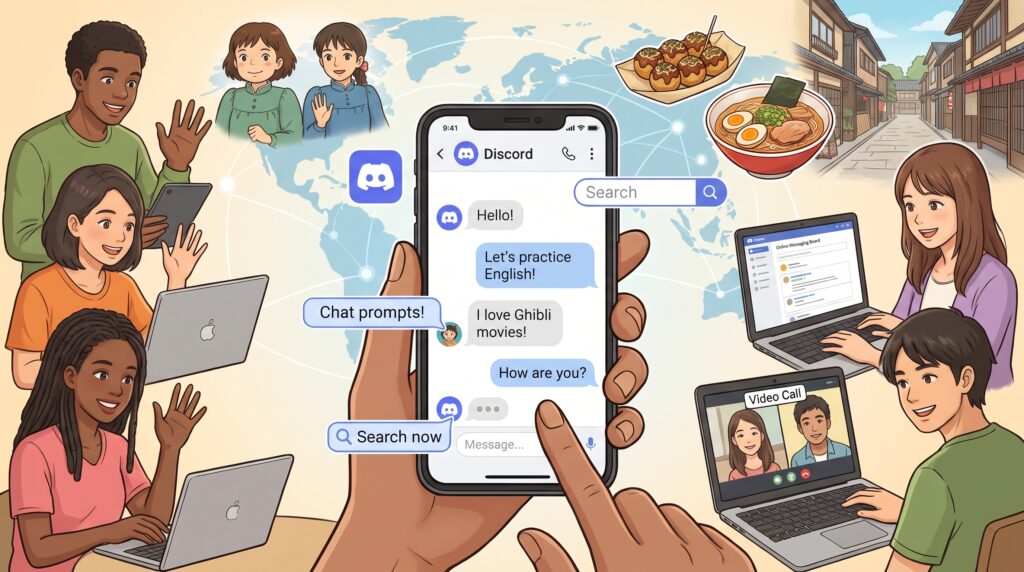
Here’s the quick path to making Japanese friends online and make friends more naturally:
- Choose the right platforms – language exchange apps, Discord servers, hobby forums with active Japanese speakers.
- Build a genuine profile – mention specific interests like “I love Howl’s Moving Castle” or “I’m learning Japanese through cooking videos.”
- Start conversations around shared interests rather than generic greetings.
- Gradually move from chat to voice or video to build real rapport.
Many Japanese people enjoy chatting in English, so you don’t need to speak Japanese fluently to connect online. A mix of simple Japanese plus English works. Start connecting before your trip to Japan – building rapport early makes socializing far easier when you arrive.
Sample opening messages that go beyond “hi”:
- “I just watched Princess Mononoke for the first time – what scene meant the most to you?”
- “I’m trying to learn Japanese through Ghibli film dialogue. Any recommendations?”
- “I found this amazing Kiki’s Delivery Service café in my city – do cafes like that exist near you in Japan?”
Why Many Attempts at Making Japanese Friends Fail
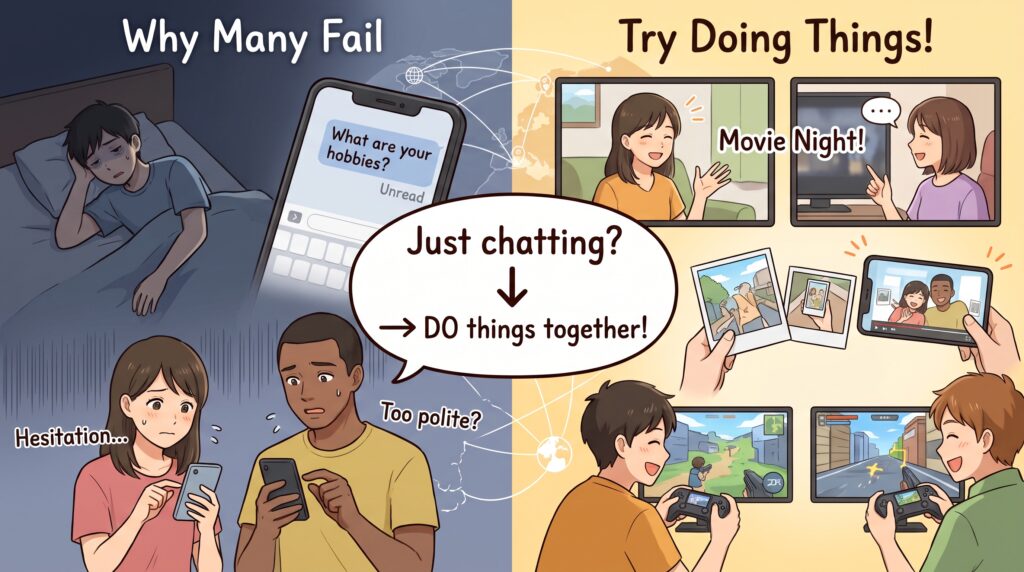
Most online friendships die at the small talk stage. Here’s why:
- Vague conversation topics. Asking “What are your hobbies?” gives nothing to latch onto. Without specificity, chats die within days.
- Time zone gaps. Japan Standard Time is UTC+9. If you’re in North America or Europe, replies can lag by half a day, killing momentum.
- Cultural hesitation. Japanese politeness means many people avoid messaging too often for fear of bothering you. They may also hesitate to speak English imperfectly around strangers.
- No shared activities. Many apps fail to facilitate meaningful connections because there’s nothing beyond texting. Conversations often fade without a plan to meet in person or do something together.
- Online friendships die without plans to meet. Without a future goal – even a virtual movie night – there’s no reason to keep investing.
The problem isn’t your personality, nationality, or accent. It’s usually lack of structure.
The mindset shift: stop thinking of friendship as chatting. Think of it as doing things together – watching a Studio Ghibli film simultaneously, exchanging photos of daily life, or playing an online game on the same night.
Where to Meet Japanese Friends Online (Safely and Effectively)
Different platforms attract different kinds of connections:
| Platform Type | What to Expect | Examples |
|---|---|---|
| Language exchange apps | Partners who want mutual practice | HelloTalk (~18M users), Tandem, HiNative |
| Friendship apps | People looking to expand social circles | SewaYou, Langmate, Bumble BFF |
| Hobby communities | Fans with shared passions | Ghibli fan Discord servers, anime forums |
| Forums & subreddits | Slow, low-pressure engagement | r/LearnJapanese, r/Japan |
Networks like Japanese cultural associations are great for making friends abroad – many cities have Japan societies that host events, film screenings, and language tables.
Safety tips: avoid sharing your full home address early on, use neutral usernames, be cautious about money requests from anyone, and move gradually from public servers to private chats only after trust is established.
Using Studio Ghibli as the Perfect Icebreaker
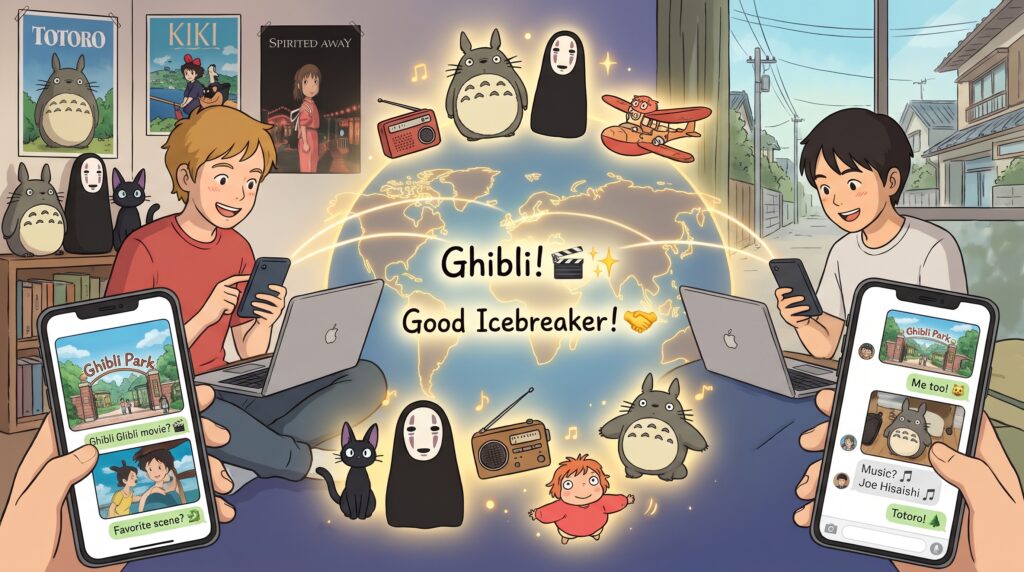
Here’s why Ghibli works: in a 2022 poll by A-Line Research, 48.5% of Japanese respondents aged 10–69 named My Neighbor Totoro as their favorite, with Spirited Away at 44.5%. Hayao Miyazaki’s films and the studio’s broader catalog are broadcast on Japanese television regularly – they’re childhood memories for people now in their 20s, 30s, and 40s. Toshio Suzuki, the studio’s legendary producer, is a household name. Shared interests help keep conversations alive, and Ghibli is one of the most universal you’ll find.
Feature films worth referencing:
My Neighbor Totoro (1988), Kiki’s Delivery Service (1989),
Princess Mononoke (1997),
Spirited Away (2001)
Ponyo (2008),
The Wind Rises (2013)
Questions to send a Japanese friend:
- “What was your first Ghibli film as a kid?”
- “Do you have a favorite scene in Spirited Away?”
- “Have you been to Ghibli Park or the Ghibli Museum in Mitaka?”
- “Which Ghibli character do you think matches your personality?”
- “What do you think of the animation style in the studio’s films compared to modern anime?”
Talking about Joe Hisaishi’s music or visiting Ghibli Park often leads to nostalgic, deeper conversation. Discovery Japan Mall offers official Studio Ghibli items – from figures to accessories – that can serve as both conversation pieces and thoughtful gifts for Japanese friends.
Talking About Studio Ghibli Products Without Sounding Like an Advertisement
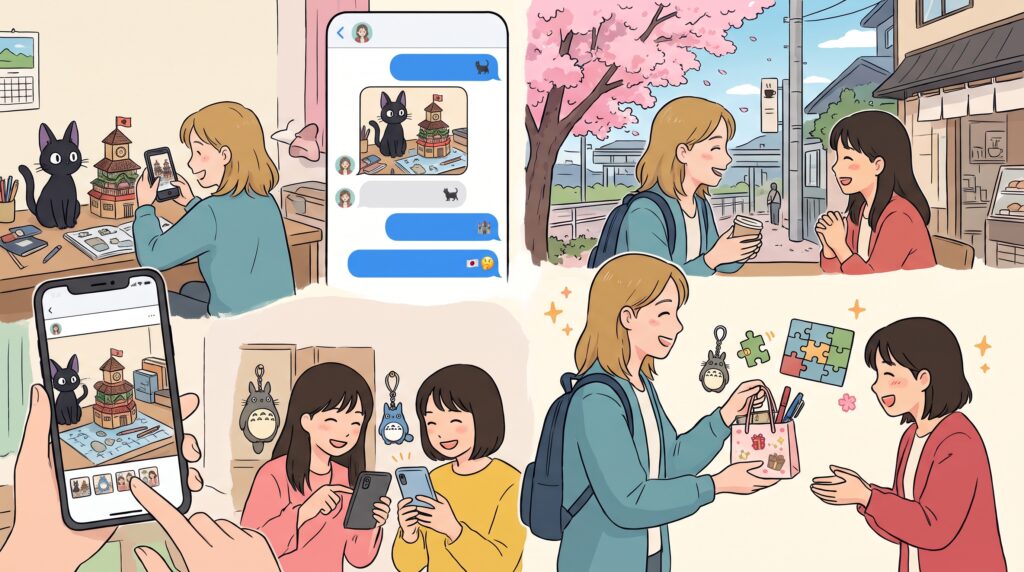
The key is to share, not sell. Send a photo of the Jiji plush on your desk and ask, “Do you also keep Ghibli stuff in your room?” Share a picture of a Spirited Away miniature kit you’re building and ask your friend which scene they’d want as a diorama.
Conversation starters that feel natural: “In Japan, which Ghibli merchandise is popular among university students these days?” or “I found this official Howl’s Moving Castle model kit – it reminds me of the scene where the castle first appears.”
Reciprocity and small gestures are important in Japanese social interactions. Giving a small Ghibli-themed gift – a Kiki’s Delivery Service puzzle, a keychain, or stationery – when meeting in person feels warm and culturally appropriate, aligning with the Japanese practice of omiyage.
Meeting Japanese Friends in Real Life in Japan

Friendships in Japan can take time to form due to low relational mobility – people don’t cycle through social groups as quickly as in some Western countries. Joining clubs or classes is a primary way for adults to socialize in Japan, so lean into that.
Effective strategies:
- Language exchange meetups are effective for newcomers to connect with locals – try weekend events in Shibuya or English–Japanese meetups in Osaka Namba.
- Volunteering provides a natural environment for connecting with locals.
- Local festivals provide excellent opportunities to meet Japanese people in a relaxed, fun atmosphere.
- Becoming a regular at local cafes or izakayas fosters natural friendships over time.
- Attend Studio Ghibli exhibitions, limited cinema screenings, or Ghibli Park – you’ll find people who are interested in the same things.
Real friendships need in-person meetings to thrive. Friendships that survive the online stage almost always lead to real-life meetings eventually. When meeting someone from the internet for the first time, choose public places – cafes, parks, department store food courts.
Etiquette: be punctual, remove shoes in homes, bring small omiyage when visiting Japanese friends, and offer to split the bill.
FAQ About Making Japanese Friends
Can I make Japanese friends online for free? Yes. Discord servers and Reddit communities are free options to connect. HelloTalk and Tandem also have free tiers. You can find people and join a Japanese community without spending anything, then later browse Japanese-made watches and goods together as a fun shared topic.
Do I need to speak fluent Japanese? No, you do not need to speak Japanese fluently to make friends online. What matters is sincerity, and many people are happy to chat in English or in a mix of languages. Even beginner-level effort in learning Japanese builds trust.
How do I know if my Japanese friend wants to meet in person? Signals include moving from text to video calls, asking about your location, or suggesting a specific place and time. If they say “Let’s meet for coffee in Shibuya on Sunday,” that’s your answer.
Is talking about anime or Studio Ghibli childish? Not at all. According to survey data, roughly 64% of Japanese people aged 20–29 are highly interested in anime, and Ghibli is respected as serious animation and art across all age groups. It’s a good place to start any conversation.
What small gifts should I bring when I meet my Japanese friend in Japan? Ghibli goods like keychains or stationery, regional sweets from your own country, or snacks unique to your area. Presentation matters – even a simple bag shows thoughtfulness.
Where can I find authentic Japanese Ghibli items online? Discovery Japan Mall is a Japan-based option for official Ghibli figures, accessories, and home goods as well as new arrivals of Japanese-brand products. It’s a reliable publishing company for authentic merchandise you won’t easily find outside Asia – and every item can double as a conversation starter or a gift that turns a few friends into close friends.

Comments